Digital Signage vs Static Signage: What's the Difference?

Digital signage uses digital screens to display dynamic content such as videos, animations, or rotating images that can be updated remotely, while static signage uses printed materials like posters, banners, or billboards that remain fixed until physically replaced. Businesses use digital signage for flexible, real-time messaging and static signage for simple, long-term displays.
What Is Digital Signage?
Digital signage refers to electronic displays that show multimedia content such as videos, images, animations, and live information. These displays are commonly installed in retail stores, restaurants, offices, transportation hubs, and public spaces.
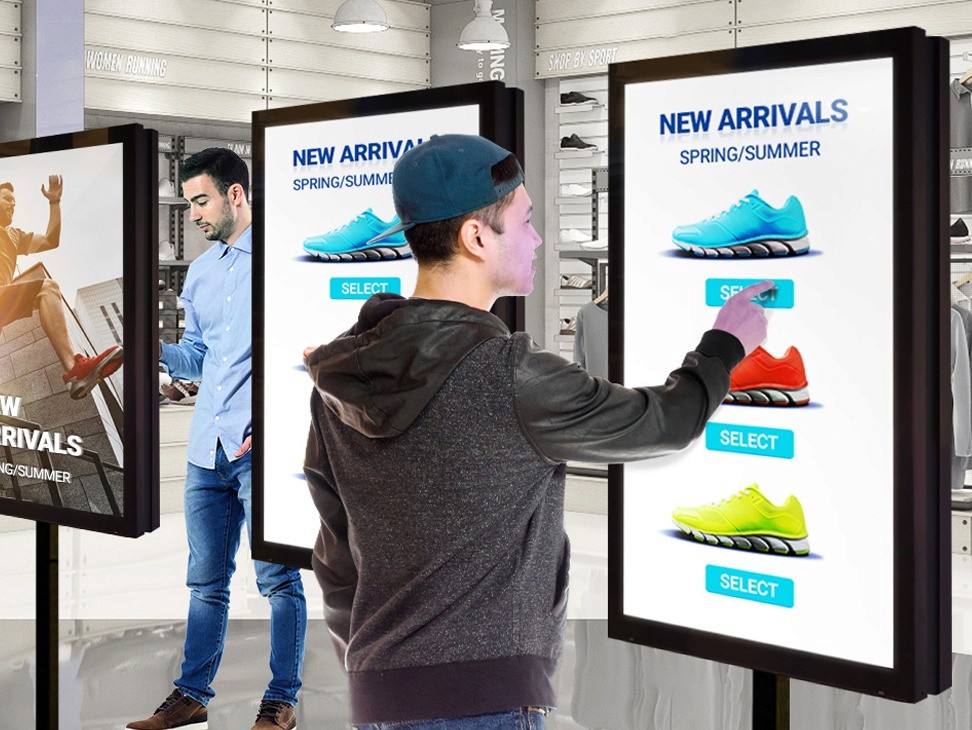
Content on digital signage screens can be managed through software, often called a content management system (CMS). Businesses can schedule playlists, update promotions, and change messages across multiple screens from one dashboard.
Common content displayed on digital signage includes:
Advertisements
Promotions and product highlights
Event announcements
Informational messaging
Real-time updates
Digital signage allows businesses to change content instantly without replacing physical materials.
What Is Static Signage?

Static signage refers to printed materials used for communication or advertising. These signs remain fixed until they are replaced or redesigned.
Common uses for static signage include:
Storefront signage
Event posters
Roadside billboards
Directional signs
Promotional banners
Businesses rely on static signage for long-term messages such as branding, store hours, permanent directions, or promotional posters. Updates require printing new materials and physically installing them.
Static signage works well when messaging remains consistent for long periods.
Key Differences Between Digital Signage and Static Signage
Here are some key differences between Digital and Static Signage:
Feature | Digital Signage | Static Signage |
Display Type | Electronic screens | Printed materials |
Content Updates | Remote and instant updates | Requires reprinting and replacement |
Content Format | Images, videos, animations, live data | Printed text and images |
Flexibility | Multiple messages can rotate in a playlist | One message per display |
Operational Control | Managed through digital signage software | Managed manually |
Cost Over Time | Higher initial setup cost, lower update cost | Lower initial cost, repeated printing costs |
Audience Engagement | Dynamic visuals capture attention | Limited visual engagement |
Scheduling | Content can be scheduled by time or location | No scheduling capability |
Advantages of Digital Signage
Digital signage provides operational and marketing advantages for businesses that update content regularly.
Key benefits include:
1. Instant Content Updates
Marketing teams can change promotions, pricing, or announcements across multiple locations from a single platform.
2. Dynamic Visual Content
Screens can display motion graphics, videos, and slideshows that capture attention more effectively than static posters.
3. Scheduled Campaigns
Businesses can schedule messages to appear at specific times of day. An example is when restaurants use this for breakfast, lunch, and dinner menu rotations.
4. Reduced Printing Costs
Digital displays eliminate frequent printing of posters and banners, reducing operational costs and paper waste.
Advantages of Static Signage
Static signage remains valuable for many businesses because it offers simplicity and reliability.
1. Lower Initial Cost
Printed signage usually costs less up front than installing digital screens.
2. No Technical Setup
Static signage requires no software, hardware configuration, or network connectivity.
3. Long-Term Messaging
Permanent branding elements, such as building signs or store logos, remain consistent over time.
4. Simple Deployment
Businesses can install posters, banners, or window graphics quickly without technical infrastructure.
Why Businesses Should Choose Digital Signage
Many organizations use both digital and static signage together. Digital screens handle dynamic promotions, while static signs support branding and permanent information. The right signage depends on how often your content changes and how interactive your messaging needs to be.
Businesses often consider these factors:
Frequency of content updates
Marketing campaign flexibility
Budget and infrastructure
Customer engagement goals
Number of locations to manage
Digital signage supports environments where messages change frequently or require dynamic presentation.
Common industries that can use digital signage include:
Retail stores promoting products and sales
Restaurants displaying digital menus
Corporate offices sharing internal announcements
Transportation hubs displaying schedules
Healthcare facilities communicating information to visitors
Baber-shop promoting hair/grooming care products
How Beam Supports Digital Signage
With Beam, businesses can manage digital signage networks from a single platform. Teams can schedule playlists, update campaigns remotely, and deliver targeted messages across screens.
Beam enables organizations to:
Control multiple displays from one dashboard
Schedule content across playlists
Launch advertising campaigns on screens
Update messaging in real time
This approach gives businesses a flexible way to communicate with customers while maintaining consistent branding across locations.
Summary
Digital signage and static signage serve different communication needs. Digital signage supports dynamic content, remote management, and scheduled campaigns across screens. Static signage provides a straightforward way to display fixed messages through printed materials. Businesses select the approach that aligns with their communication goals, budget, and operational requirements.
Is digital signage more expensive than static signage?
Digital signage requires an initial investment in screens and software. Static signage has lower setup costs but requires ongoing printing for updates.
Can businesses use both digital and static signage?
Many businesses combine both approaches. Digital screens handle promotions and dynamic messaging, while static signage supports permanent branding or directional information.
Is digital signage more effective than static signage?
Digital signage often attracts more attention because it displays motion and multimedia content. Businesses use it for promotions and dynamic messaging.