How Dental and Medical Practices Use Digital Signage to Lift Case Acceptance and Earn From the Waiting Room

Dental and medical practices use digital signage to fill waiting room time with patient education that lifts treatment plan acceptance, and to earn passive income by opening idle screen time to approved advertisers. Most patients spend 10 to 20 minutes in the waiting room before they are seen, one of the last captive audiences left in media. A screen that explains procedures, answers common questions, and reinforces your services turns that wait into production, and the same screen can help pay for itself.
Why the waiting room is your most underused asset
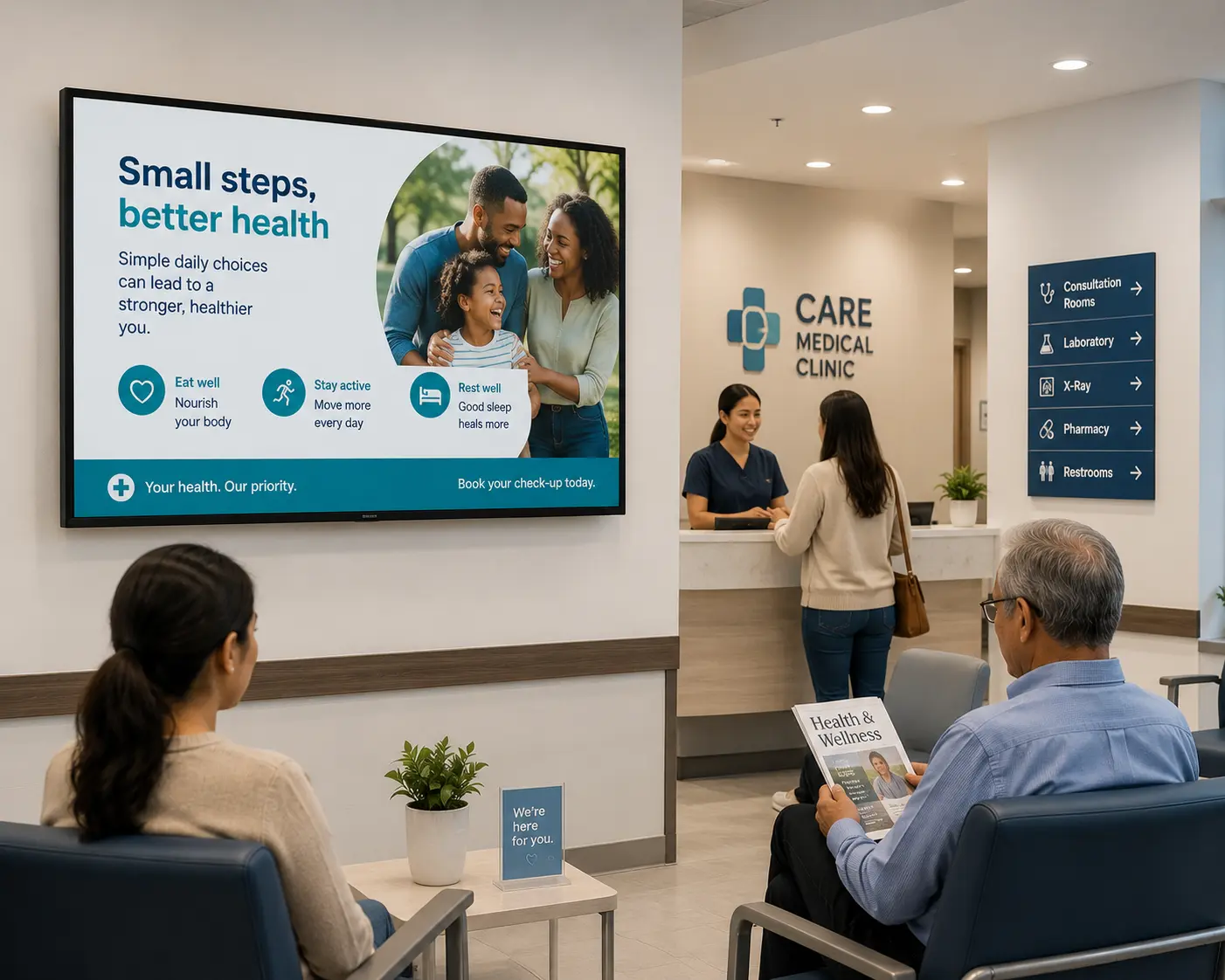
Most practices treat the waiting room as dead time. Patients sit, scroll their phones, and lose the thread on why the visit matters. A screen changes the default. Patients in a clinic are already in a health mindset; the setting carries a trust halo, and the same messages repeat across a single visit.
That attention shows up in the numbers. Industry research on point-of-care media reports message recall above 60%, roughly two to three times standard digital display.
Treat that figure as directional, since waiting room attention varies by layout and traffic. The core point holds. A captive, health-focused audience beats a distracted one.
A captive, health-focused audience beats a distracted one.
From wait time to treatment acceptance
Case acceptance is where signage earns its keep. Patients say yes to treatment they understand. Implants, crowns, root canals, periodontal care, and cosmetic work are hard to picture from a verbal description. Short animations and before-and-after visuals make the plan tangible before the provider walks in.
The effect is measurable. In one analysis of 41 dental organizations and more than 450,000 patients, visual case presentation was associated with case acceptance gains of 20% or more.
Earn from idle screen time with the Beam Network
Here you are a seller, not a buyer. Every hour your screens run practice content, they also hold advertising value you can capture. Advertiser demand is real and growing. Out-of-home advertising reached a record 9.46 billion dollars in 2025, and digital out-of-home grew 10.5% year over year to more than a third of all out-of-home revenue, per the OAAA. Captive, health-adjacent audiences are exactly what those buyers want.
Beam Network lets you open idle screen time to approved advertisers and earn passive income from screens you already own. You keep control. You block competing practices, exclude off-brand categories, and hold priority slots for your own education and promotions. Attribution for signage is directional, so treat ad income as a supplemental line rather than a forecast.
How Beam helps
Schedule patient education, service promotions, and network ads across every screen and location from one dashboard.
Update content remotely, so a new implant promotion or a flu-shot notice goes live in minutes instead of visits.
Monetize idle time with Beam Network vetted advertisers, with category controls that keep content clinically appropriate.
Keep clinical and brand priority, since your own content always outranks network fill.
Picture a two-location practice. During the day, it runs implant and whitening education in the waiting room, blocks competing offices and off-brand categories, and lets approved brands fill the rest. The waiting room shifts from a cost center to a small revenue line, and case presentations start before the patient reaches the chair.
How Beam helps. One dashboard for education, promotions, and paid network ads, with full control over what runs on your screens.
Turn your waiting room into production and passive income
See how Beam runs patient education and monetizes idle screen time for practices like yours at usebeam.io
Sources
https://www.dentistrytoday.com/patients-who-wait-more-than-20-minutes-leave-unsatisfied/
https://placebased.media/blog/top-platforms-for-point-of-care-advertising
https://www.overjet.com/blog/how-to-increase-dental-case-acceptance-with-ai
https://oaaa.org/news/out-of-home-advertising-revenue-reaches-record-9-46-billion/
Will digital signage annoy patients in the waiting room?
Not when the content is useful and calm. Mix procedure education, practice updates, and quiet visuals, keep motion and volume moderate, and the screen reads as a service rather than a distraction.
Does on-screen education replace the provider's treatment conversation?
No. It primes understanding so the plan lands faster, and the provider still presents and closes. The effect is supportive and directional, not a substitute for the clinical discussion.
Can we control which ads appear if we join the Beam Network?
Yes. Advertisers are approved before they run, and you can block competitors, exclude categories, and reserve priority slots for your own content.
What equipment does a practice need?
A standard commercial or consumer TV and a media player cover most rooms. Beam manages scheduling and updates remotely, so staff does not touch the hardware day to day.
How much can a practice earn from idle screen time?
It depends on locations, patient traffic, screen count, and fill rate, so treat earnings as supplemental. The larger return is usually higher case acceptance from better education.
Is waiting room advertising measurable?
Only in part, since signage and DOOH attribution is directional. Track proxies you control, such as case acceptance rate, treatment plan value, and new-patient mentions of what they saw on screen.