How Supermarkets Use Digital Signage To Lift Basket Size
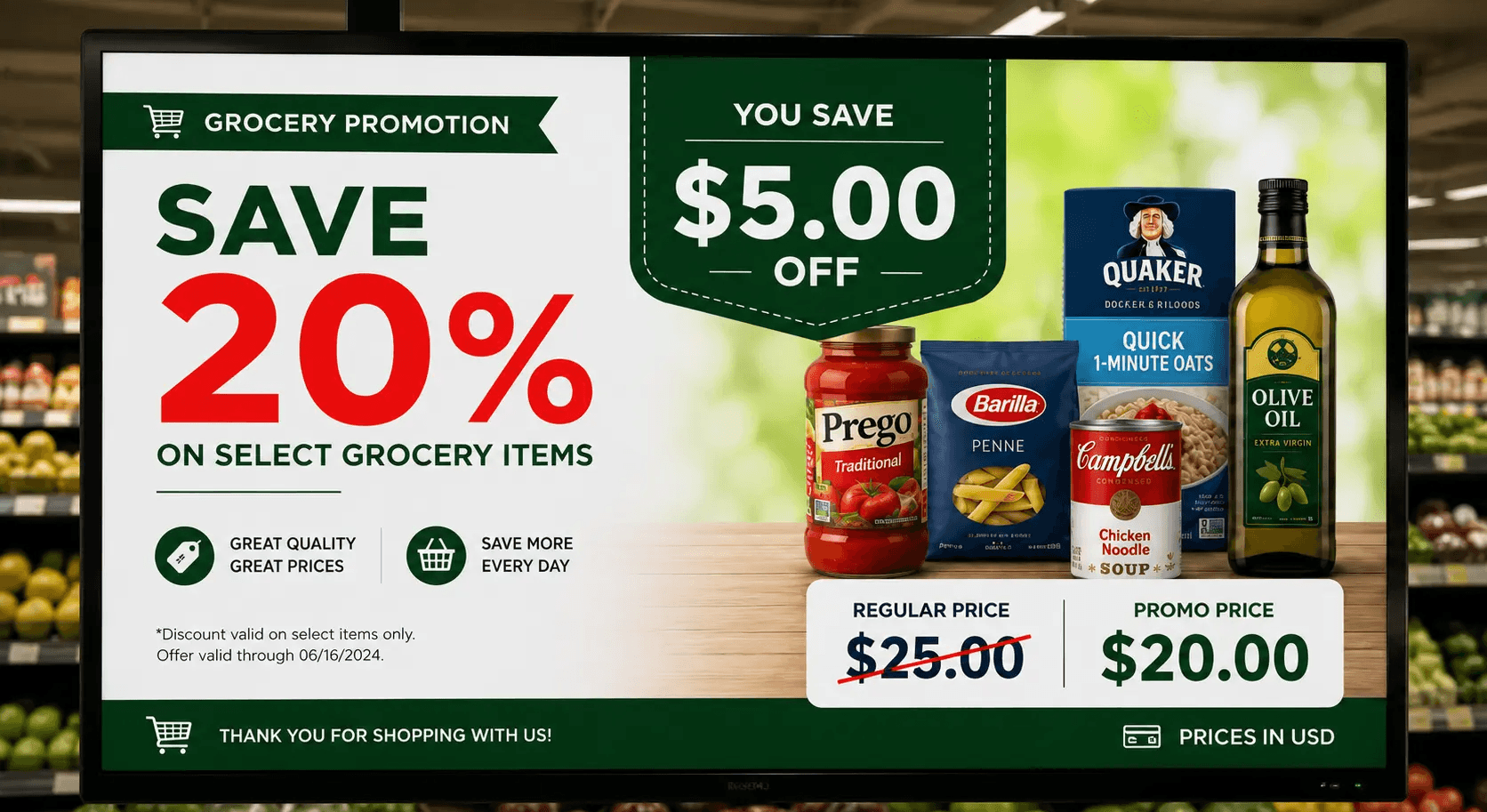
Supermarkets win or lose on basket size, and most of what ends up in the cart is decided in the aisle, not on a list. Research from the University of Wisconsin-Madison found that unplanned purchases account for about 68% of items bought on major shopping trips and 54% on smaller ones.
That makes the store floor the single biggest lever a grocer has, and digital signage is how you pull it at the moment of decision. Stores using in-store screens have reported basket-size lifts of roughly $2-$3 per visit, which compounds quickly across thousands of weekly transactions.
Why Signage Works In Grocery Stores
Grocery shoppers move slowly, revisit the same store weekly, and make dozens of small decisions per trip. Each of those decisions is a chance to trade up, add an item, or try something new. Digital screens influence those moments because they are timely, visual, and placed exactly where the choice happens.
Notably, nearly 30% of shoppers cite in-store digital displays as a key influence on their purchase decisions, and checkout and point-of-sale screens consistently achieve the highest impulse conversion rates because shoppers are stationary and already in a buying mindset.
Where To Place Screens And What To Show
Entrance and produce: The first zone sets the tone. Feature seasonal produce, fresh-baked items, and weekly highlights to start the trip with high-margin, high-appeal categories.
Aisle ends (end-caps): End-caps are the highest-traffic decision points in the store. Use screens to feature promotions, recipe pairings, and complementary items ("pasta on sale, here's the sauce and parmesan to match"), which lifts units per transaction.
Deli, butcher, and bakery counters: Dwell time is high while customers wait. Show prepared-meal ideas, daily specials, and add-on suggestions to convert waiting into buying.
Checkout: The classic impulse zone. Stationary shoppers in a buying mindset respond strongly to last-second add-ons and loyalty prompts. When linked to queue systems, signage can also cut perceived wait time by up to about 35%, improving the experience while it sells.
A content note that matters: a study across Western European grocery stores found that inspirational and emotional content (recipes, serving ideas, freshness) outperformed straight price-cut messaging for impulse conversion. Lead with appetite and ideas, not just discounts.
How Digital Beats Printed Signage in Grocery Stores
Prices and promotions change constantly in grocery stores, and printed signage can't keep up. Digital signage updates instantly across the store and across locations, so weekly specials, dayparted promotions (breakfast items in the morning, dinner solutions at 5 PM), and sudden price changes all go live in minutes.
That speed reduces the labor of swapping printed tags and keeps the floor accurate, which protects trust at the shelf.
Benefits for Supermarket Operators
Bigger baskets: timely prompts lift units per transaction and average spend.
More impulse conversion: especially at end-caps and checkout, where shoppers are primed to buy.
Faster and cheaper updates: instant changes replace constant reprinting.
Better experience: queue-linked screens reduce perceived wait and add useful information.
New revenue: idle screen time can be monetized through advertising (see below).
Turn Screen Time into a Second Revenue Stream
Supermarkets have something advertisers want: high foot traffic and a captive, buying-ready audience. Through the Beam Network, a store can make available screen time open to approved third-party advertisers (CPG brands, local businesses), with Beam handling advertiser relationships, campaign delivery, and operations. For a high-traffic grocer that turns existing screens into an income source on top of the basket-size gains, the kind of passive return that pays back the hardware.
Best Practices To Consider
Lead with appetite and ideas; use price cuts as support, not the whole message.
Match content to the zone and the daypart.
Keep each screen to one clear idea; avoid cluttered layouts.
Refresh weekly specials reliably so the floor stays accurate.
Use high-quality food imagery; grocery is a visual, craving-driven category.
Common Mistakes To Avoid
Relying only on discount messaging (it underperforms inspirational content).
Overcrowded screens that shoppers can't parse at a glance.
Static content that never changes, training shoppers to ignore screens.
Inconsistent pricing between screens and shelf tags.
Ignoring checkout and end-caps, the highest-converting placements.
How Beam Helps
Beam lets supermarket operators manage every screen across every location from one dashboard: schedule weekly specials and dayparted content, keep pricing consistent storewide, and feature the recipes and pairings that drive bigger baskets. And through the Beam Network, idle screen time can earn advertising revenue, so the same screens that lift basket size also generate income.
Ready to turn your aisles into a sales channel? Start at usebeam.io.
Summary
Because most grocery purchases are decided in the aisle, digital signage is one of the most direct ways for supermarkets to lift basket size and impulse conversion.
Place screens at entrances, end-caps, service counters, and checkout; lead with inspirational, visual content; keep specials current; and use the Beam Network to earn advertising revenue from idle screen time.
Sources
University of Wisconsin-Madison, Impulse buying in grocery stores: https://news.wisc.edu/impulse-buying-still-prevails-in-grocery-stores
NowSignage, How to increase supermarket sales with digital signage: https://www.nowsignage.com/2026/04/how-to-increase-supermarket-sales-with-digital-signage
IT Retail, Supermarket signage best practices: https://www.itretail.com/blog/supermarket-signage
How does digital signage increase supermarket sales?
By prompting unplanned and trade-up purchases at the point of decision. With about 68% of items on major trips bought unplanned, well-placed screens lift units per transaction and basket size.
Where should supermarkets place screens?
Entrances and produce, aisle end-caps, deli/bakery/butcher counters, and checkout are the highest-traffic and highest-dwell decision points.
What content works best in grocery stores?
Inspirational, visual content (recipes, pairings, freshness) outperforms straight price cuts for impulse conversion; use discounts as support.
Can supermarkets earn money from their screens?
Yes. Through the Beam Network, stores can run approved third-party ads during available screen time for additional revenue.
Can content be updated across multiple stores at once?
Yes. Beam updates content and pricing across all locations from one dashboard in minutes.