How to Open a Gym: Costs, Steps, and What to Know Before You Launch
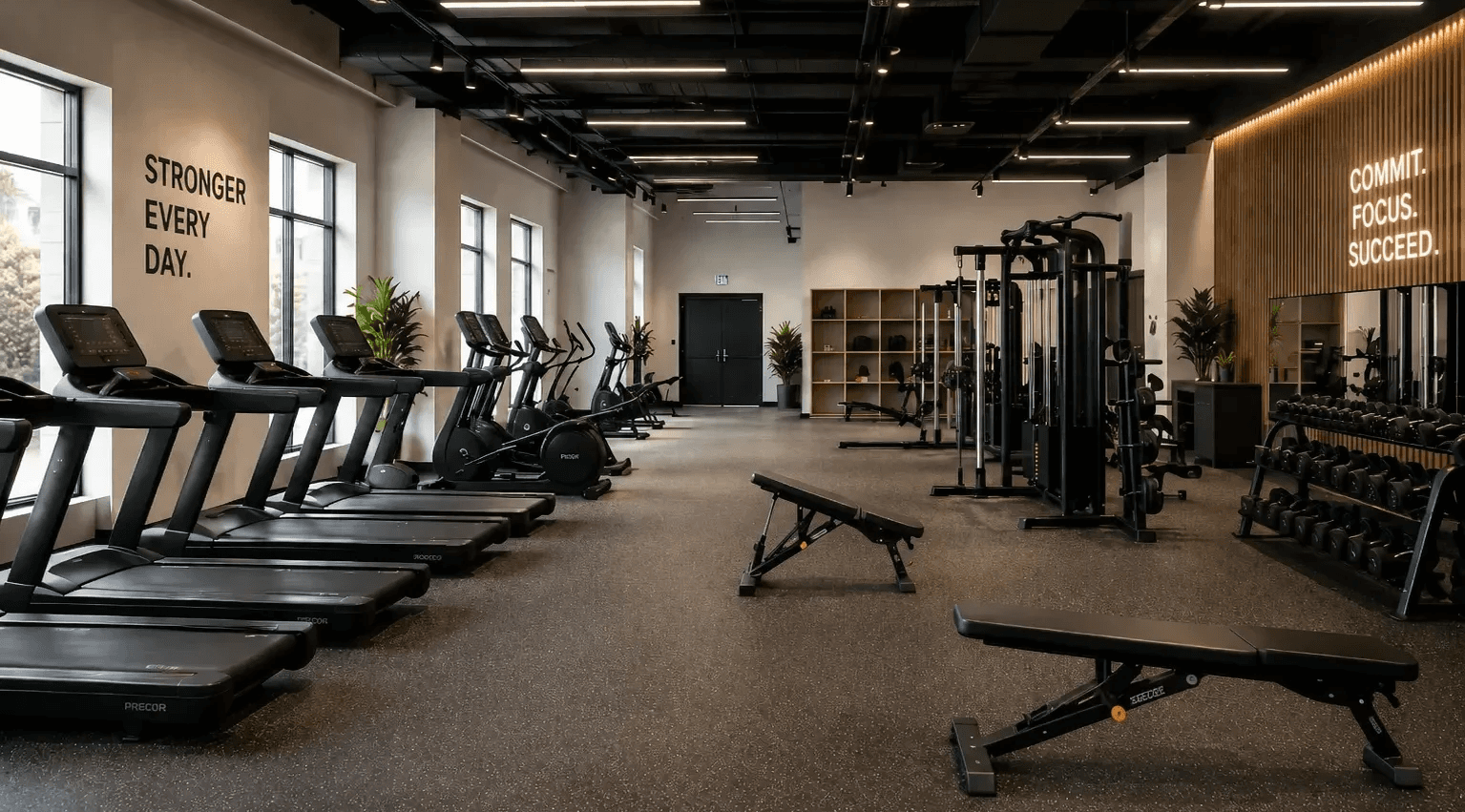
Opening a gym takes a concept, a business plan, funding, a location, licenses, equipment, staff, and a launch plan, usually over 6 to 12 months. Demand is at a record high. A record 81 million Americans belonged to a gym or fitness studio in 2025, about 26 percent of the population age 6 and up, according to the Health & Fitness Association.
This guide covers the steps, the real costs, and the numbers to know before you sign a lease.
Choose your gym model
Pick a model first, because it drives cost, space, and staffing. Common models include a boutique studio, a 24-hour access gym, a big-box full-service club, a CrossFit box, and a personal training studio. Match the model to local demand and to the price your market will pay.
Write a business plan and set a budget
Turn the concept into numbers: market research, membership pricing, staffing, marketing, and a financial model with startup costs, monthly overhead, and a break-even point. Budget for working capital, since memberships build slowly in the first months.
Reality check on cost
Industry estimates put an independent gym at 50,000 to 250,000 dollars to open. A boutique studio can start near 15,000 to 50,000 dollars, a big-box club can pass 1,000,000 dollars, and a franchise commonly runs 200,000 to 500,000 dollars. Treat these as planning ranges, not quotes.
Startup cost by gym type
Gym type | Typical startup range |
Boutique or PT studio | 15,000 to 75,000 dollars |
Independent gym | 50,000 to 250,000 dollars |
Franchise | 200,000 to 500,000 dollars |
Big-box club | 1,000,000 dollars or more |
Secure funding
Most owners combine savings, an SBA or bank loan, and sometimes investors. Lenders want a business plan, projections, and owner equity. Raise enough to cover build-out, equipment, licenses, and three to six months of operating costs before memberships cover the bills.
Choose a location and sign a lease
Location drives visibility, parking, and member convenience. Check zoning, ceiling height, ventilation, and floor load for heavy equipment. Read the lease closely and negotiate a build-out allowance before you sign.
Register the business, licenses, and permits
Register your entity, then apply early for the approvals your area requires. Common ones include a business license, an occupancy permit, building and signage permits, and music licensing for classes and floor audio. Confirm the exact list with your local licensing office, and carry liability insurance and member waivers from day one.
Match the model to local demand and to the price your market will pay
Equip the floor
Equipment is your largest fixed cost. Balance cardio, strength, and free-weight zones to your model, and consider leasing or certified used gear to lower upfront spend. Plan the layout for flow, safety, and clear sightlines.
Set pricing and memberships
Price to your model and market. Boutique studios often charge two to four times a big-box membership, and they hold a large share of members. The U.S. fitness industry generated roughly 45 to 47 billion dollars in 2025. Build membership tiers, add-ons like personal training, and a clear cancellation policy.
Hire and train staff
Hire trainers, front-desk, and cleaning staff who fit your brand. Verify certifications and CPR training, and set service standards before you open. A soft launch lets the team rehearse check-in, classes, and safety routines.
Set up tech and screens
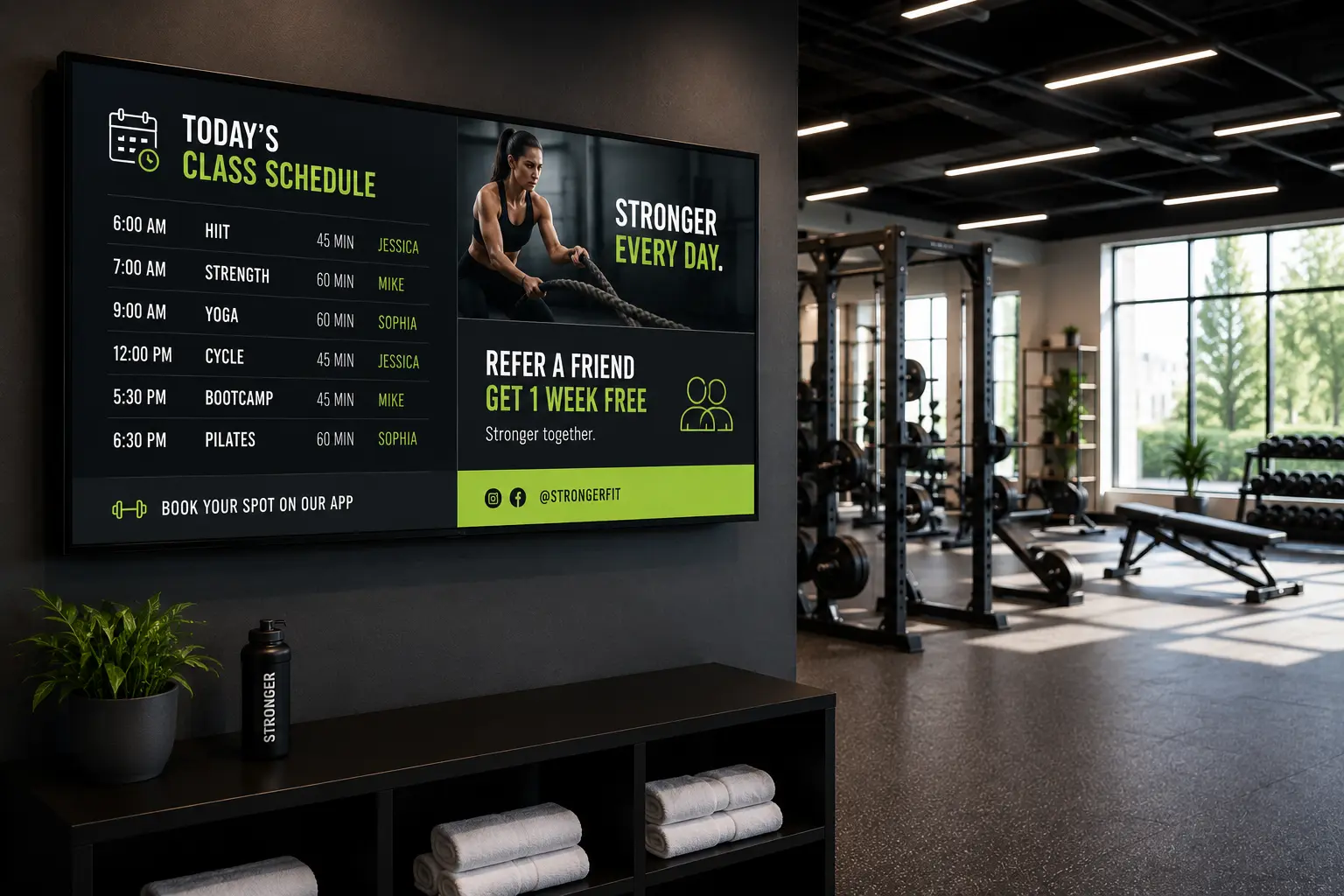
Choose management software for memberships, billing, and access control. Plan in-club screens early, since class schedules, promotions, personal-training offers, and safety guidance keep members informed and sell add-ons where people train.
Plan your launch
Presell memberships before you open. Set up your Google Business Profile, run local social ads, and offer founding-member rates. Retention is the real game, so plan onboarding, check-ins, and community events from week one. Ask happy members for honest reviews, and never pay for or incentivize them.
How Beam helps once you open
Beam turns your TVs and floor screens into managed digital signage you control from one dashboard, so class schedules, promotions, and personal-training offers update in minutes across every screen and location.
Retention and add-on revenue are where gyms win, and screens put those messages where members already look. The difference is what happens during idle time. Beam Network lets you open unused screen time to approved advertisers and earn passive income from screens you already run. You keep control, block competitors, and hold priority slots for your own content. Signage supports retention and upsells rather than guaranteeing them, and screen attribution is directional.
How Beam helps. One dashboard for schedules, promotions, and paid network ads, with full control over what runs on your screens.
Open smarter with Beam
Plan your screens alongside your build-out. See how Beam runs in-club signage and monetizes idle screen time at usebeam.io
Sources
How much does it cost to open a gym?
Industry estimates put an independent gym at 50,000 to 250,000 dollars, a boutique studio at 15,000 to 50,000 dollars, and a franchise at 200,000 to 500,000 dollars. Big-box clubs can exceed 1,000,000 dollars, depending on size, equipment, and location.
How long does it take to open a gym?
Most independent gyms take about 6 to 12 months from concept to opening. Leasing, build-out, and equipment delivery are the usual bottlenecks.
What licenses do I need to open a gym?
Requirements vary by location, and common ones include a business license, an occupancy permit, building and signage permits, and music licensing for classes and floor audio. Confirm the list with your local licensing office and carry liability insurance.
Is opening a gym profitable?
It can be, though memberships build over months, so working capital matters. Retention, ancillary revenue like personal training, and controlled fixed costs drive profit more than sign-ups alone.
Do I need digital signage to open a gym?
No, but screens earn their place quickly. They promote classes, sell personal training, and platforms like Beam let you offset costs by earning from idle screen time.