In-Store Digital Advertising: A Restaurant's Recipe For Success
What Is In-Store Advertising in Restaurants?
In-store advertising puts the right message in front of diners at the exact moment they decide what to order, and the numbers show it moves real revenue. Restaurants using digital menu boards commonly see average order value rise by up to about 29%, with featured items lifting 15-25% and combo attachment rates climbing 18-31% (industry studies; AIScreen).
Even McDonald's credited a roughly 6.1% same-store sales lift in part to dynamic digital boards. This guide covers what to display, where, and how to capture that upside.
What is in-store advertising in restaurants?
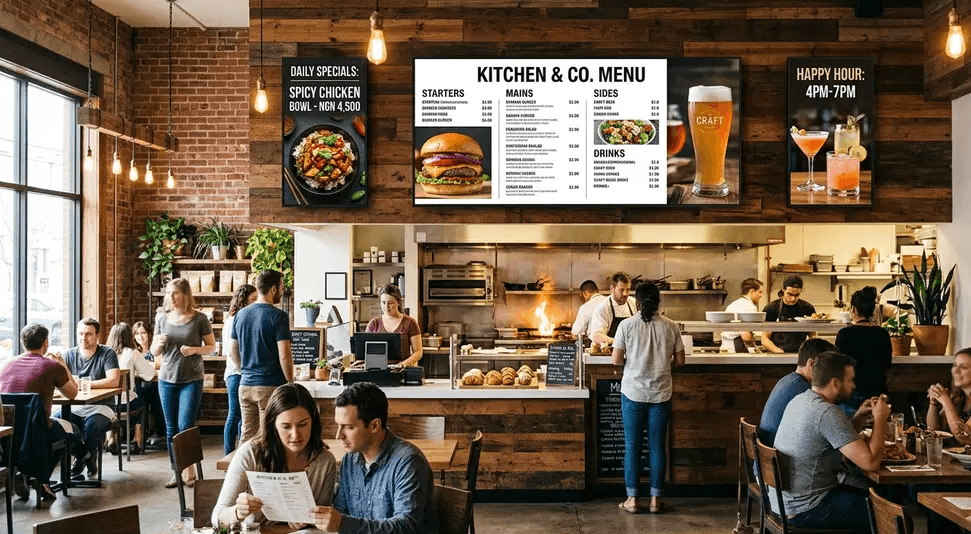
In-store advertising is promotional content placed inside the dining environment to influence ordering decisions:
Digital menu boards
Lobby and counter screens
Pickup-area displays, and
Table or QR signage.
It highlights menu items, offers, and seasonal campaigns at the moment customers are ready to order. Platforms like Beam let restaurants manage this across locations while keeping content fresh and consistent.
Why it works for restaurants
Diners decide fast; they scan the menu, glance around, and choose within a couple of minutes. Strategic in-store advertising guides those quick decisions toward the items you want to sell.
Influence decisions in real time
Customers act immediately on what they see.Promote high-margin items
Feature the dishes that improve profitability.Drive add-ons and upgrades
"Add fries for $2" or "Try our new dessert" lifts the check; digital boards push combo attach rates up 18-31%.Support seasonal and limited-time offers
Update instantly to create urgency.
Common placements, mapped to the dining journey:
Digital menu boards above the ordering counter (the decision point)
Entrance screens that highlight current promotions
Pickup areas that promote add-ons and beverages
Table or QR signage that encourages dessert and drink upgrades
Each placement supports a different stage of the visit.
How digital screens improve in-store advertising
1. Update In Real Time
Menus and promotions change instantly: breakfast in the morning, lunch specials midday, dinner combos at night. Dayparting alone has driven measurable check increases for major chains.
2. Present Food Visually
High-quality images help customers choose faster and crave more. A vivid shot of a sizzling steak or a rich dessert does more selling than text.
3. Manage Multiple Locations
Chains keep messaging consistent across branches while tailoring local promotions, all from one dashboard.
4. Scheduled Campaigns
Promotions run automatically by hour or day, reducing manual work for staff.
5. Stay Top of Mind
Consistent logo, tagline, and signature dishes build familiarity and repeat visits.
Content That Performs Well
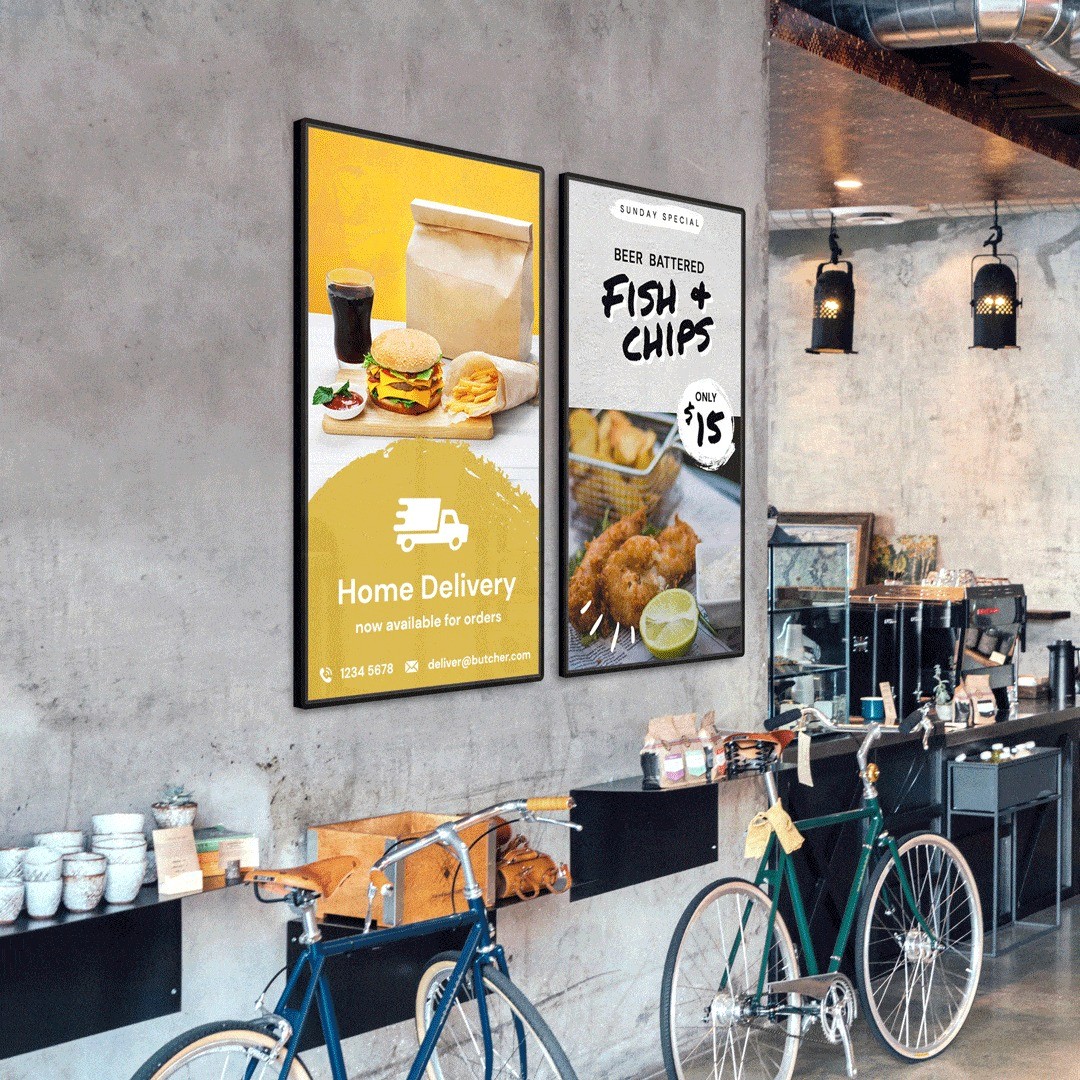
Effective restaurant advertising focuses on clear visuals and quick messaging. Restaurants see the best results when advertising content is clear, relevant, and timely.
Highlight Limited-Time Offers
Urgency drives action: "Weekend Burger Special," "Happy Hour 4-6 PM."
Use Motion and Visuals
Short animations and rotating slides capture attention in a busy room.
Keep Messaging Simple
Customers glance while waiting; clear text and strong images communicate in seconds.
A compliance note
If you display menu items with prices or calories, follow local menu-labeling rules (in the US, FDA calorie-disclosure requirements apply to chains with 20+ locations). Digital boards make compliance easier because you can update figures instantly, but make sure the required information is shown correctly.
Common Mistakes To Avoid
Too much information on one screen, which kills readability.
Outdated promotions that confuse customers and erode credibility.
Inconsistent branding across locations.
No scheduling, so the content doesn't match the daypart or traffic.
Poor placement: put screens where customers naturally look (counter, entrance, pickup, line).
How Beam Helps
Beam lets restaurants manage every screen across every location from one dashboard: schedule dayparted menus, push high-quality visuals, update prices and LTOs instantly, and keep branding consistent. The result is the kind of dynamic, well-timed merchandising that drives measurable lifts in average order value and combo attachment.
Ready to turn your screens into a sales channel? Start at usebeam.io.
Summary
In-store advertising guides customer decisions at the point of purchase, and digital signage makes it measurable: higher average order value, better combo attach, and stronger repeat visits.
Place screens along the dining journey, lead with appetizing visuals and clear offers, schedule by daypart, and keep it consistent across locations.
Sources
AIScreen, "Do Digital Menu Boards Increase Sales?"(https://www.aiscreen.io/digital-menu-board/increase-sales/)
Stream, "Static vs. Digital Menu Boards: Which Drives More Restaurant Sales?" (https://explorestream.com/static-vs-digital-menu-boards-restaurant-sales/)
Samsung, "Restaurant Digital Menu Boards." (https://vxt.samsung.com/digital-signage-solutions/restaurant-menu-boards)
What is in-store advertising for restaurants?
Promotional messages displayed inside a restaurant to influence purchases, usually via digital menu boards and in-location screens.
How does it increase sales?
It highlights promotions, add-ons, and featured items at the point of decision. Digital menu boards have been shown to lift average order value by up to about 29% and combo attach by 18-31%.
What content works best?
High-quality food images, limited-time offers, combo deals, and simple callouts like "Try our new item."
Can restaurants manage multiple locations?
Yes. Platforms like Beam update content across multiple locations from a single dashboard.
Where should screens go?
Ordering counters, entrances, waiting areas, and pickup stations, where customers naturally focus.
How often should content change?
Typically weekly or seasonally, with daily adjustments for specials and dayparts.