The Q4 Screen Playbook: What Local Businesses Should Put on Their TVs From September Through December
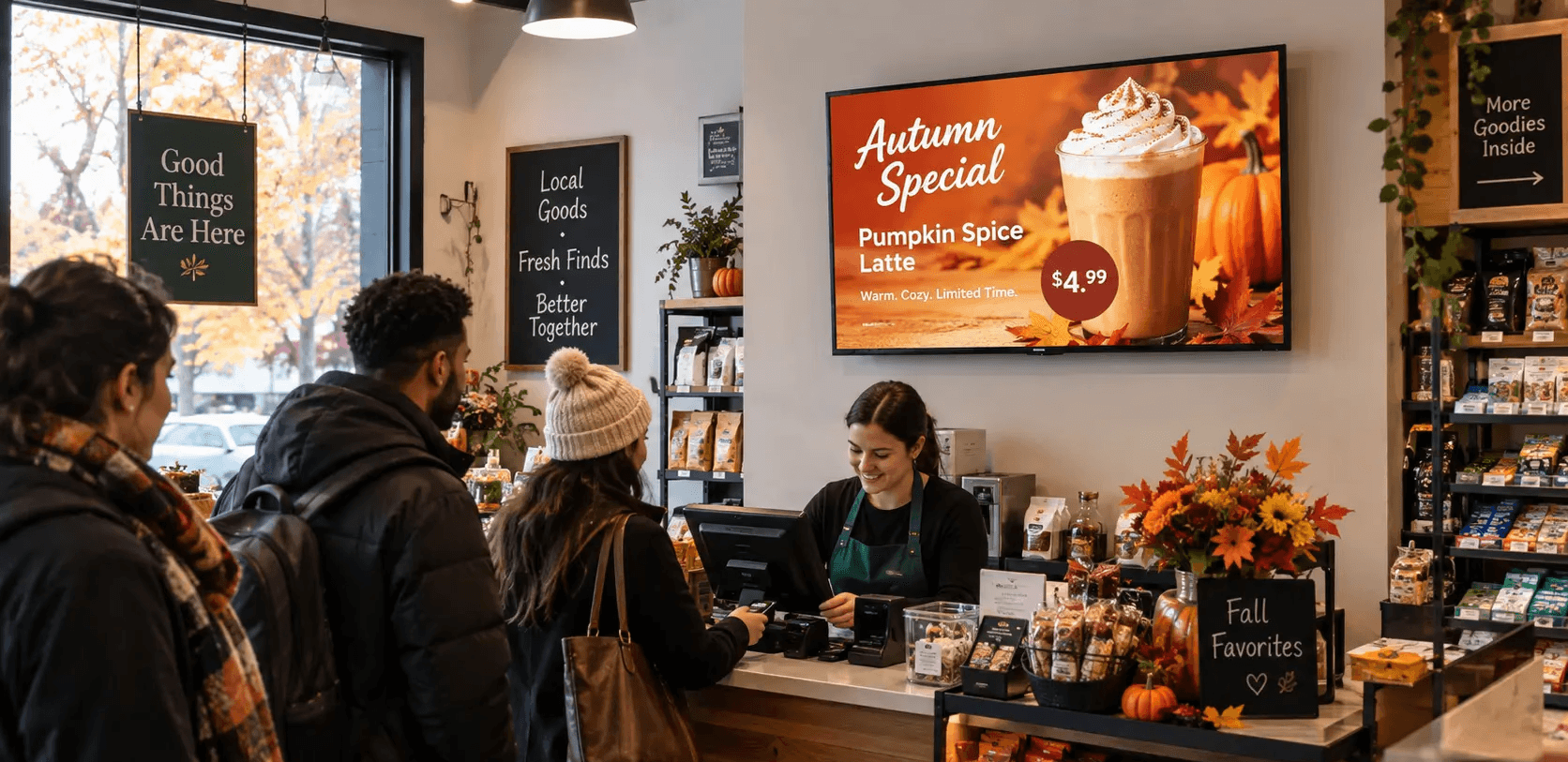
Start reprogramming your screens in September, not December. U.S. holiday retail sales passed $1 trillion for the first time in 2025, growing 4.1 percent from November 1 through December 31, according to the National Retail Federation. Most of that money is decided before Thanksgiving, and 42 percent of shoppers told NRF they begin browsing and buying before November even starts. If your in-store screens are still running summer promos in October, you are spending your best display weeks of the year on stale content.
This playbook is for owners and managers of local venues with TVs already on the wall: restaurants, salons, gyms, convenience stores, auto shops, boutiques, clinics. The KPI is not "engagement." It is average transaction value, prepaid gift card sales, appointment bookings held through the holidays, and, if you open your idle screen time to advertisers, revenue per screen.
September: build the calendar before the rush
September is setup month. Pull last year's sales by week and mark the three or four dates that actually move your numbers. For most local businesses that list is short: a Halloween weekend, the Black Friday through Cyber Monday block, the gift card surge in the last ten days of December, and one slow midweek stretch you want to fill.
Then build the assets once. Six to eight templates, each with the price and the date as editable fields, will carry you through December. Schedule them now with start and end dates so nothing expires on the wall.
What to run in September
Loyalty sign-up prompts, so your November list is bigger.
Early booking messages for anything capacity-limited, such as holiday party space, grooming slots, or service appointments.
Staff hiring calls, since Q4 hiring closes early in retail and hospitality.
October: the season starts earlier than you think
Halloween is now a September buying event for many shoppers. NRF found that 49 percent of Halloween shoppers start before October arrives, up from 34 percent a decade ago. Treat October as the opening of Q4, not a warm-up.
October is where you capture the shoppers who are trying to spread their budget, and 54 percent of early shoppers say that is exactly why they start
Run seasonal bundles, gift card teasers, and any "book now for December" message. If you sell services, put the last available December date on screen and update it weekly. Scarcity that is true is the most effective thing you can display.
November: sell the bundle, not the item
Black Friday through Cyber Monday is the one window where local venues compete directly with national retail on price. You will usually lose that fight. Win the basket instead.
Show bundles with a single price rather than a percentage off.
Put add-on items on the screen nearest the register or checkout line.
Rotate a maximum of five messages per loop so each one gets seen.
Keep every promo readable in under four seconds from six feet away.
Key stat: digital out of home advertising revenue rose 18.5 percent year over year in Q2 2026 and now makes up 38.4 percent of all U.S. out of home revenue, per OAAA. Advertiser demand for in-venue screens is strongest in Q4, which matters if you plan to monetize your idle screen time
December: gift cards, hours, and the January bridge
Two messages carry December. First, gift cards, because they convert last-minute traffic into prepaid revenue you recognize in January. Second, holiday hours, because a wrong hour on a door costs you a visit and a bad review.
In the last week of December, start the January bridge: a membership offer, a service package, or a rebooking prompt that gets holiday traffic to commit to a return date. Local businesses that leave screens dark between December 26 and January 2 lose the easiest retention message of the year.
Month | Primary screen message | KPI to watch |
September | Loyalty rewards + early booking | List growth |
October | Seasonal bundles + gift card teasers | Average transaction value |
November | Bundles + add-ons at point of sale | Units per transaction |
December | Gift cards + holiday hours + January offers | Prepaid revenue + rebooking rate |
The honest limit on measurement
In-store screens are hard to attribute cleanly. You will rarely prove that a specific loop caused a specific sale. What you can do is run a controlled comparison: promote one bundle on screen for two weeks, hold a comparable bundle off screen, and compare attach rates. Treat the result as directional evidence, not proof. Anyone selling you exact signage ROI for a local venue is overstating what the data supports.
How Beam helps
Beam runs your Q4 calendar from one place. You schedule the September through December loop once, with dated start and stop times, and push it to every screen without visiting them.
The part most signage tools do not offer: Beam also lets you open your unsold screen time to approved third-party advertisers through the Beam Network. Your own promos take priority, and the leftover inventory earns. That matters most in Q4, when advertiser demand for in-venue screens peaks and your screens are running longer hours anyway. You keep control over which categories are allowed near your business.
How Beam helps: schedule your entire Q4 loop in one sitting, keep your promotions in first position, and let approved advertisers fill the remaining slots so the screen pays for itself during your busiest quarter
Start now
Book a walkthrough at usebeam.io and get your September through December schedule loaded before the first Halloween shopper walks in.
Sources
When should a local business start changing screen content for the holidays?
September. Building templates and scheduling dated content in September means October and November require edits rather than new work.
How many promotions should run in one loop?
Five or fewer during peak season. Longer loops reduce how often any single message is seen by a customer who is only in your venue for a few minutes.
Do I need new hardware for a seasonal campaign?
No. Most venues run Beam on the commercial or consumer displays they already own, with a small media player attached.
Can I make money from my screens during the holidays?
Yes, by opening unsold screen time to approved advertisers through the Beam Network. Earnings depend on your foot traffic, location, and hours, so treat any figure as an estimate until your screens have run for a full month.
Will running third-party ads push out my own promotions?
No. Your content holds priority in the schedule and advertiser spots fill the remaining time.
How do I know if the screens worked?
Compare a promoted item against a similar unpromoted item over the same period, and track attach rate or average transaction value. The result is directional, not conclusive.