How Auto Repair Shops Use Digital Signage to Lift Repair Order Value and Earn From the Waiting Room
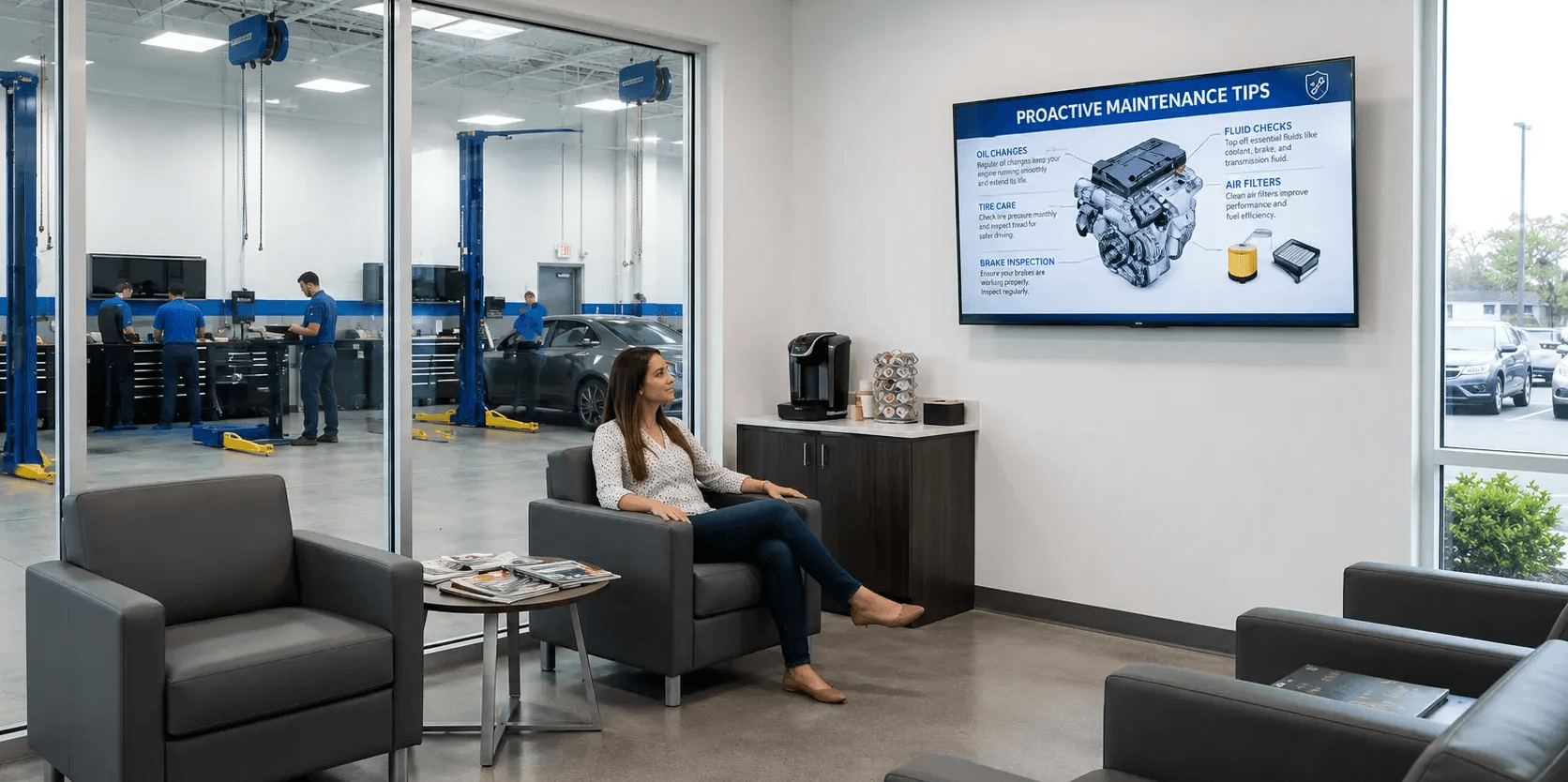
A lobby screen running clear, well-timed service content can raise your average repair order and turn idle wait time into a second income line. Digital out-of-home ads drive action from 76% of the people who see them, according to an OAAA and Comscore study.
In a repair-shop lobby, where customers sit captive for 30 minutes to a few hours, that attention is yours to use.
This guide is for the shop owner or service manager who runs their own screens and wants two outcomes: more approved upsells per ticket, and revenue from screen time you are already paying to power.
Why The Waiting Room Is Your Most Underused Sales Tool
Auto service involves real wait. Mass-market vehicle owners now wait an average of 5.2 days just to get a service appointment, up from 4.8 days a year earlier, per the 2024 J.D. Power U.S. Customer Service Index Study. Once they arrive, they sit through the diagnosis and the work. That captive window is when the upsell decision gets made.
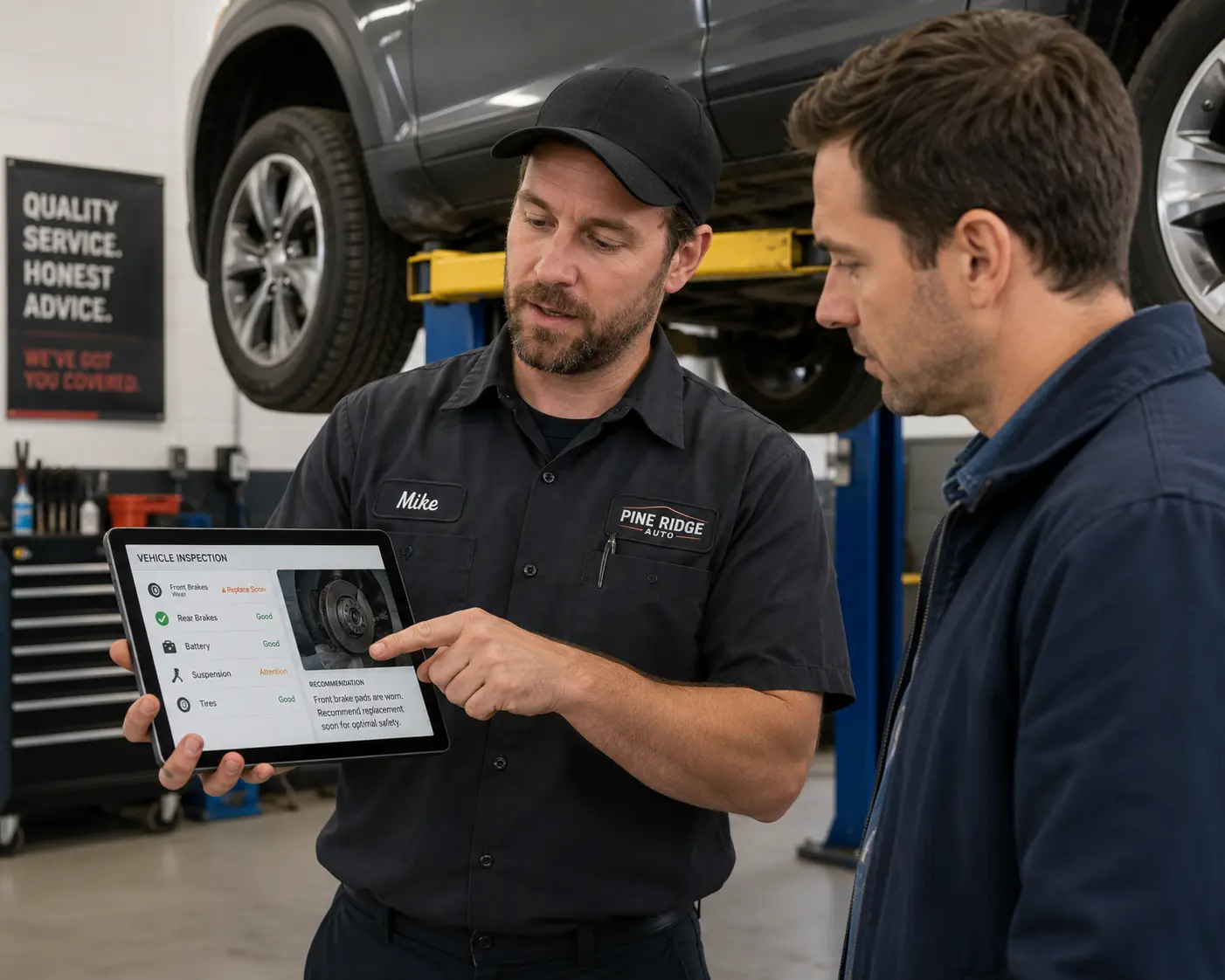
Most shops fill the wait with a muted cable channel that sells nothing. A purpose-built screen does the opposite. It explains why a cabin air filter matters, shows what worn brake pads look like, and previews the maintenance due at the customer's mileage. The advisor stops cold-pitching and starts confirming what the screen already framed.
The KPI to Watch: Average Repair Order, Not "Engagement"
For a repair shop, the number that pays the bills is the average repair order, the total dollars per ticket, plus the approval rate on recommended service. A waiting-room screen supports both. When a customer has already seen a plain explanation of a coolant flush or a tire rotation, the recommendation lands as information, not pressure.
Two other KPIs move alongside it.
Reviews: A timed prompt to leave honest feedback can lift your count, which feeds the local search results that new customers see.
Rebooking: A screen showing the next service interval gives advisors a natural reason to schedule the return visit before the customer leaves.
The advisor stops cold-pitching and starts confirming what the screen already framed.
What To Put On The Screen
Keep it short, useful, and on a loop that matches a typical wait. Some options include:
Service education
Brief clips on brakes, fluids, filters, and alignment, with simple before-and-after visuals.
Maintenance reminders
Mileage-based service intervals so customers self-identify what they are due for.
Trust builders
Certifications, warranty terms, technician bios, and your review prompt.
Offers
Seasonal checks, fleet accounts, and financing for larger repairs.
Honest limit:
Signage influences the decisions made in your lobby. It does not directly change your Google ranking, and attribution for in-store screens is directional, not exact.
Treat lifts in approval rate and review volume as signals, not guarantees, and confirm with your shop management system over time.
How Beam Helps
Beam turns the TVs you already run into managed signage, then lets you open idle screen time to approved advertisers and earn from it. That second part is what sets Beam apart.
Beam runs your service content from one dashboard, so you can update offers across one bay or ten locations without touching a USB stick. You schedule the loop, swap seasonal promos, and keep certifications current remotely.
The differentiator is the Beam Network. When your screen is not pushing your own message, you can make that time available to vetted third-party advertisers and collect revenue on placements.
For a shop owner, that means the lobby TV stops being a cost and starts paying for itself. You stay in control: you approve what runs, and your own service content always comes first. Here you are acting as a seller of screen time, which is separate from your main job of educating the customer in the chair.
A Simple Way To Start
Mount one screen where customers actually sit, not above the service counter where nobody looks. Build a 20- to 30-minute loop weighted toward the services with the best margin and the clearest visual story, such as brakes and fluids.
Add a review prompt and a next-service reminder. After a month, check whether the approval rate and average repair order have moved, then adjust the loop.
Ready To Make Your Waiting Room Work
Turn the screen you already have powered into a tool that lifts repair orders and earns ad revenue. See how the Beam Network works for auto repair shops at usebeam.io.
Sources
Will a waiting-room screen actually increase my average repair order?
It can, by framing recommended services before the advisor talks to the customer. The lift varies by shop and content, so track approval rate and average repair order in your management system rather than assuming a fixed gain.
How is Beam different from just plugging a TV into a streaming stick?
A streaming stick plays content but earns nothing, and is hard to manage across locations. Beam manages your content centrally and lets you sell idle screen time to approved advertisers for added revenue.
Do I lose control of what shows on my screen if I join the ad network?
No. You approve the advertisers and placements, and your own service content takes priority. Network ads run when you choose to open up.
Does digital signage improve my Google ranking?
Not directly. Signage can prompt more reviews and branded searches, which support your local presence, but it does not change search rankings on its own.
What content works best in an auto repair lobby?
Short service explainers, mileage-based maintenance reminders, trust signals like certifications and warranties, and a review prompt. Keep clips brief and loop them to match a typical wait.
How many screens do I need to start?
One well-placed screen where customers sit is enough to test. Beam lets you add more bays or locations later and manage them from the same dashboard.