How Convenience Stores Use Digital Signage to Lift Basket Size and Earn From Idle Screens

Convenience stores can put their screens to work two ways: lift sales on high-margin items at the counter, and earn money by renting idle screen time to advertisers. The average US convenience store rings up about 1,484 transactions a day, across 152,255 stores nationwide (NACS, 2025). That is a steady stream of attention at the register, the coffee station, and the fuel island, and most stores still leave it on a static poster or a dark TV.
Your counter screen is your highest-traffic shelf
In a convenience store, the money is in foodservice. Foodservice, which covers prepared food and dispensed drinks, made up 38.9% of in-store gross profit in 2025, the single largest in-store profit category (NACS). That is the category to feature on screen, because a coffee, a hot sandwich, or a fountain drink carries far better margin than a packaged snack.
A screen at the decision point can move those items. A peer-reviewed study in the Journal of Marketing found that digital signage raised the likelihood of buying a featured product by about 8.1% on average, with bigger effects for new and low-priced items. Treat that as directional, not a promise. The screen nudges a choice the shopper was already close to making.
The number to watch is average transaction value, plus your foodservice attach rate: how often a fuel or drink buyer adds food, and how often a coffee buyer adds a pastry.
What to put on the screens
Keep the rotation short, current, and tied to margin:
Coffee and hot food deals near the register and the coffee station.
Combo prompts that add one item, such as a coffee with a breakfast roll or a hot dog with a fountain drink.
New and limited-time items that shoppers have not seen before.
Loyalty signups, app downloads, and member-only prices.
Store services such as ATM, lottery, and bill pay.
Keep every price and offer on screen accurate, honor it at the register, and follow your local pricing and labeling rules.
The second revenue stream: rent your idle screen time
Here your store becomes a seller. Most of the day your screens promote your own products. The rest of the time they sit idle, and that idle time has real market value.
The demand is there. Digital out-of-home ad revenue grew 10.5% in 2025 and now makes up 36.3% of a record $9.46 billion out-of-home market (OAAA). Advertisers pay for local screens in high-traffic places, and few formats match a convenience store for daily foot traffic. Opening a few slots per loop to approved advertisers turns a screen that costs you money into one that pays you back.
Most of the day, your screens sell your own products. The rest of the time, they can pay you
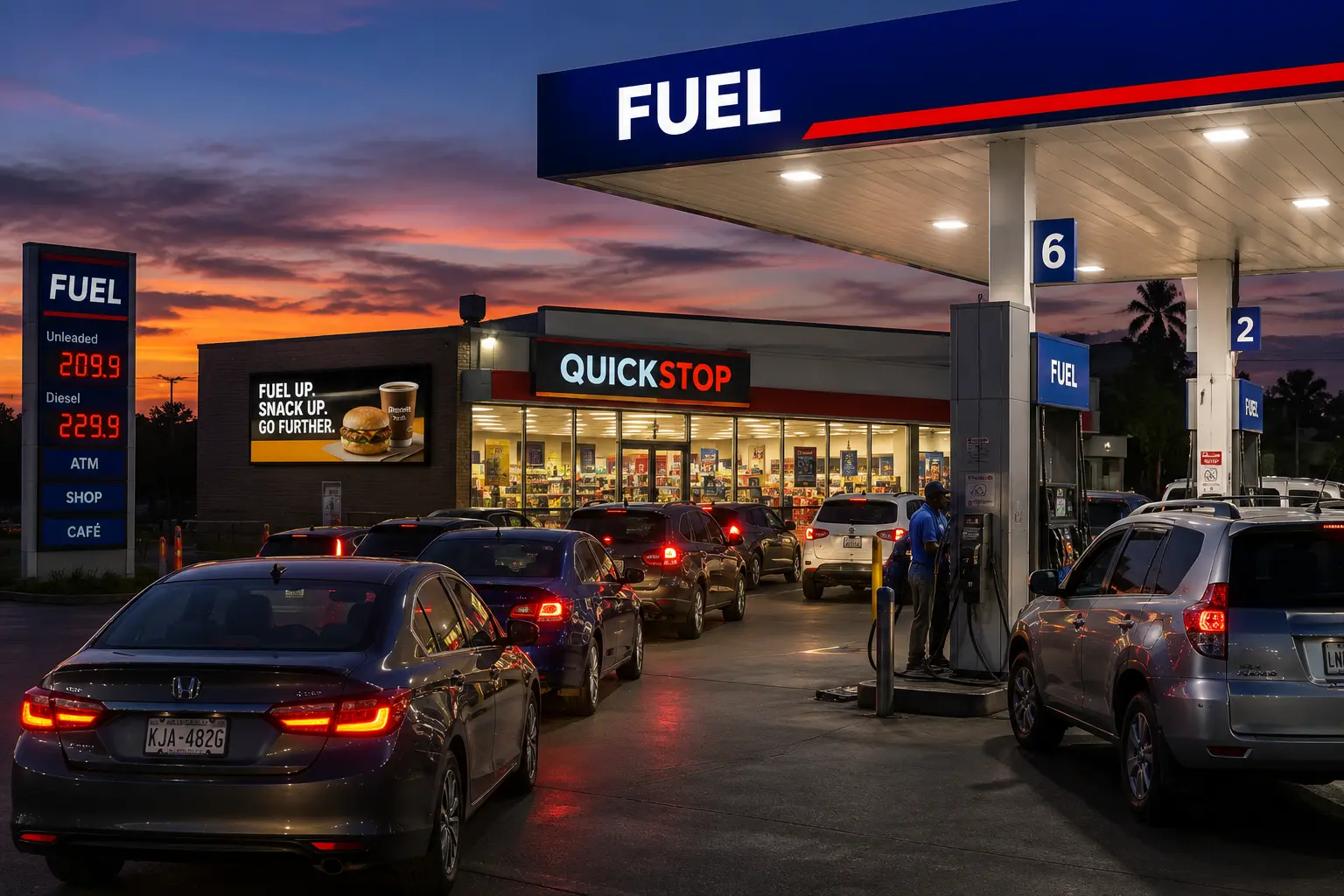
How Beam helps. Beam runs your in-store promotions and connects idle screen time to its advertiser network, so one TV both sells your foodservice and earns ad revenue.
How Beam helps convenience stores
Beam is digital signage with a built-in way to earn. You manage content for one store or a whole chain from a single dashboard, and push a new coffee promo to every location in minutes. You decide how much screen time stays on your own products and how much opens to the Beam Network, the pool of approved third-party advertisers. You keep control of what runs, and you collect a share of the ad revenue from the slots you release.
For a multi-site operator, that means one breakfast offer live across every store by 6 a.m., and a second income line from screens that used to show nothing.
Be honest about measurement
Attribution for signage and DOOH is directional, not exact. You will not get a clean click-to-sale trail in a store. Measure what you can: compare unit sales on a featured item for two weeks before and after, watch foodservice attach in your register data, and use a code or a loyalty offer when you want a cleaner read. Small, steady lifts on high-margin items are the realistic win.
Turn your screens into a second register
See how Beam helps convenience stores promote foodservice and earn from idle screen time at usebeam.io.
Sources
NACS, U.S. Convenience Store Count Stands at 152,255 (2025): https://www.convenience.org/Media/Press-Releases/2025-Press-Releases/U-S-Convenience-Store-Count-Stands-at-152,255
NACS, U.S. Convenience In-Store Sales Top $340 Billion, foodservice share of in-store gross profit (2025): https://www.convenience.org/stay-current/news/2026/april/15/u-s-convenience-in-store-sales-top-$340-billion
OAAA, Out of Home Advertising Revenue Reaches Record $9.46 Billion (2025): https://oaaa.org/news/out-of-home-advertising-revenue-reaches-record-9-46-billion/
Herhausen, de Jong and Grewal, In-Store Advertising with Digital Signage, Journal of Marketing (2026): https://journals.sagepub.com/doi/10.1177/00222429251351578
Do I need to buy new TVs?
Usually not. Most stores can use existing screens with a media player and the Beam software, so you avoid a big hardware bill to start.
Will screens actually lift sales?
They can move featured, high-margin items at the margin. Independent research points to a lift in the range of 8% on featured products, larger for new and low-priced items, though results vary by store and placement.
How much can I earn from the Beam Network?
It depends on your location, foot traffic, screen count, and how many slots you open to advertisers. Beam shares the revenue from ads that run on your screens, so earnings rise with traffic and fill rate.
Do the screens still work if the internet drops?
Yes. Content is stored on the player and keeps playing offline, then syncs new updates when the connection returns.
Can I run my own promos and paid ads on the same screen?
Yes. You set how much of each loop stays on your products and how much opens to the Beam Network, so the same screen sells your food and earns ad income.