How Car Dealerships Use Digital Signage to Recapture Declined Service Work and Earn From Lounge Screens
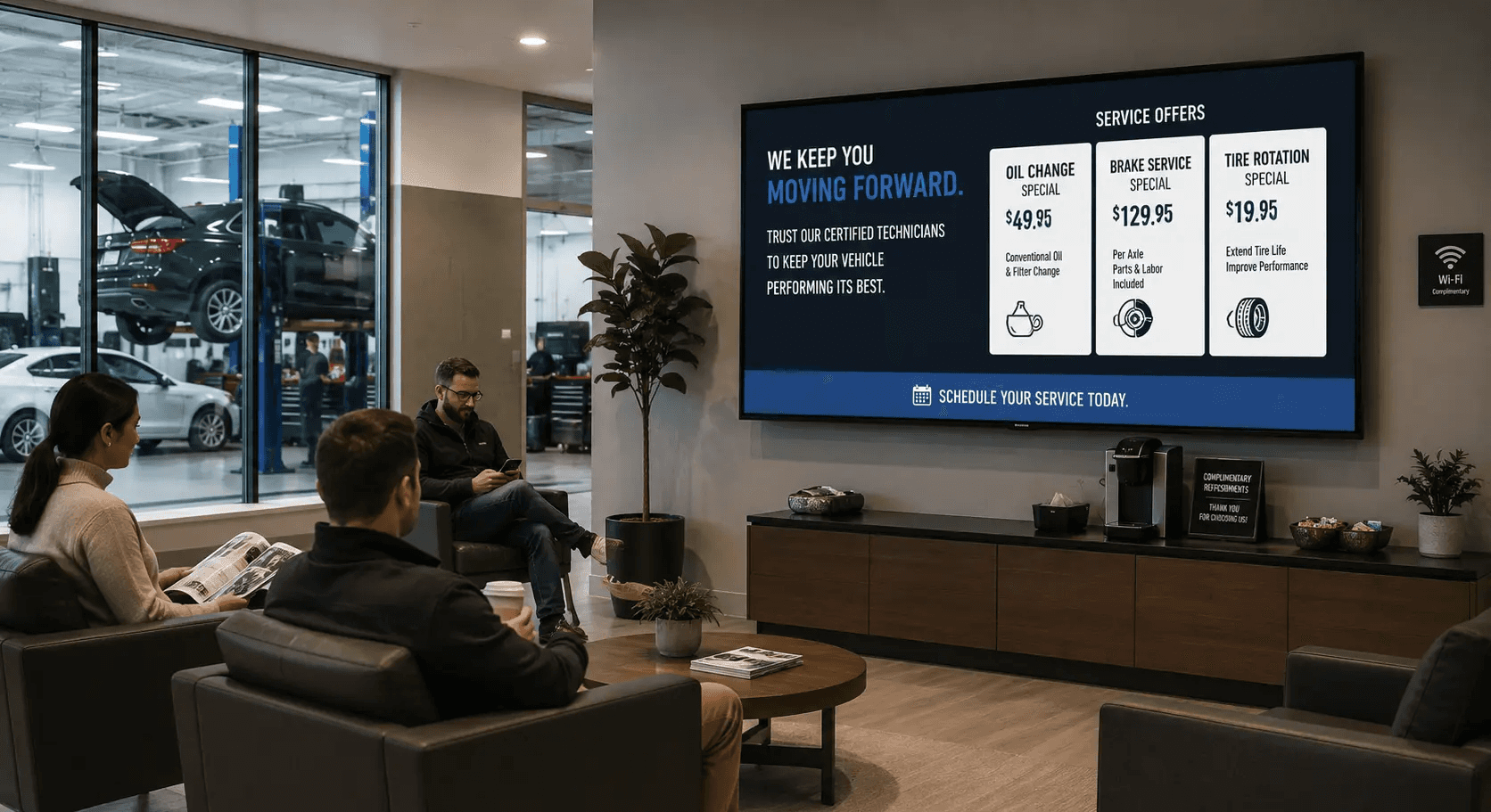
A service lounge is the longest uninterrupted stretch of customer attention a dealership gets all year, and most stores fill it with cable news. More than 75 percent of service customers say a comfortable lounge is critical to their overall satisfaction, and 53 percent are willing to wait on-site rather than leave, according to CDK Global research. Digital signage uses that wait to put tire pricing, declined-service reminders, and menu specials in front of the customer while they are still on your property and still able to say yes.
The number this actually moves is absorption, not "engagement"
Fixed operations carry the store. Service and parts generate roughly half of total dealership gross profit on about 13 percent of revenue, and the national service absorption rate sat at 63.9 percent in August 2025 against NADA's 115 percent target. Every point of absorption you gain comes from the same three levers: hours per repair order, effective labor rate, and customer-pay retention.
Lounge screens work on the first and third of those. A customer whose tires measured at 4/32 has the length of the wait to see a set price with an install quote before the advisor comes back. You are not creating new demand. You are reducing the number of "let me think about it" answers that never come back.
You are not creating new demand. You are reducing the number of declines that never come back
Speed is the industry's sore spot. J.D. Power's 2026 U.S. Customer Service Index Study found dealership service satisfaction holding at 868 on a 1,000-point scale, with speed and convenience named as the areas most in need of improvement. A screen will not make the job faster. It makes the wait feel shorter and gives the customer something to act on, and CSI scores feed manufacturer money.
What to run on a service lounge screen
Keep the loop short and the offers specific. A ninety-second rotation is plenty.
Menu pricing for the four or five jobs you decline most (alignment, tires, brake fluid, induction service)
Live or estimated wait status so customers stop asking the advisor
Tire brand pricing with an install-included figure, not a "call for quote"
Technician credentials and factory-trained badges, which justify your labor rate
Loyalty and prepaid maintenance plan terms in plain numbers
Trade equity messaging for customers whose vehicle is worth more than they think
Rule of thumb: if an advisor has to explain it twice a day, it belongs on the screen. If it needs a signature, it belongs on the advisor
The showroom screen has a different job
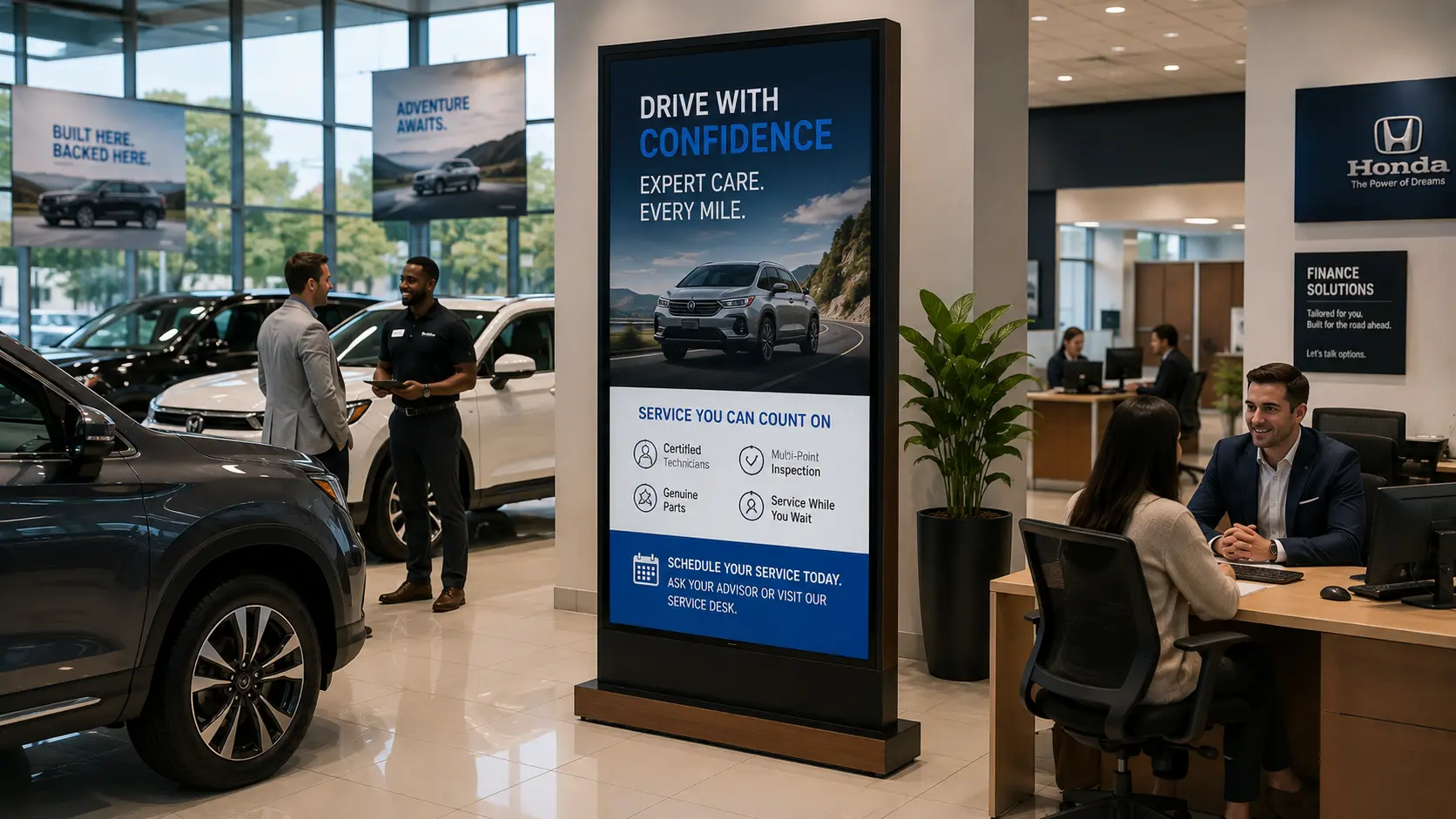
Sales floor screens should not run the service menu. Put inventory highlights, lease and finance programs, delivery timelines, and accessory packages there. Split the two loops, because mixing them dilutes both.
Where signage falls short, honestly
Attribution is the weak point. You will not get a clean click-to-close path from a lounge screen to a signed repair order. The practical approach is directional: run a screen-only offer code for sixty days, track declined-service recapture rate and hours per repair order against the prior period, and accept that other variables moved too.
Two more limits worth stating. Signage does not change your Google rankings, though it can prompt the branded searches and review activity that help local visibility indirectly. And it will not fix a lounge that is dirty or an advisor who does not follow up. Screens amplify a working process. They do not replace one.
Turning idle screen time into revenue
Here is the part most dealers have not considered. Your screens run all day whether or not you have something to say. Beam lets you open that unsold inventory to approved third-party advertisers through the Beam Network, so the screen earns while your own promos are not scheduled.
The demand is real and growing. U.S. out of home revenue passed $3.16 billion in Q2 2026, with digital out of home up 18.5 percent year over year and now 38.4 percent of total OOH spend, per the Out of Home Advertising Association of America. Advertisers want dwell-time inventory in real venues, and a service lounge where people sit for an hour or more is exactly that.
You keep control. You approve the categories that can run, and you block competitors, so no rival franchise or independent shop appears on your wall.
How Beam helps
Beam turns the TVs you already own into managed signage, then opens the unsold time to vetted advertisers. You schedule service menus and showroom content from one dashboard across every rooftop in the group, set category blocks so competitors never appear, and receive a share of the ad revenue the network places on your screens. Most stores start with the screens already mounted in the lounge and service drive.
For a multi-rooftop group, the practical win is consistency. One loop pushed to every lounge, with local pricing overrides where the market differs, instead of a USB stick per store.
Start with the lounge
Take the screen your customers already stare at during every service visit and make it work two ways: recapturing declined service and earning ad revenue on the hours you are not selling anything. See how it works at usebeam.io
Sources
https://www.cdkglobal.com/insights/yes-your-service-department-waiting-room-really-matters
https://www.jdpower.com/business/press-releases/2026-us-customer-service-index-csi-study/
https://billboardinsider.com/us-out-of-home-revenue-up-9-percent-in-2q-2026/
https://oaaa.org/news/out-of-home-advertising-revenue-reaches-record-9-46-billion/
Can I use the TVs already mounted in my service lounge?
In most cases yes. A modern smart TV or a standard display with an HDMI input and a small media player will run Beam. You do not need commercial-grade panels to start, though heavy-use locations benefit from them over time.
Will third-party ads make my lounge look cheap?
Not if the categories are controlled. You approve which advertiser categories may run and block direct competitors, so the network fills idle time with relevant national and local brands rather than anything that walks in.
How do I measure whether the screens are working?
Use a screen-only offer code and compare declined-service recapture rate and hours per repair order across a sixty to ninety day window. Treat the result as directional, since staffing, weather, and manufacturer incentives all move the same numbers.
Does digital signage help my dealership's SEO?
Not directly. Signage does not influence Google's ranking algorithm. It can prompt branded searches and review activity that support local visibility, but the effect is indirect and slow.
How much content do I need to keep it fresh?
Less than most dealers expect. A ninety-second loop with five to seven cards, refreshed monthly for pricing and seasonal work, covers a service lounge. Manufacturer co-op assets fill a lot of the gap.
Can I run different content at different rooftops?
Yes. Beam schedules by location and screen group, so a group can push one brand-wide loop and still override pricing or inventory cards store by store.