How to Open a Barbershop: Costs, Steps, and What to Know Before You Launch
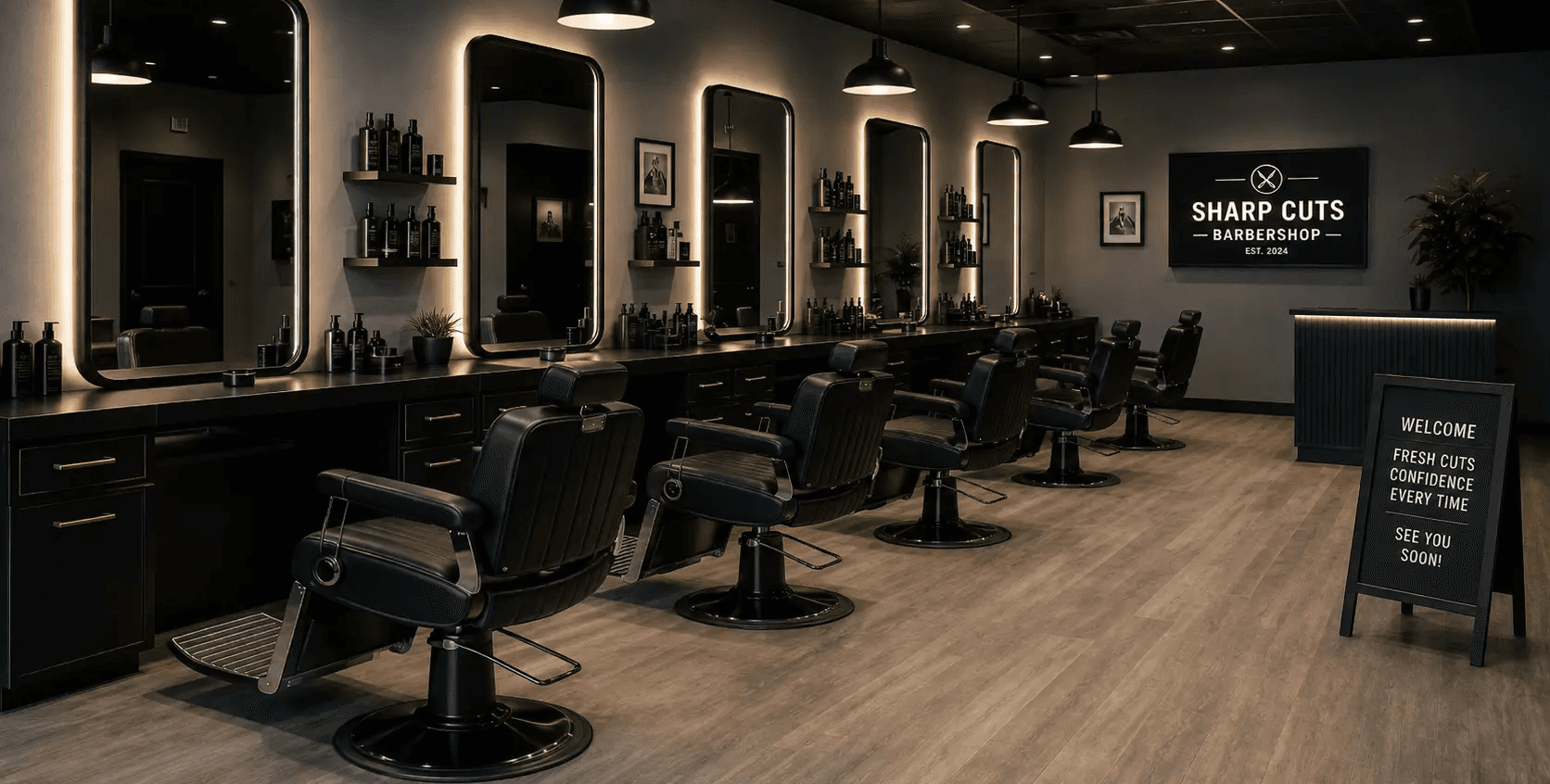
Opening a barbershop takes a concept, a business plan, funding, a location, licenses, chairs and equipment, licensed barbers, and a launch plan, usually over 3 to 9 months. It is a steady, growing trade. The U.S. had about 154,925 barbershops in 2025, up 2.2 percent from the year before, in a market worth roughly $7 billion, according to IBISWorld.
This guide covers the steps, the real costs, and the numbers to know before you sign a lease.
Define your concept and market
Decide what kind of shop you are building: a classic neighborhood barbershop, a modern grooming lounge, or an upscale men's spa. Study nearby shops, their prices, and the customers they miss out on. A clear concept sets your location, price, and hiring.
Write a business plan and set a budget
Turn the concept into numbers: market research, services, staffing model, marketing, and a financial model with startup costs, monthly overhead, and a break-even point. Barbershops can start lean, so plan the model that fits your capital.
Reality check on cost
Industry estimates put a full commercial barbershop at 50,000 to 150,000 dollars to open, and up to 200,000 dollars for a larger or higher-end build. A chair-rental, mobile, or home-based model can start under 10,000 dollars. Treat these as planning ranges, not quotes.
Startup cost by barbershop model.
Model | Typical startup rang |
Chair rental or mobile | under 10,000 dollars |
Small commercial shop | 50,000 to 100,000 dollars |
Full or upscale build | 100,000 to 200,000 dollars |
Secure funding
Most owners combine savings, a bank or SBA loan, and sometimes a partner. Lenders want a plan, projections, and owner equity. Raise enough to cover build-out, chairs and tools, licenses, and a few months of rent and payroll before the chairs fill.
Choose a location and sign a lease
Foot traffic, parking, and visibility drive walk-ins. Check plumbing for wash stations, zoning, and signage rules before you commit. Read the lease closely and negotiate a build-out allowance where you can.
Register the business, licenses, and permits
Register your entity, then apply early for the approvals your area requires. Common ones include a business license, a barbershop or establishment license, individual barber licenses for your staff, and health and sanitation approval from the state board. Rules vary by state, so confirm the exact list with your barbering or cosmetology board.
A clear concept sets your location, price, and hiring
Design the shop and buy equipment
Plan the layout for flow, comfort, and clear sightlines to mirrors. Barber chairs commonly run 300 to 1,500 dollars each, plus stations, wash bowls, tools, and a reception area. Buying quality used equipment is one way to lower upfront cost.
Choose your staffing model
Decide between booth rental and employed barbers. Booth rental gives predictable income and less management, while employees give you more control over service and schedule. Many shops blend both as they grow.
Set services and pricing
Build a menu of cuts, beard work, shaves, and add-ons, then price to your market and concept. Retail products lift the average ticket, so plan a small, well-chosen product line. Cost your time per chair so pricing covers labor and overhead.
Set up tech and screens
Choose booking and point-of-sale software that handles walk-ins and appointments. Plan in-shop screens early, since a service menu, a style gallery, and product promotions inform waiting clients and lift retail attachment.
Plan your launch
Build a local following before day one. Set up your Google Business Profile, post cuts on social channels, and open with walk-in-friendly hours. Early reviews and rebooking drive steady chairs, so make the first weeks count. Ask happy clients for honest feedback, and never pay for or incentivize reviews.
How Beam helps once you open
Beam turns your TVs into managed digital signage you control from one dashboard, so your service menu, style gallery, and product promotions update in minutes across every screen. Retail attachment and rebooking are where barbershops grow the ticket, and screens put those prompts in front of clients while they wait.
The difference is what happens during idle time. Beam Network lets you open unused screen time to approved advertisers and earn passive income from screens you already run. You keep control, block competitors, and hold priority slots for your own content. Signage supports upsells and rebooking rather than guaranteeing them, and screen attribution is directional.
How Beam helps. One dashboard for service menus, promotions, and paid network ads, with full control over what runs on your screens.
Open smarter with Beam
Plan your screens alongside your build-out. See how Beam runs in-shop signage and monetizes idle screen time at usebeam.io
Sources
How much does it cost to open a barbershop?
Industry estimates put a full commercial barbershop at 50,000 to 150,000 dollars, and up to 200,000 dollars for a larger or upscale build. A chair-rental, mobile, or home-based model can start under 10,000 dollars, depending on location and equipment.
How long does it take to open a barbershop?
Most shops take about 3 to 9 months from concept to opening. Licensing and build-out for plumbing and stations are the usual bottlenecks, so start early.
What licenses do I need to open a barbershop?
Requirements vary by state, and common ones include a business license, a barbershop or establishment license, individual barber licenses for staff, and health and sanitation approval. Confirm the exact list with your state barbering or cosmetology board.
Should I use booth rental or employ barbers?
Booth rental gives steadier income and lighter management, while employees give you more control over service and scheduling. Many owners blend both, especially as the shop grows.
Do I need digital signage to open a barbershop?
No, but screens earn their place quickly. They show your service menu, promote retail products, and platforms like Beam let you offset costs by earning from idle screen time.