How to Open a Convenience Store: Costs, Steps, and What to Know Before You Launch
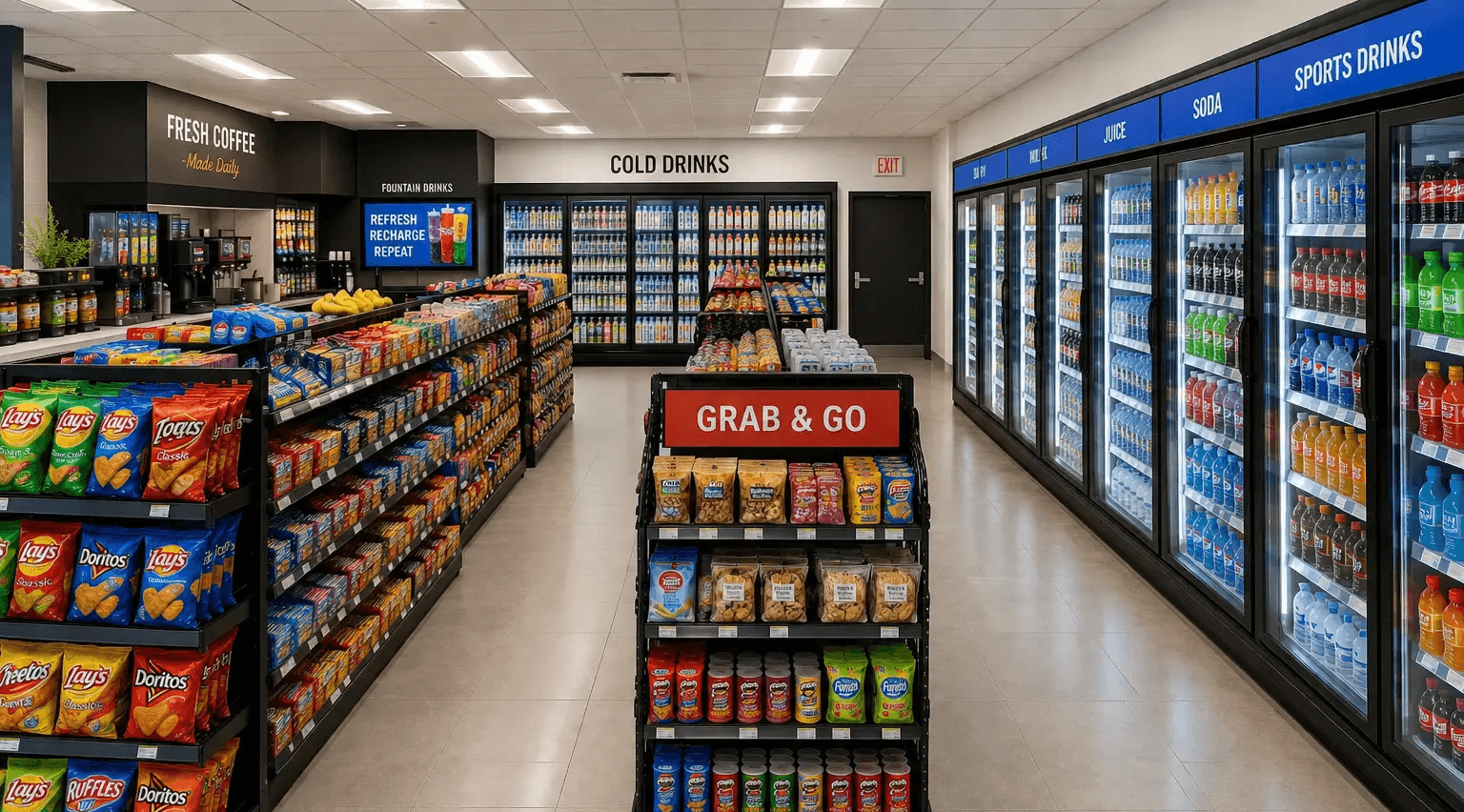
Opening a convenience store takes a business plan, funding, a location, licenses, fixtures and coolers, inventory, and a launch plan, usually over 6 to 12 months. It is a large, small-operator-friendly channel. The U.S. had 151,975 convenience stores in 2025, and the industry posted 341 billion dollars in in-store sales, according to NACS.
This guide covers the steps, the real costs, and the numbers to know before you sign a lease.
Choose your store model
Decide what you are opening: a lean neighborhood store, a mid-size store with a full cooler and foodservice, or a store with fuel. Foodservice and fuel change your cost, licensing, and margins. Study local traffic and nearby stores to find the gap.
Write a business plan and set a budget
Turn the plan into numbers: product mix, foodservice, staffing, and a financial model with startup costs, monthly overhead, and a break-even point. Convenience runs on volume and per-square-foot margin, so plan the mix that fits your location.
Reality check on cost
Industry estimates put a lean neighborhood store at 50,000 to 100,000 dollars, and a mid-size store with a full build-out at 150,000 to 300,000 dollars. Larger or premium stores can pass 600,000 dollars, and fuel adds high cost. Treat these as planning ranges, not quotes.
Startup cost by store type
Store type | Typical startup range |
Lean neighborhood store | 50,000 to 100,000 dollars |
Mid-size with full build-out | 150,000 to 300,000 dollars |
Large or premium store | 300,000 to 600,000 dollars or more |
Secure funding
Most owners combine savings, an SBA or bank loan, and sometimes supplier terms. Lenders want a plan, projections, and owner equity. Raise enough to cover build-out, coolers, initial inventory, licenses, and a few months of operating costs.
Choose a location and sign a lease
Location is everything in convenience retail. Look for traffic, easy in-and-out access, and visibility. Confirm zoning and any fuel or foodservice restrictions before you commit. Read the lease closely and negotiate terms that fit a thin-margin business.
Register the business, licenses, and permits
Register your entity, then apply early for the approvals your area requires. Common ones include a business license, a sales tax permit, a food handling permit, and tobacco, alcohol, and lottery licenses if you sell those. Age-restricted products carry strict rules, so build compliance and staff training in from day one.
Convenience runs on volume and per-square-foot margin, so plan the mix that fits your location
Set up suppliers and inventory
Line up a primary distributor plus direct-store-delivery vendors for drinks, snacks, and fresh items. Negotiate terms and plan shelf space by margin and turnover. Fresh food and coffee often carry the best margins, so give them prime placement.
Design the store and buy fixtures
Plan shelving, coolers, and the counter for flow and impulse buys. Coolers and refrigeration are major costs, so size them to your product plan. Place high-margin and impulse items near the register.
Hire and train staff
Hire clerks you can trust with cash, age-restricted sales, and customer service. Train on your point-of-sale, compliance checks, and safety before you open. Clear procedures protect your licenses and your margin.
Set up tech and screens
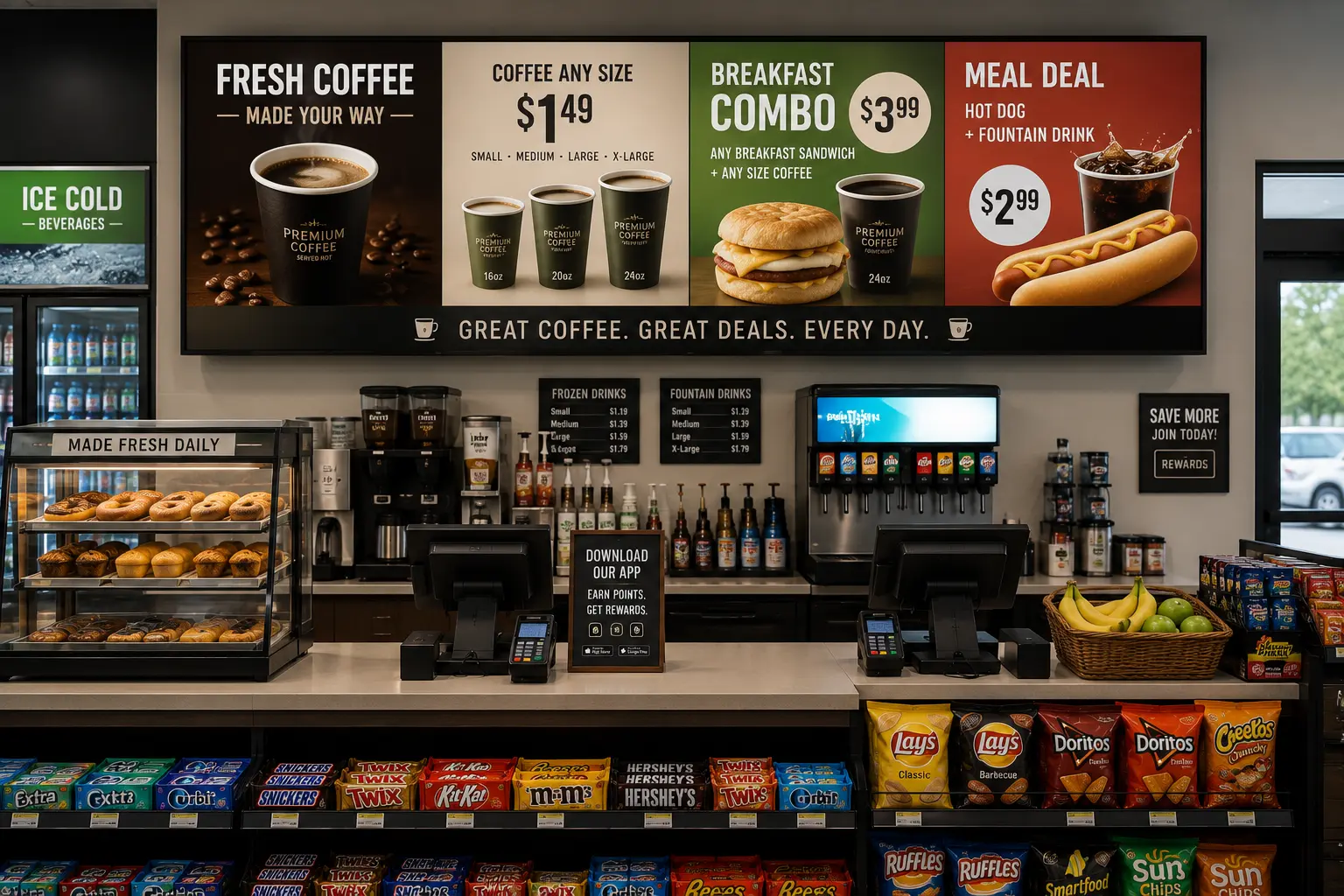
Choose a point-of-sale built for high-transaction retail with age verification. Plan in-store screens early, since promotions for coffee, hot food, and combo deals lift basket size right where customers decide.
Plan your launch
Build neighborhood awareness before you open. Set up your Google Business Profile, post local offers, and run opening deals on coffee and grab-and-go food. Repeat visits build your base, so make the first weeks count. Ask happy customers for honest reviews, and never pay for or incentivize them.
How Beam helps once you open
Beam turns your TVs into managed digital signage you control from one dashboard, so promotions for coffee, hot food, and combos update in minutes across every screen and store. Basket size is where convenience stores grow revenue, and screens push high-margin deals right at the counter. The difference is what happens during idle time. Beam Network lets you open unused screen time to approved advertisers and earn passive income from screens you already run.
You keep control, block competitors, and hold priority slots for your own content. Signage supports basket size rather than guaranteeing it, and screen attribution is directional.
How Beam helps. One dashboard for promotions, combo deals, and paid network ads, with full control over what runs on your screens.
Open smarter with Beam
Plan your screens alongside your build-out. See how Beam runs in-store signage and monetizes idle screen time at usebeam.io
Sources
How much does it cost to open a convenience store?
Industry estimates put a lean neighborhood store at 50,000 to 100,000 dollars and a mid-size store with a full build-out at 150,000 to 300,000 dollars. Larger or premium stores can pass 600,000 dollars, and adding fuel raises costs further.
How long does it take to open a convenience store?
Most take about 6 to 12 months from plan to opening. Licensing for age-restricted products and cooler build-out are the usual bottlenecks.
What licenses do I need to open a convenience store?
Requirements vary by location, and common ones include a business license, a sales tax permit, a food handling permit, and tobacco, alcohol, and lottery licenses where you sell those. Confirm the exact list with your local licensing office.
How do convenience stores make money?
They earn on volume and margin per square foot. Foodservice, coffee, and fresh items usually carry the best margins, so placement and basket size matter more than shelf count.
Do I need digital signage to open a convenience store?
No, but screens earn their place quickly. They promote high-margin items at the counter, and platforms like Beam let you offset costs by earning from idle screen time.