How to Open a Laundromat: Costs, Steps, and What to Know Before You Launch

Opening a laundromat takes a business plan, funding, a location, licenses, commercial machines, utilities, and a launch plan, usually over 6 to 12 months. It is a steady, cash-based business built on repeat demand. The U.S. laundromat industry was worth about 6.8 billion dollars in 2025, a mature market that grew at roughly 2 percent a year over the prior five years.
This guide covers the steps, the real costs, and the numbers to know before you sign a lease.
Decide to build or buy
Your first choice is whether to build a new laundromat or buy an existing one. Buying gives you working machines and an existing customer base, while building lets you design the space and pick the equipment. Study local demand, apartment density, and nearby competition before you decide.
Write a business plan and set a budget
Turn the plan into numbers: utilities, machine mix, staffing, and a financial model with startup costs, monthly overhead, and a break-even point. Utilities are your biggest ongoing cost, so model water, gas, and electricity carefully.
Reality check on cost
Industry estimates put a new or mid-size laundromat at 200,000 to 500,000 dollars to open, with equipment alone often above 150,000 dollars. A small shop with used machines can start near 50,000 dollars, and buying an existing laundromat commonly runs 200,000 to 1,000,000 dollars.
Treat these as planning ranges, not quotes.
Startup cost by approach
Approach | Typical range |
Small shop with used equipment | from 50,000 dollars |
New or mid-size build | 200,000 to 500,000 dollars |
Buy an existing laundromat | 200,000 to 1,000,000 dollars |
Secure funding
Most owners combine savings, an SBA or equipment loan, and sometimes seller financing when buying. Lenders want a plan, projections, and owner equity. Raise enough to cover machines, build-out, deposits, and three to six months of operating reserves.
Choose a location and sign a lease
Location decides your traffic. Look for apartment-dense areas, visible frontage, and easy parking. Confirm the water, gas, and electrical capacity the machines need, since upgrades are expensive. Read the lease closely and negotiate a long term with renewal options.
Register the business, licenses, and permits
Register your entity, then apply early for the approvals your area requires. Common ones include a business license, building and plumbing permits, and health or environmental approvals for water and wastewater. Confirm the exact list with your local building and licensing offices.
Utilities are your biggest ongoing cost, so model water, gas, and electricity carefully
Choose your machine mix and layout
Balance washer and dryer sizes to serve singles, families, and large loads. Efficient machines lower water and energy bills, which protects your margin. Plan the layout for flow, folding space, and clear sightlines for safety.
Decide your service model
Choose your mix of self-service, wash-dry-fold, and pickup and delivery. Wash-dry-fold and delivery raise revenue per customer and use the same machines during slower hours. Set payment options, since cards and apps now sit alongside coins.
Plan attendants and security
Decide whether to run attended, unattended, or hybrid hours. Attendants improve service and reduce problems, while cameras and good lighting protect an unattended floor. Budget for cleaning, since a spotless laundromat keeps customers loyal.
Set up tech and screens
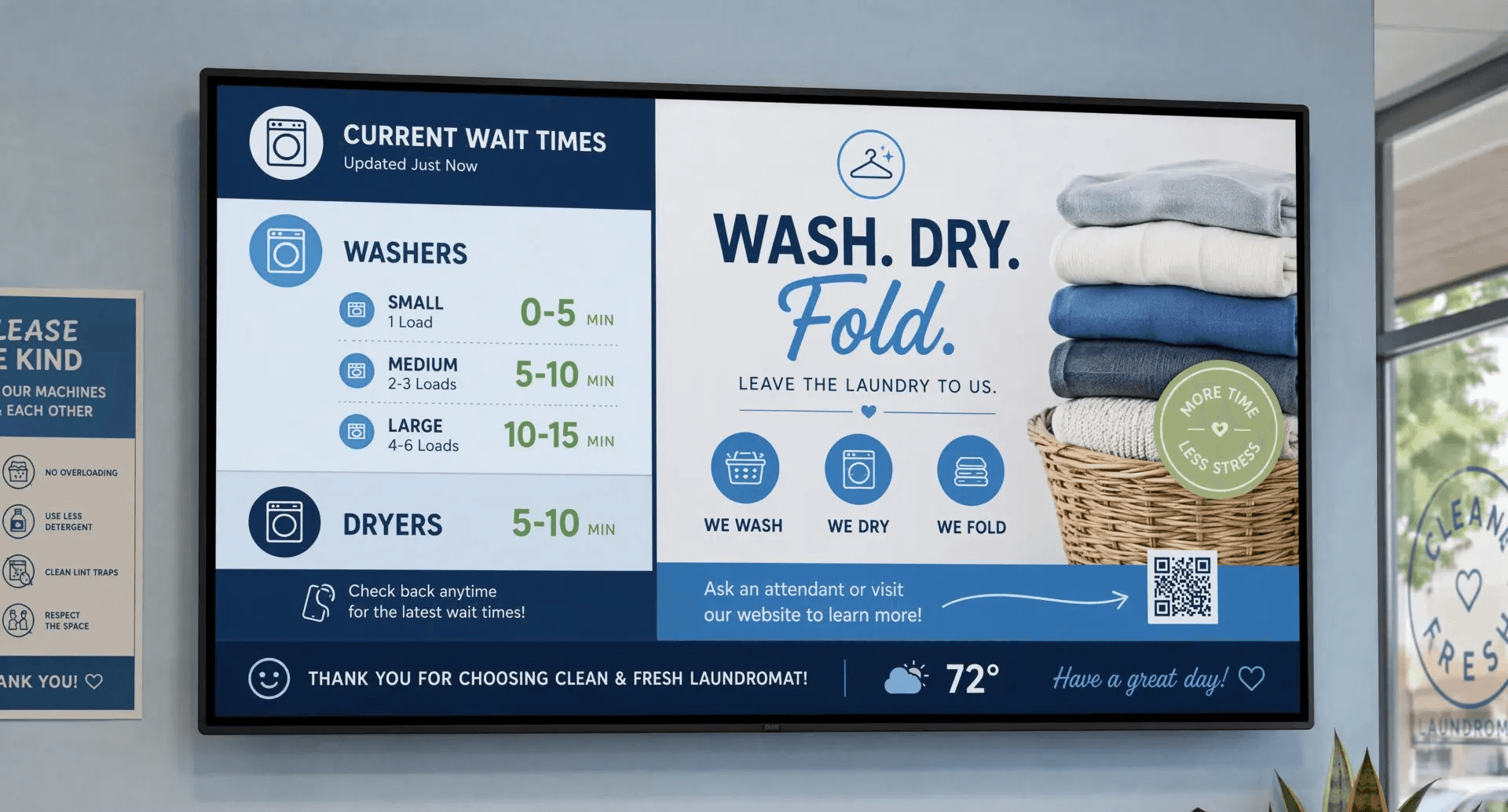
Choose management and payment systems that track machine use and revenue. Plan screens early, since wait-time content, machine instructions, and service promotions inform customers during the long dwell time a laundromat creates.
Plan your launch
Build local awareness before you open. Set up your Google Business Profile, post in neighborhood groups, and offer opening-week deals on wash-dry-fold. Repeat visits build a steady base, so make the first weeks count. Ask happy customers for honest reviews, and never pay for or incentivize them.
How Beam helps once you open
Laundromats create something rare in retail: long, captive dwell time. Beam turns your TVs into managed digital signage you control from one dashboard, so wait-time content, service promotions, and app instructions update in minutes across every screen. The difference is what happens during idle time. Beam Network lets you open unused screen time to approved advertisers and earn passive income from screens you already run.
For a business built on thin utility-driven margins, a screen that promotes wash-dry-fold and adds an ad-revenue line both help. You keep control, block competitors, and hold priority slots for your own content. Signage supports revenue rather than guaranteeing it, and screen attribution is directional.
How Beam helps. One dashboard for service promotions, wait-time content, and paid network ads, with full control over what runs on your screens.
Open smarter with Beam
Plan your screens alongside your build-out. See how Beam runs in-store signage and monetizes idle screen time at usebeam.io
Sources
How much does it cost to open a laundromat?
Industry estimates put a new or mid-size laundromat at 200,000 to 500,000 dollars, with equipment often above 150,000 dollars. A small shop with used machines can start near 50,000 dollars, and buying an existing laundromat commonly runs 200,000 to 1,000,000 dollars.
How long does it take to open a laundromat?
Most take about 6 to 12 months to build, or less if you buy an existing one. Utility upgrades and permitting are the usual bottlenecks.
Are laundromats profitable?
They can produce steady cash flow, but utilities and rent drive the margin. Wash-dry-fold, pickup and delivery, and efficient machines improve returns more than machine count alone.
What licenses do I need to open a laundromat?
Requirements vary by location, and common ones include a business license, building and plumbing permits, and health or environmental approvals for water and wastewater. Confirm the exact list with your local building and licensing offices.
Do I need digital signage to open a laundromat?
No, but the long wait time makes screens valuable. They fill idle minutes, promote services, and platforms like Beam let you offset costs by earning from idle screen time.