How to Open a Nightclub: Costs, Steps, and What to Know Before You Launch
Opening a nightclub takes a concept, a business plan, funding, a venue, liquor and entertainment licenses, sound and lighting, security, staff, and a launch plan, usually over 9 to 18 months. It is a big-ticket, competitive business. The U.S. bars and nightclubs market was about 39 billion dollars in 2025 across roughly 68,000 venues, and it has stayed flat to slightly down, according to IBISWorld.
This guide covers the steps, the real costs, and the numbers to know before you sign a lease.
Define your concept and market
Nightlife is crowded, so a sharp concept matters. Decide on your format, music, and crowd, whether a dance club, a live-music venue, a lounge, or a bottle-service club. Study local nightlife for the gap you can own, because a flat market rewards clear differentiation.
Write a business plan and set a budget
Turn the concept into numbers: capacity, drink pricing, entertainment, security, and a financial model with startup costs, monthly overhead, and a break-even point. Nightlife carries real failure risk, so plan conservative revenue and strong working capital.
Reality check on cost
Industry estimates put a nightclub at 240,000 to 840,000 dollars to open, and premier venues in high-cost cities can exceed 2,000,000 dollars. Set aside 75,000 to 150,000 dollars in working capital for the first six months. Treat these as planning ranges, not quotes.
Startup cost by venue level
Venue level | Typical startup range |
Small lounge or bar-club | 240,000 to 500,000 dollars |
Mid-size club | 500,000 to 840,000 dollars |
Premier urban venue | 1,000,000 to 2,000,000 dollars or more |
Secure funding
Nightclubs usually need investors alongside owner equity and loans. Lenders and partners want a plan, projections, and a credible operator. Raise enough to cover build-out, sound and lighting, licenses, opening inventory, and several months of payroll.
Choose a venue and sign a lease
Location sets your crowd, your rent, and your permitting path. Check capacity, parking, noise ordinances, and neighborhood zoning before you commit. Rent in a high-traffic area often runs 5,000 to 20,000 dollars a month, so read the lease closely.
Register the business and secure licenses
This is the hardest step, so start it first. A liquor license is the critical approval, and it can take months and carry significant cost. You will also need a business license, an occupancy permit, entertainment and music licensing, food permits if you serve food, and security and fire approvals.
Confirm every requirement with your city and state, since alcohol rules are strict and vary widely.
A flat market rewards clear differentiation
Design sound, lighting, and space
Sound and lighting define the experience. State-of-the-art systems can run 100,000 to 250,000 dollars, and layout should balance the dance floor, the bar, and VIP areas. Design for flow, safety, and clear exits.
Build your security and safety plan
Security protects guests and your license. Plan trained door staff, ID checks, camera coverage, capacity control, and incident procedures. A strong safety record keeps regulators and insurers on your side.
Set your drink menu and pricing
Price drinks and bottle service to your concept and crowd. Bottle service and VIP tables lift the average spend per guest, so design those offers carefully. Control pour costs and inventory, since shrinkage erodes thin margins fast.
Hire staff and set up tech and screens
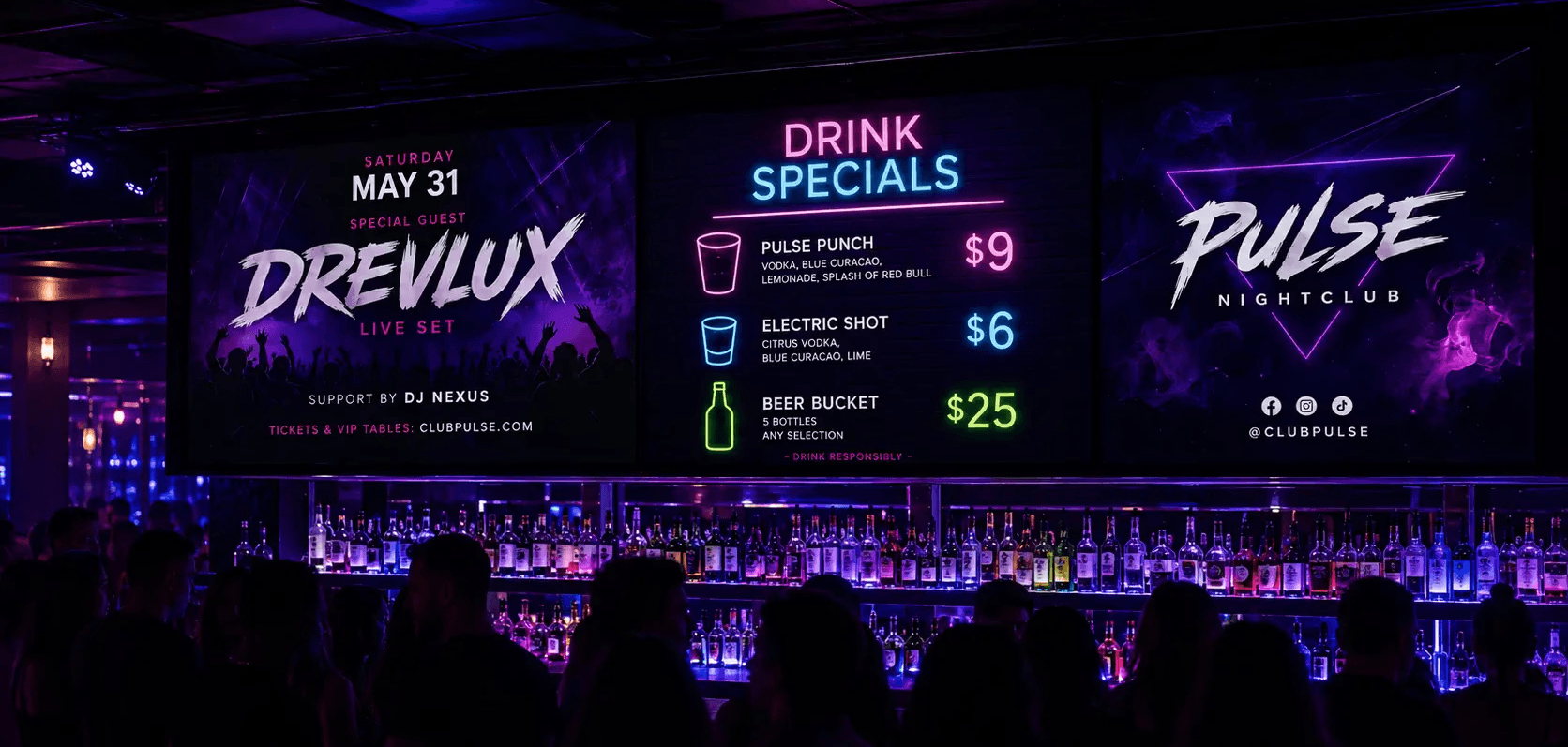
Hire bartenders, servers, security, and a manager, and train on service and responsible alcohol practices. Choose a point-of-sale built for high-volume bars, then plan screens early for event promotion, drink specials, and bottle-service offers.
Plan your launch
Nightlife runs on buzz. Line up promoters, book a strong opening act or DJ, and build social hype before the doors open. Guest lists, table reservations, and a memorable opening night set the tone. Ask happy guests for honest reviews, and never pay for or incentivize them.
How Beam helps once you open
Beam turns your TVs and venue screens into managed digital signage you control from one dashboard, so event promotions, drink specials, and bottle-service offers update in minutes across every screen. Average spend per guest is where clubs grow revenue, and screens push VIP and bottle offers where guests decide.
The difference is what happens during idle time. Beam Network lets you open unused screen time to approved advertisers and earn passive income from screens you already run. You keep control, block competitors, and hold priority slots for your own content. Signage supports upsells rather than guaranteeing them, and screen attribution is directional.
How Beam helps. One dashboard for event promos, specials, and paid network ads, with full control over what runs on your screens
Open smarter with Beam
Plan your screens alongside your build-out. See how Beam runs venue signage and monetizes idle screen time at usebeam.io
Sources
How much does it cost to open a nightclub?
Industry estimates put a nightclub at 240,000 to 840,000 dollars, and premier urban venues can exceed 2,000,000 dollars. Plan an extra 75,000 to 150,000 dollars in working capital for the first six months.
How long does it take to open a nightclub?
Most take about 9 to 18 months from concept to opening. Liquor licensing and build-out for sound and lighting are the usual bottlenecks, so start licensing first.
What licenses do I need to open a nightclub?
The liquor license is the critical one, along with a business license, an occupancy permit, entertainment and music licensing, and fire and security approvals. Rules vary widely, so confirm every requirement with your city and state.
Is opening a nightclub risky?
Yes. Nightlife is competitive, and the market has been flat to slightly down, so a clear concept, tight cost control, and strong working capital matter. Plan conservative revenue for the first year.
Do I need digital signage to open a nightclub?
No, but screens earn their place quickly. They promote events, push bottle service, and platforms like Beam let you offset costs by earning from idle screen time.