How to Open a Salon or Spa: Costs, Steps, and What to Know Before You Launch
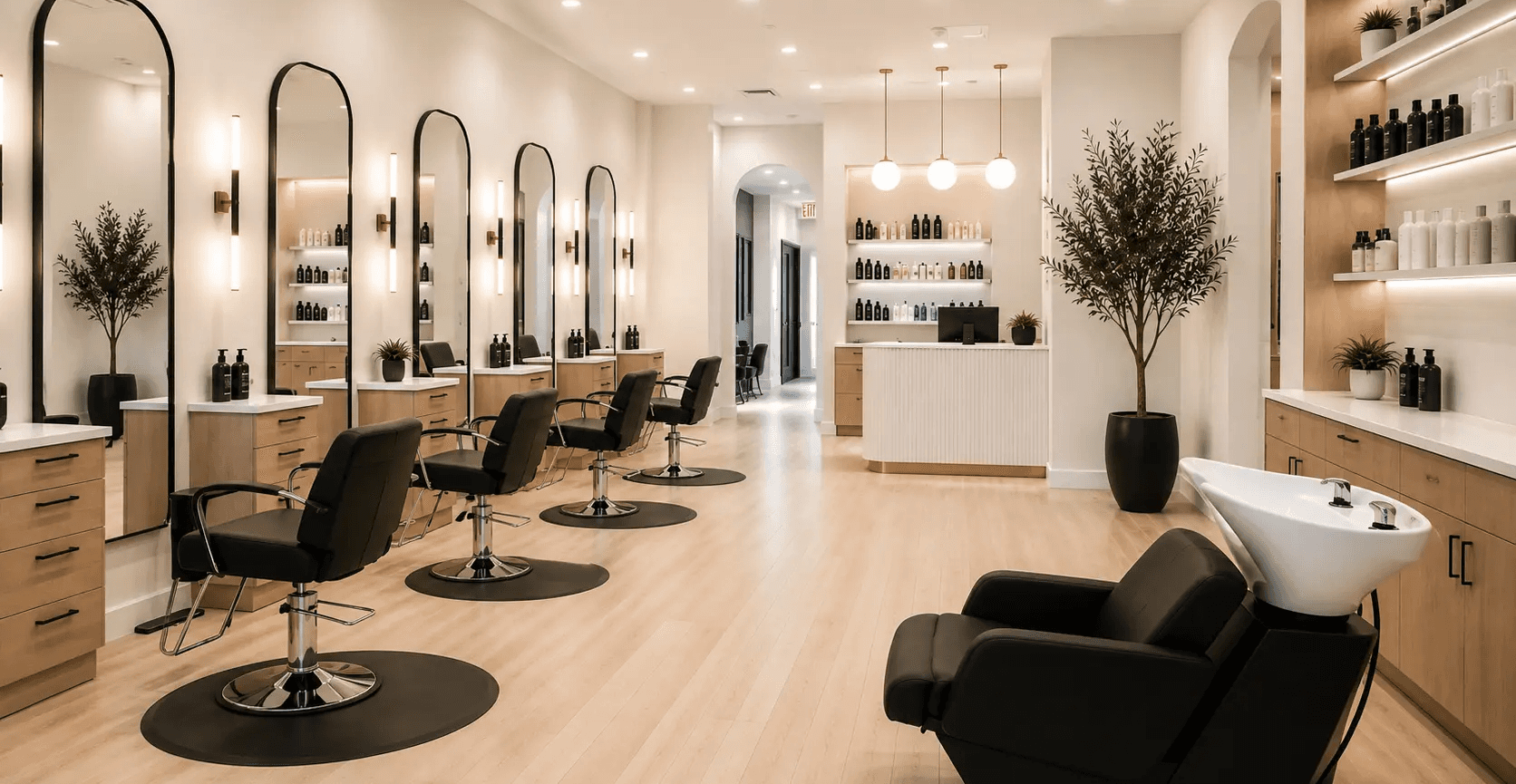
Opening a salon or spa takes a concept, a business plan, funding, a location, licenses, stations and equipment, licensed staff, and a launch plan, usually over 4 to 9 months. The market is large and steady. The U.S. hair and nail salon market was worth about 90 billion dollars in 2025, spread across more than 1 million salon and spa locations.
This guide covers the steps, the real costs, and the numbers to know before you sign a lease.
Define your concept and market
Decide what you offer: hair, nails, skin, or a full-service spa. Pick a target client and a price tier, then study nearby salons for gaps you can fill. A focused concept guides your space, staffing, and retail mix.
Write a business plan and set a budget
Turn the concept into numbers: services, pricing, staffing model, retail, and a financial model with startup costs, monthly overhead, and a break-even point. Beauty is a repeat-visit business, so plan for the rebooking that drives steady revenue.
Reality check on cost
Industry estimates put a mid-range salon at 60,000 to 150,000 dollars to open. A salon suite or home-based studio can start at around 10,000 to 35,000 dollars, and a high-end salon or day spa in a premium location can exceed 500,000 dollars.
Treat these as planning ranges, not quotes.
Startup cost by salon type
Type | Typical startup range |
Suite or home studio | 10,000 to 35,000 dollars |
Mid-range salon | 60,000 to 150,000 dollars |
High-end salon or day spa | 300,000 to 500,000 dollars or more |
Secure funding
Most owners combine savings, a bank or SBA loan, and sometimes investors. Lenders want a plan, projections, and owner equity. Raise enough to cover build-out, stations and equipment, licenses, initial retail stock, and a few months of operating costs.
Choose a location and sign a lease
Visibility, parking, and plumbing matter for salons and spas. Check water and drainage for wash stations and treatment rooms, plus zoning and signage rules. Read the lease closely and negotiate a build-out allowance before you sign.
Register the business, licenses, and permits
Register your entity, then apply early for the approvals required in your area. Common ones include a business license, a salon or establishment license, individual cosmetology, nail, or esthetics licenses for staff, and health and sanitation approval. Rules vary by state, so confirm the list with your cosmetology board.
Beauty is a repeat-visit business, so plan for the rebooking that drives steady revenue
Design the space and buy equipment
Plan stations, wash areas, and treatment rooms for comfort and flow. Budget for chairs, mirrors, wash units, dryers, and treatment tables, plus a welcoming reception and retail display. Certified used equipment can lower upfront cost.
Choose your staffing and pricing model
Decide between commission staff, hourly employees, and booth or suite rental. Set service prices to your market and tier, and cost each service so pricing covers labor, product, and overhead. Retail products and packages lift the average ticket.
Hire and train your team
Hire licensed stylists, technicians, or estheticians who fit your brand, and verify their credentials. Train on service standards, sanitation, and your booking system before you open. A soft launch lets the team rehearse the full client experience.
Set up tech and screens
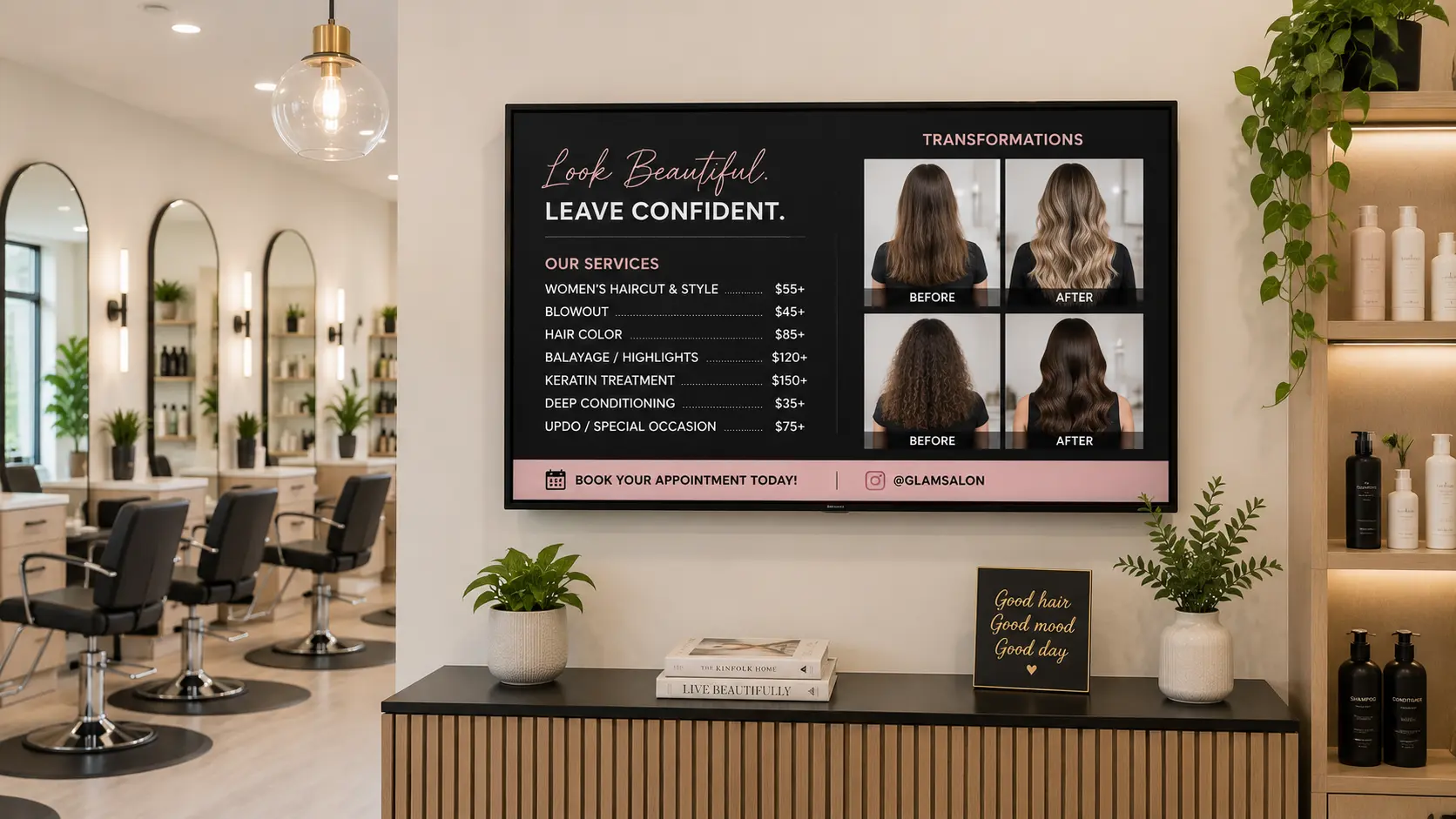
Choose booking and point-of-sale software that supports rebooking and packages. Plan in-salon screens early, since service menus, before-and-after galleries, and product promotions inform clients and lift retail attachment where they relax and wait.
Plan your launch
Build interest before day one. Set up your Google Business Profile, post work on social channels, and offer opening packages that encourage rebooking. Early reviews and repeat visits build a steady book, so make the first weeks count. Ask happy clients for honest feedback, and never pay for or incentivize reviews.
How Beam helps once you open
Beam turns your TVs into managed digital signage you control from one dashboard, so service menus, seasonal offers, and retail promotions update in minutes across every screen and location. Retail attachment and rebooking are where salons and spas grow revenue, and screens put those prompts in front of clients while they wait or relax. The difference is what happens during idle time. Beam Network lets you open unused screen time to approved advertisers and earn passive income from screens you already run.
You keep control, block competitors, and hold priority slots for your own content. Signage supports rebooking and retail rather than guaranteeing them, and screen attribution is directional.
How Beam helps. One dashboard for service menus, promotions, and paid network ads, with full control over what runs on your screens
Open smarter with Beam
Plan your screens alongside your build-out. See how Beam runs in-salon signage and monetizes idle screen time at usebeam.io
Sources
How much does it cost to open a salon or spa?
Industry estimates put a mid-range salon at 60,000 to 150,000 dollars, a salon suite or home studio at 10,000 to 35,000 dollars, and a high-end salon or day spa at 300,000 to 500,000 dollars or more, depending on services, location, and build-out.
How long does it take to open a salon?
Most salons take about 4 to 9 months from concept to opening. Plumbing build-out, licensing, and hiring licensed staff are the usual bottlenecks.
What licenses do I need to open a salon?
Requirements vary by state, and common ones include a business license, a salon or establishment license, individual practitioner licenses for staff, and health and sanitation approval. Confirm the exact list with your state cosmetology board.
How do salons make steady money?
Rebooking and retail drive steady revenue more than one-time visits. Packages, memberships, and a focused product line raise the average ticket and bring clients back on a schedule.
Do I need digital signage to open a salon?
No, but screens earn their place quickly. They show service menus, feature results, and platforms like Beam let you offset costs by earning from idle screen time.