How to Open an Auto Repair Shop: Costs, Steps, and What to Know Before You Launch
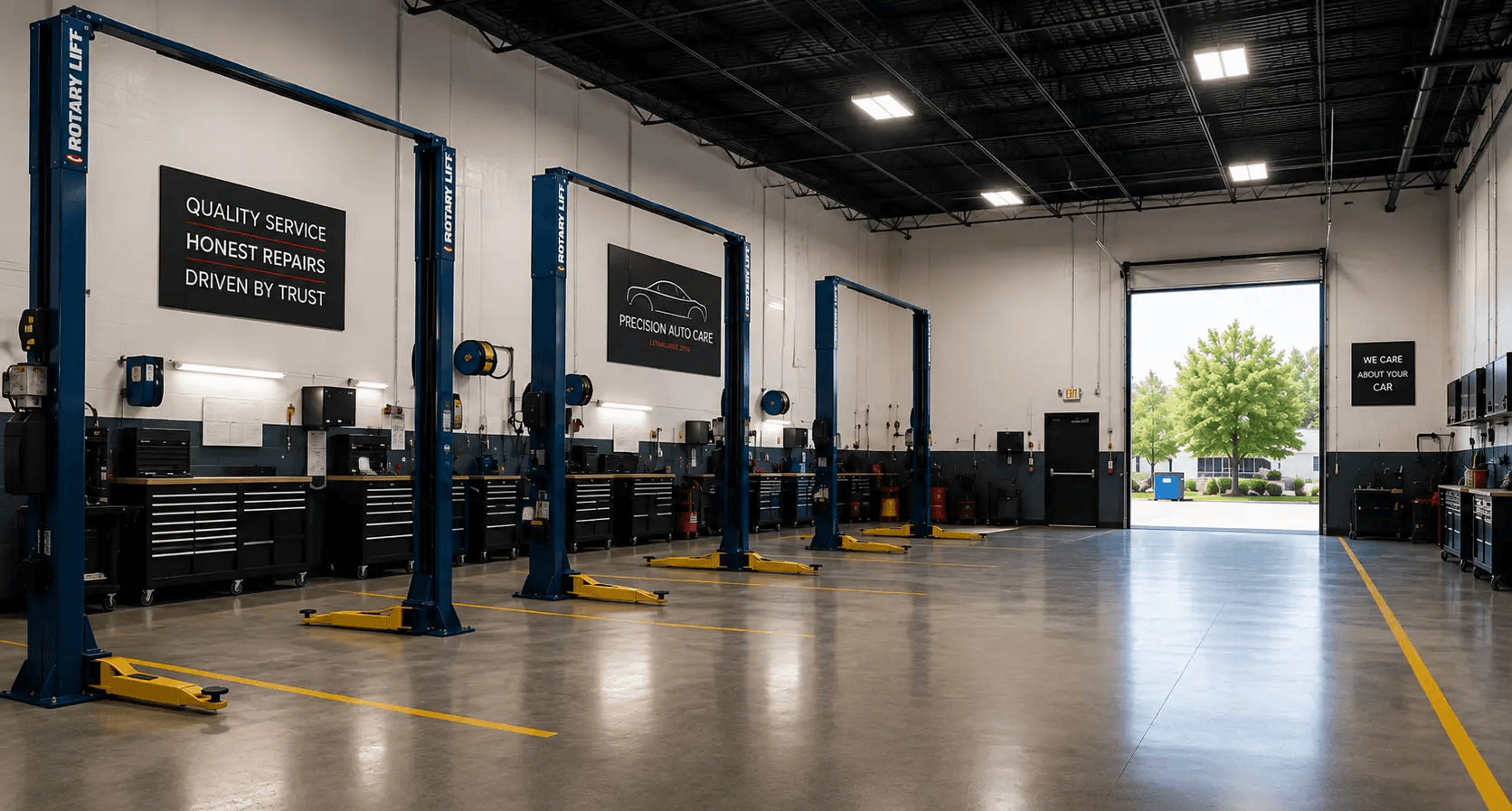
Opening an auto repair shop takes a business plan, funding, a location with bays, licenses, equipment, certified technicians, and a launch plan, usually over 6 to 12 months. Demand is large and steady, since cars always need service. The U.S. automotive service market was worth about 199 billion dollars in 2025 across roughly 160,000 to 170,000 shops, most of them independently owned.
This guide covers the steps, the real costs, and the numbers to know before you sign a lease.
Define your shop and market
Decide what you fix and for whom: general repair, a specialty like brakes or transmissions, or a maker-specific shop. Study nearby shops, their wait times, and their prices. A clear focus guides your equipment, hiring, and pricing.
Write a business plan and set a budget
Turn the plan into numbers: bays, equipment, staffing, and a financial model with startup costs, monthly overhead, and a break-even point. Repair is a labor business, so plan technician pay and billable hours carefully.
Reality check on cost
Industry estimates put a small shop at 50,000 to 75,000 dollars and a medium shop at 100,000 to 430,000 dollars, with premium or specialized facilities reaching 650,000 dollars. Lifts, diagnostic tools, and a compressor are major line items. Treat these as planning ranges, not quotes.
Startup cost by shop size
Shop size | Typical startup range |
Small independent shop | 50,000 to 75,000 dollars |
Medium shop | 100,000 to 430,000 dollars |
Premium or specialized shop | up to 650,000 dollars |
Secure funding
Most owners combine savings, an SBA or equipment loan, and sometimes vendor financing on lifts and tools. Lenders want a plan, projections, and owner equity. Raise enough to cover equipment, deposits, licenses, and a few months of payroll.
Choose a location and sign a lease
Look for a building with the right bay count, ceiling height, and drive-in access. Check zoning for automotive use, environmental rules, and parking for customer and work vehicles. Read the lease closely, since bay build-outs are costly to move.
Register the business, licenses, and permits
Register your entity, then apply early for the approvals required in your area. Common ones include a business license, an automotive repair license where required, environmental permits for waste oil and fluids, and an EPA refrigerant handling certification for air-conditioning work. Confirm the exact list with your state and local agencies.
Repair is a labor business, so plan technician pay and billable hours carefully
Buy equipment and tools
Equipment is your core investment. Budget for lifts, a compressor, diagnostic scanners, and shop tools, and plan the bay layout for safe, efficient flow. Buying quality used equipment can lower upfront cost without hurting reliability.
Hire certified technicians
Skilled technicians drive your reputation and revenue. Hire ASE-certified techs where you can, verify credentials, and set clear service standards. Ongoing training keeps your shop current as vehicles grow more complex.
Set pricing and service standards
Price labor by the hour and parts by margin, and quote clearly to build trust. Transparent estimates and honest timelines drive repeat business and referrals. Track repair order value, since add-on maintenance lifts revenue per visit.
Set up tech and screens
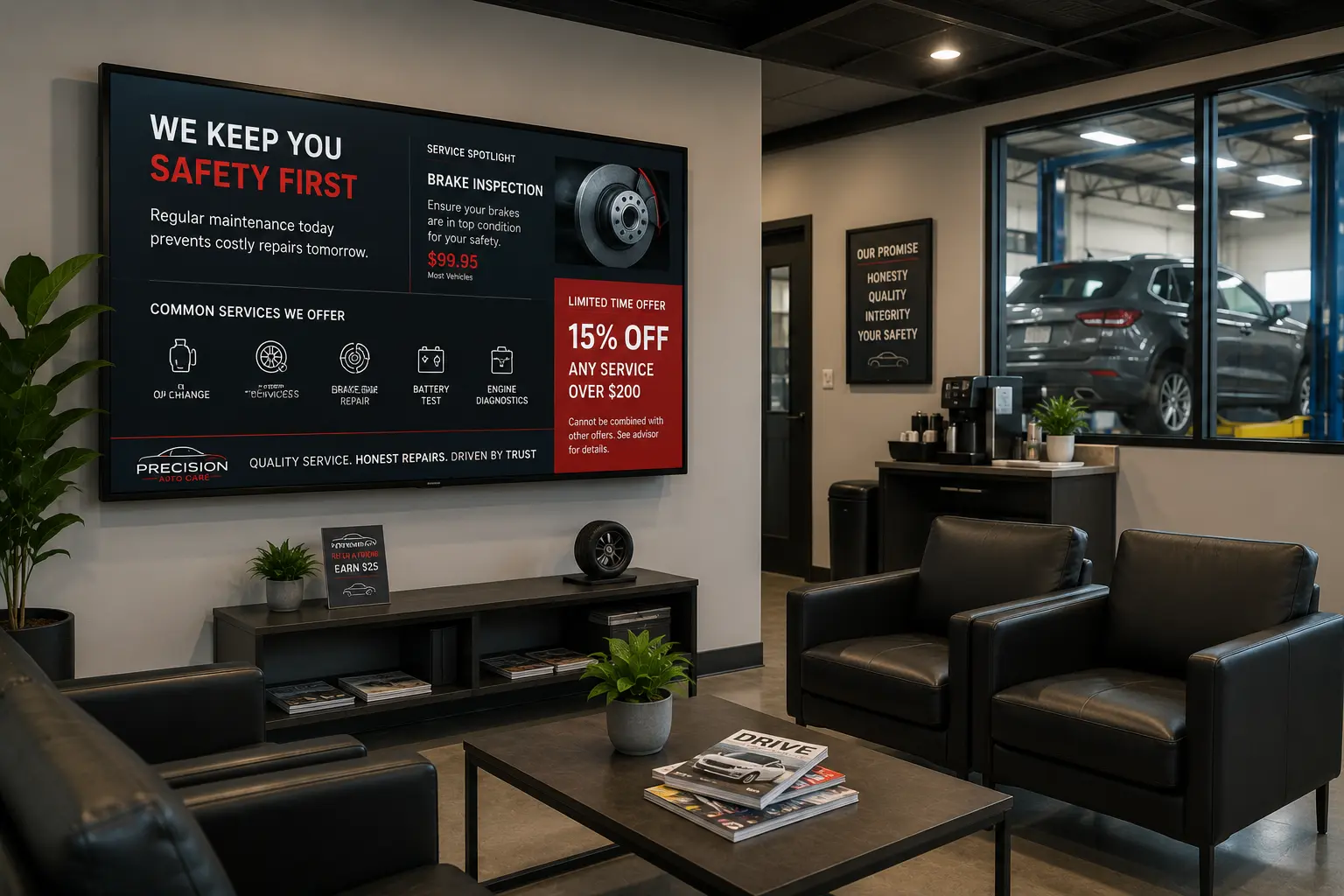
Choose shop-management software for estimates, scheduling, and invoicing. Plan waiting-room screens early, since service education and maintenance reminders help customers approve recommended work while they wait.
Plan your launch
Build local trust before you open. Set up your Google Business Profile, collect early reviews, and offer opening specials on common services. Reputation drives this business, so make the first jobs count. Ask happy customers for honest reviews, and never pay for or incentivize them.
How Beam helps once you open
Auto shops have a captive waiting room, and Beam turns those screens into a tool that works for you. Beam is managed digital signage you control from one dashboard, so service education, maintenance reminders, and offers update in minutes across every screen. Repair order value is where shops grow revenue, and screens help customers understand and approve recommended work. The difference is what happens during idle time. Beam Network lets you open unused screen time to approved advertisers and earn passive income from screens you already run.
You keep control, block competitors, and hold priority slots for your own content. Signage supports approvals rather than guaranteeing them, and screen attribution is directional.
How Beam helps. One dashboard for service education, offers, and paid network ads, with full control over what runs on your screens
Open smarter with Beam
Plan your screens alongside your build-out. See how Beam runs waiting-room signage and monetizes idle screen time at usebeam.io
Sources
How much does it cost to open an auto repair shop?
Industry estimates put a small shop at 50,000 to 75,000 dollars and a medium shop at 100,000 to 430,000 dollars, with premium or specialized facilities reaching 650,000 dollars. Lifts, diagnostic tools, and a compressor are the major line items.
How long does it take to open an auto repair shop?
Most take about 6 to 12 months from plan to opening. Finding a zoned building with bays and installing equipment are the usual bottlenecks.
What licenses do I need to open an auto repair shop?
Requirements vary by location, and common ones include a business license, an automotive repair license where required, environmental permits for waste fluids, and an EPA refrigerant certification for air-conditioning work. Confirm the exact list with your state and local agencies.
How do auto repair shops make money?
They earn on labor hours and parts margin. Skilled technicians, high billable-hour efficiency, and add-on maintenance that raises repair order value drive profit more than car count alone.
Do I need digital signage to open an auto repair shop?
No, but the waiting room makes screens valuable. They educate customers on recommended work, and platforms like Beam let you offset costs by earning from idle screen time.