How to Start a Property Management Company: Costs, Steps, and What to Know Before You Launch
Starting a property management company takes a niche, a business plan, licensing, trust accounting, insurance, software, and a plan to win doors, usually over 3 to 6 months. It is a large, steady, recurring-revenue business. The U.S. property management industry was worth about 134 billion dollars in 2025 across an estimated 330,000 companies, according to IBISWorld and industry data.
This guide covers the steps, the real costs, and the numbers to know before you launch.
Choose your niche
Property management spans many segments. Pick a focus such as residential rentals, HOAs and condos, commercial buildings, or short-term rentals. Your niche sets your licensing, software, and the owners you pursue.
Write a business plan and set a budget
Turn the plan into numbers: services, fee structure, staffing, and a financial model with startup costs, overhead, and a break-even point. Management fees recur monthly, so model the doors you need to cover costs.
Reality check on cost
Industry estimates put a from-scratch property management startup near 2,000 to 10,000 dollars, growing to 10,000 to 20,000 dollars as you scale. A franchise commonly runs 27,000 to 60,000 dollars. Treat these as planning ranges, not quotes.
Startup cost by approach
Approach | Typical range |
From scratch | 2,000 to 10,000 dollars |
Scaling operation | 10,000 to 20,000 dollars |
Franchise | 27,000 to 60,000 dollars |
Register the business and get licensed
Register your entity, then handle licensing, which is the critical step. Most states, about 44 of them, require a real estate broker or property manager license to manage property for others. Coursework often runs 60 to 180 hours, so confirm the exact requirement with your state real estate commission.
Set up trust accounting and compliance
Managing other people's money demands strict controls. Set up separate trust or escrow accounts for owner funds and security deposits, and learn fair housing and landlord-tenant rules. Clean accounting and compliance protect your license and your clients.
Management fees recur monthly, so model the doors you need to cover costs
Get insurance and bonding
Protect the business with the right coverage. Common policies include general liability, errors and omissions, and a surety bond where required. Owners often require proof of coverage before they hand over a property.
Build your technology stack
Property management runs on software. Choose a platform for leasing, rent collection, maintenance requests, and owner reporting. Good systems let a small team manage many doors efficiently.
Set fees and management agreements
Decide your fee model, often a percentage of rent plus leasing and maintenance fees. Put clear management agreements in place that define scope, fees, and responsibilities. Transparent terms build trust with owners and boards.
Build a vendor and maintenance network
Reliable maintenance keeps residents and owners happy. Line up vetted vendors for plumbing, electrical, cleaning, and repairs, and set response standards. A strong network protects your reputation and your margins.
Win owners and grow your portfolio
Doors are your product, so build a pipeline. Network with real estate agents, investors, and HOA boards, and market your service and results. Referrals and steady performance grow the portfolio.
Onboard properties, residents, and screens
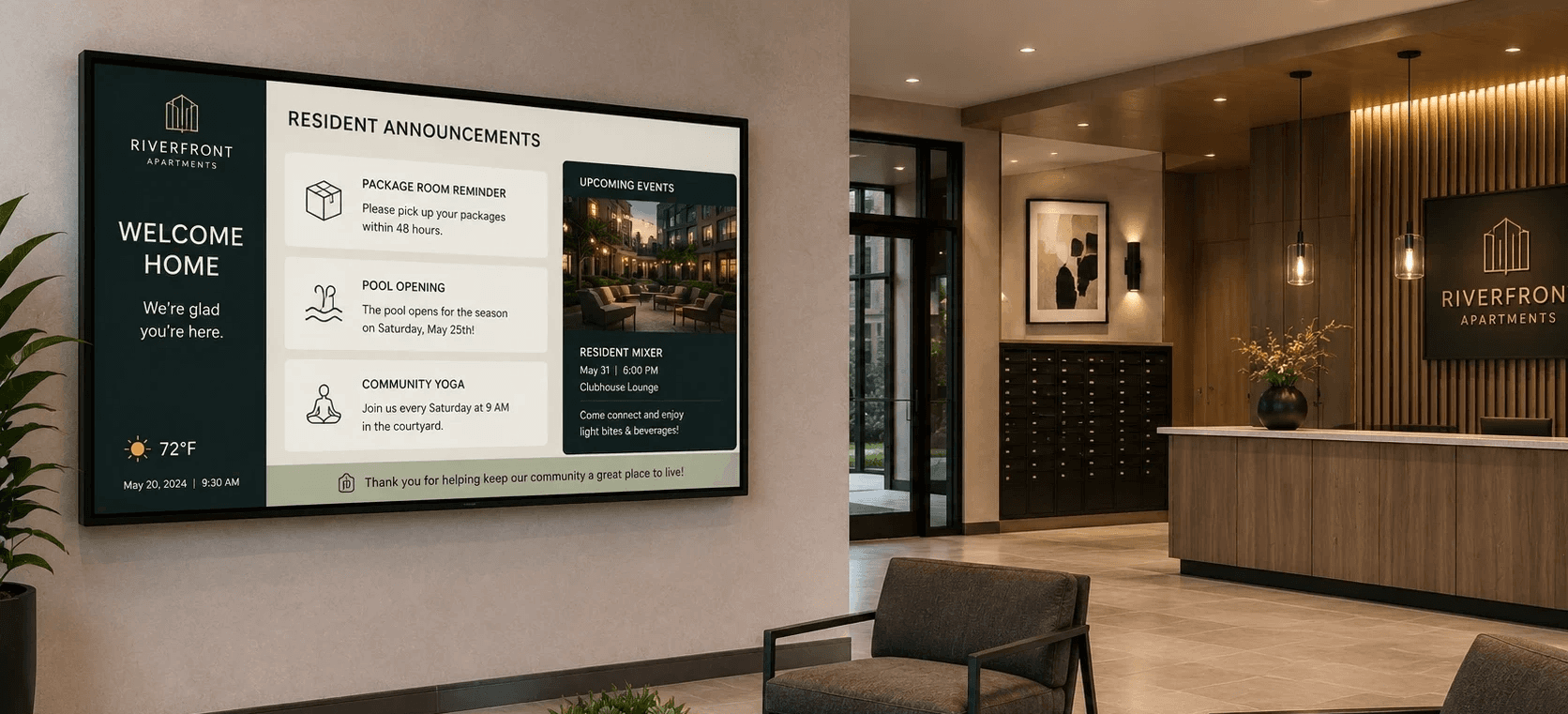
Create a smooth onboarding for new properties and residents. Set up communication for rent, maintenance, and community updates. In lobbies and amenity spaces, screens keep residents informed and engaged.
How Beam helps once you launch
Beam turns lobby, elevator, and amenity-space TVs across your managed buildings into managed digital signage you control from one dashboard, so resident announcements, community updates, and amenity information stay current across every property. The differentiator is the network. Beam Network lets you open unused screen time to approved advertisers and earn passive income from screens the property already runs, which creates ancillary revenue for owners and a clear advantage when you pitch new doors. You keep control, block competitors, and hold priority slots for resident content.
Get owner or board approval on ad content, and treat ad income as a supplemental line, since screen attribution is directional.
How Beam helps. One dashboard for resident communications and paid network ads across every building, with full control over what runs on your screens.
Grow smarter with Beam
Turn common-area screens into resident comms and income. See how Beam helps property managers at usebeam.io
Sources
How much does it cost to start a property management company?
Industry estimates put a from-scratch startup near 2,000 to 10,000 dollars, rising to 10,000 to 20,000 dollars as you scale. A franchise commonly runs 27,000 to 60,000 dollars.
Do I need a license to start a property management company?
In most states, yes. About 44 states require a real estate broker or property manager license to manage property for others. Confirm the exact requirement with your state real estate commission.
How do property management companies make money?
They earn recurring management fees, usually a percentage of rent, plus leasing and maintenance fees. Recurring revenue across many doors makes the business scalable and steady.
What is the hardest part of starting?
Licensing, trust accounting, and winning the first doors are the main hurdles. Compliance protects your license, and a strong track record earns referrals that grow the portfolio.
Can property managers earn extra revenue from building screens?
Yes. Platforms like Beam turn common-area screens into resident communications and, through the Beam Network, an ancillary income line for the property, with owner or board approval.