How Veterinary Clinics Use Digital Signage to Lift Wellness Plan Enrollment and Earn From the Waiting Room
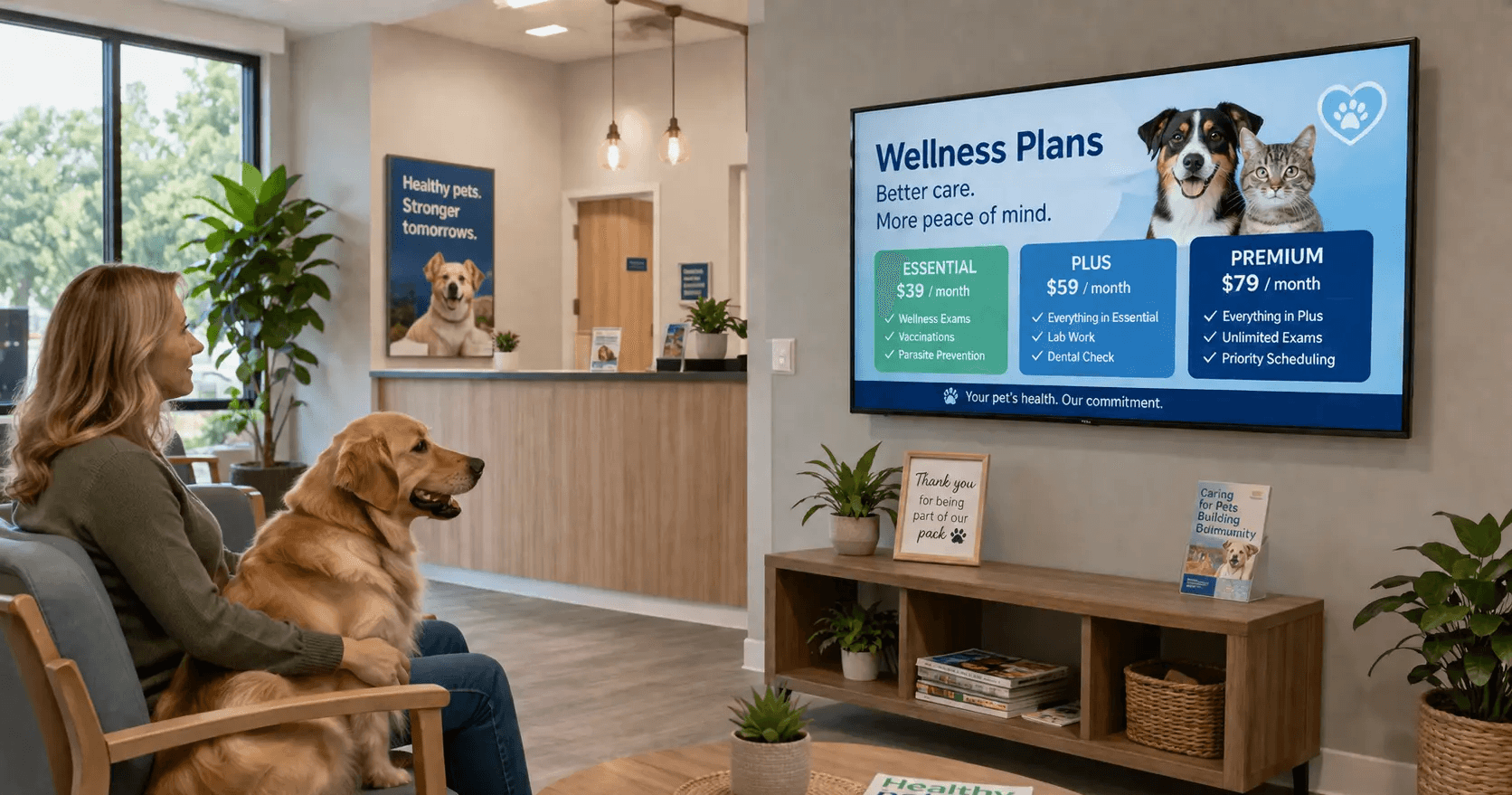
Digital signage in the waiting room and exam-room hallway gives veterinary clinics a direct channel to promote wellness plans and preventive care at the moment clients decide whether to say yes. More than half of pet owners have skipped needed veterinary care in the past year because of cost, and wellness visits fell 3.8% in 2025 compared to the year before, according to AVMA-reported data.
Clinics that put reminders, plan pricing, and clear next-step messaging on a screen clients are already looking at can chip away at that gap. The same screens, when idle, can also be rented out through an ad network to cover their own cost.
The problem: pet owners are pulling back on preventive care
Preventive visits used to be the easiest sell in the practice. That's changing. AVMA data shows 81.6% of dog owners and 76.4% of cat owners cite a routine checkup as the reason for their last visit, so the intent to come in is still there. But the follow-through is weakening: average routine visit spend sits around $214 for dogs and $138 for cats, and 46% of owners say they've delayed or skipped procedures such as dental work, imaging, or spay/neuter because of cost.
A front desk conversation about a wellness plan competes with a nervous pet, a distracted owner, and a five-minute checkout window. A screen that's been reinforcing the message for the twenty minutes before that conversation starts gives the front desk a head start.
The front desk gets one shot at the wellness-plan pitch. The waiting room screen gets twenty minutes
What to put on the screen
Wellness plan pricing and what's included, updated the moment a promotion changes
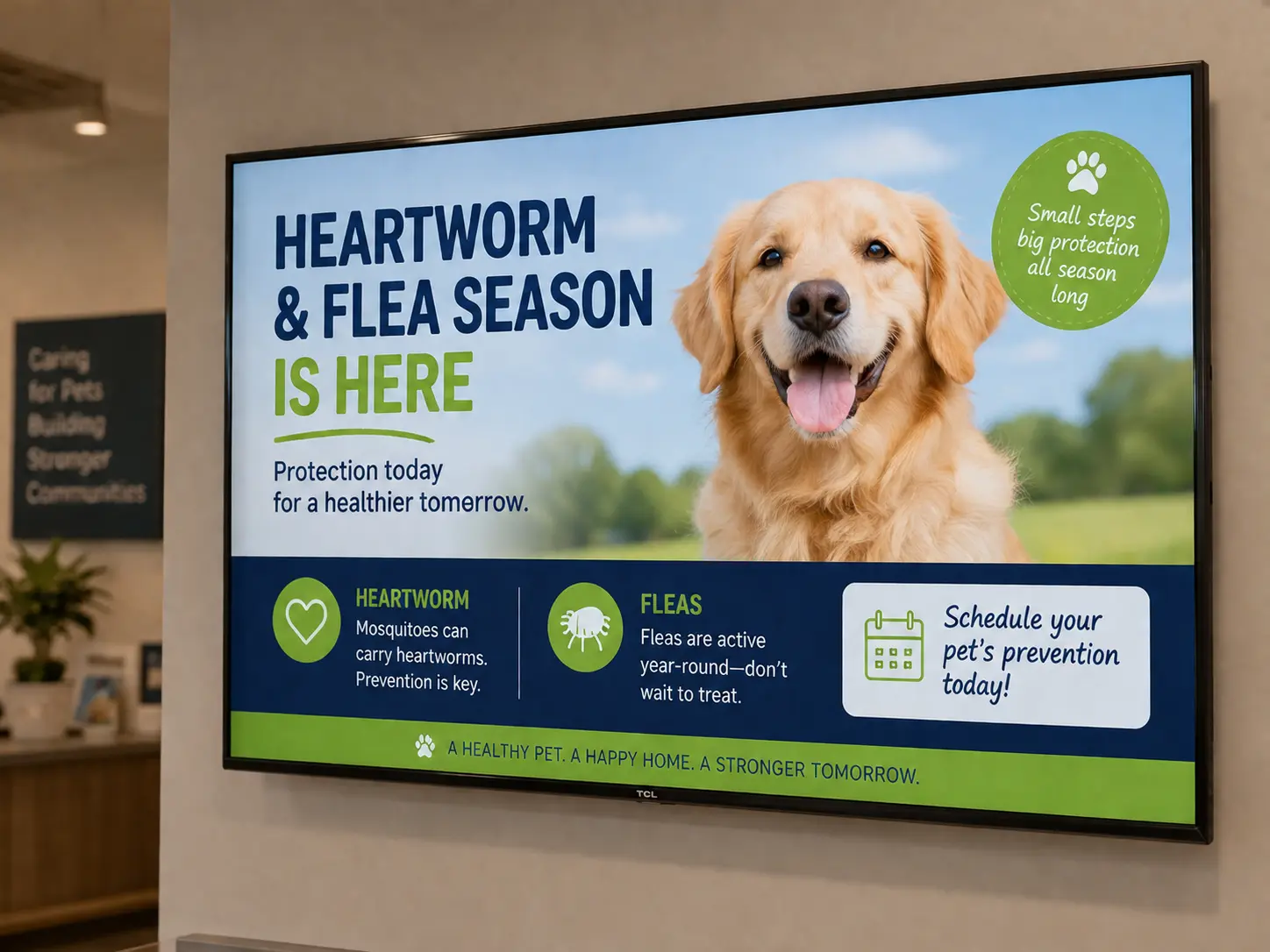
Seasonal reminders: heartworm and flea/tick season, dental month, senior wellness panels
Before/after or explainer content on dental disease, weight management, and the value of bloodwork
Local reviews and case photos (with owner permission) to build trust while people wait
Retail and add-on prompts: prescription diets, grooming, boarding availability
Waiting room zone | Best content to show |
Check-in counter | Plan pricing, appointment reminders |
General waiting area | Education/explainer content, reviews |
Exam-room hallway monitors | Post-visit care instructions, retail add-ons |
The honest limits
Signage does not cause a client to enroll in a wellness plan any more than a menu board causes someone to order the burger. It reinforces a decision the client is already leaning toward and removes friction from the conversation. Attribution here is directional: a clinic can track wellness plan sign-ups before and after adding screens, but pet owners see the same messaging on your website, in reminder emails, and from the vet directly, so isolating the screen's exact contribution is not realistic.
Treat any lift as one input among several, not a controlled result.
Earning from the waiting room, not just spending on it
Most clinics run one or two TVs that sit dark, loop a stock playlist, or show cable news for hours a day between the content that actually matters. That idle time has value. The Beam Network lets a clinic open a portion of unused screen time to vetted local advertisers (think pet insurance brands, pet food companies, or nearby groomers) and collect a share of the ad revenue automatically.
The clinic still controls what runs during appointment-heavy hours and keeps full ownership of the wellness-plan and education content; the network only fills genuinely idle slots.
How Beam helps
Beam schedules wellness plan promotions, seasonal reminders, and post-visit care instructions to rotate automatically by day and season, so the front desk never has to manually update a slide. During slow afternoon hours, Beam Network can fill unused screen time with vetted third-party ads and pay the clinic a revenue share, turning a waiting-room TV from a cost into a small recurring income line.
Clinics that want to keep it simple can start with a single screen at check-in showing plan pricing and reminders, then add the ad-network layer once the content routine is set.
Get started
See how a clinic-specific screen setup and the Beam Network revenue split work for your practice at usebeam.io.
Sources
https://www.avma.org/news/evolving-pet-owner-economics-what-data-reveal-veterinary-teams
https://www.avma.org/news/veterinarians-report-increasing-price-sensitivity-decreasing-visits
https://www.avma.org/resources/pet-owners/petcare/preventive-pet-healthcare
https://digitail.com/blog/10-veterinary-stats-and-findings-2026/
Does digital signage actually increase wellness plan sign-ups?
It can support the conversation by reinforcing pricing and value before the client reaches the front desk, but clinics should track sign-ups over time rather than expect signage alone to move the number. Treat any change as directional, not a guaranteed lift.
What should a veterinary clinic avoid putting on waiting room screens?
Avoid anything that could be read as pressuring a specific review or rating, since incentivizing reviews can violate platform policies. Stick to factual pricing, education, and reminders.
How much does a digital signage setup cost for a small clinic?
Costs vary by screen count and media player, but many single-location clinics start with one or two displays. Beam's ad-network revenue share can offset part of the ongoing cost once idle time is monetized.
Can the same screen show both client education and paid ads?
Yes. Clinics keep full control of scheduling and typically reserve peak appointment hours for their own content, opening only genuinely idle time slots to the Beam Network.
Will screens work if the clinic's internet goes down?
Most digital signage players cache the current playlist locally and continue showing the last-loaded content during a brief outage, then sync again once connectivity returns.
Do I need a big screen for every exam room?
No. Most clinics see the most value from one or two screens in high-dwell-time areas: the check-in counter and the main waiting area, rather than every room.