Can You Legally Put Ads on the TVs in Your Business?
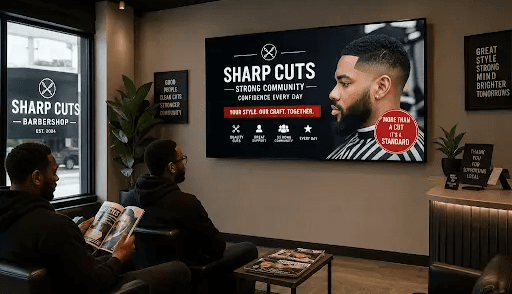
Yes, you can legally show paid ads on the TVs in your business, as long as you have the rights to whatever plays on screen and you follow a few basic rules. This is worth knowing because screen advertising is now a real income stream: US out-of-home advertising hit a record $9.46 billion in 2025, and the digital screen segment grew 10.5% year over year to more than a third of that total.
Renting out your idle screen time to advertisers is legal and increasingly common. The catch is content rights and honest placement, not the ads themselves.
The short legal answer
You own or lease the screens in your venue, so you decide what plays on them. Selling that screen space to advertisers is legal in the same way renting a wall for a poster is legal. Two things separate a clean setup from a risky one.
Content rights: everything on screen must be licensed or your own.
Honest placement: ads should be clearly ads, and appropriate for your audience.
Get those right and you are on solid ground.
Where businesses actually get into trouble
The risk usually sits in the content, not the sale. If you pipe live cable or stream copyrighted music to entertain customers, you may need public performance licenses. Any business that publicly plays copyrighted music from most sources is required to hold licenses from the performing rights organizations such as ASCAP, BMI, and SESAC, and these groups actively enforce compliance. Showing only FCC-licensed broadcast TV has narrower exceptions, but the moment you add licensed music or third-party video, the rules apply.
The risk usually sits in the content on screen, not in selling the space
Ad content carries its own rules. Regulated categories like alcohol, gambling, cannabis, and financial services have restrictions on where and how they run. False or misleading claims in an ad are a problem no matter who supplied it. And if a screen faces the street or a window, local sign ordinances may treat it as outdoor signage with its own permits.
Honest limit: this is general information, not legal advice. Rules vary by state, by content type, and by city, so confirm specifics for your location before you flip anything on.
The revenue side, in plain numbers
The demand is real. US digital out-of-home ad spend is projected to reach roughly $4.40 billion in 2025, and the programmatic slice, where advertisers buy screen time automatically, is growing about 22.6% a year. Advertisers increasingly want local, in-venue screens near the point of decision.
The KPI that matters to you is incremental revenue per screen: money your screens earn on top of their day job promoting your own offers.
Honest limit: signage and DOOH attribution is directional, not precise. What a given screen earns depends on your foot traffic, your location, your hours, and how many screens you run. Treat early numbers as a range, not a guarantee.
How Beam helps
Beam handles the parts that create legal risk. The Beam Network fills your idle screen time with ads from vetted, approved advertisers, and the ad content is licensed and moderated before it ever reaches your screen.
You choose which categories are allowed, so nothing runs that clashes with your brand or your customers. Your own promotions keep priority; ads fill the gaps and pay you for them.
In practice, that means you are not sourcing advertisers, checking their licenses, or policing their claims yourself. Beam manages the network, the content rights on the ad side, and the moderation. You keep control of the screen and collect a share of the revenue it generates.
What to check before you start
Confirm your entertainment content, especially music and live TV, is properly licensed.
Keep ad categories appropriate for your space and your audience.
Check local sign rules if any screen is visible from outside.
Use a platform that vets advertisers and licenses ad content, so the compliance load is not on you.
Turn idle screen time into income
If you already have screens running, they can be earning. See how the Beam Network puts approved, moderated ads on your idle screen time at usebeam.io
Sources
Is it legal to sell ad space on the TVs in my own business?
Yes. You control your screens, so selling that space to advertisers is legal. The main requirements are that on-screen content is licensed and that ads are appropriate and truthful.
Do I need a special license to show ads?
Not for the ads themselves in most cases. Licensing questions usually come from the entertainment content you play, such as copyrighted music or broadcast video, which may need public performance licenses.
What about ads for alcohol, gambling, or similar categories?
Those categories are regulated and have rules about placement and audience. A managed network lets you block categories you do not want, which keeps your screens clear of anything that does not fit.
Will running ads get in the way of my own promotions?
No. Your own content stays the priority. Third-party ads fill the idle gaps, so the screen keeps working for your business while earning on the side
How much can my screens earn?
It varies with foot traffic, location, hours, and screen count, so treat any estimate as a range. Earnings are directional, not guaranteed, and grow with the audience your screens reach.
Do I have to find the advertisers myself?
No. With the Beam Network, advertisers are sourced, vetted, and their content is licensed and moderated for you. You approve categories and keep control of the screen.