The Back-to-School Screen Playbook: What Local Businesses Should Put on Their TVs in July and August
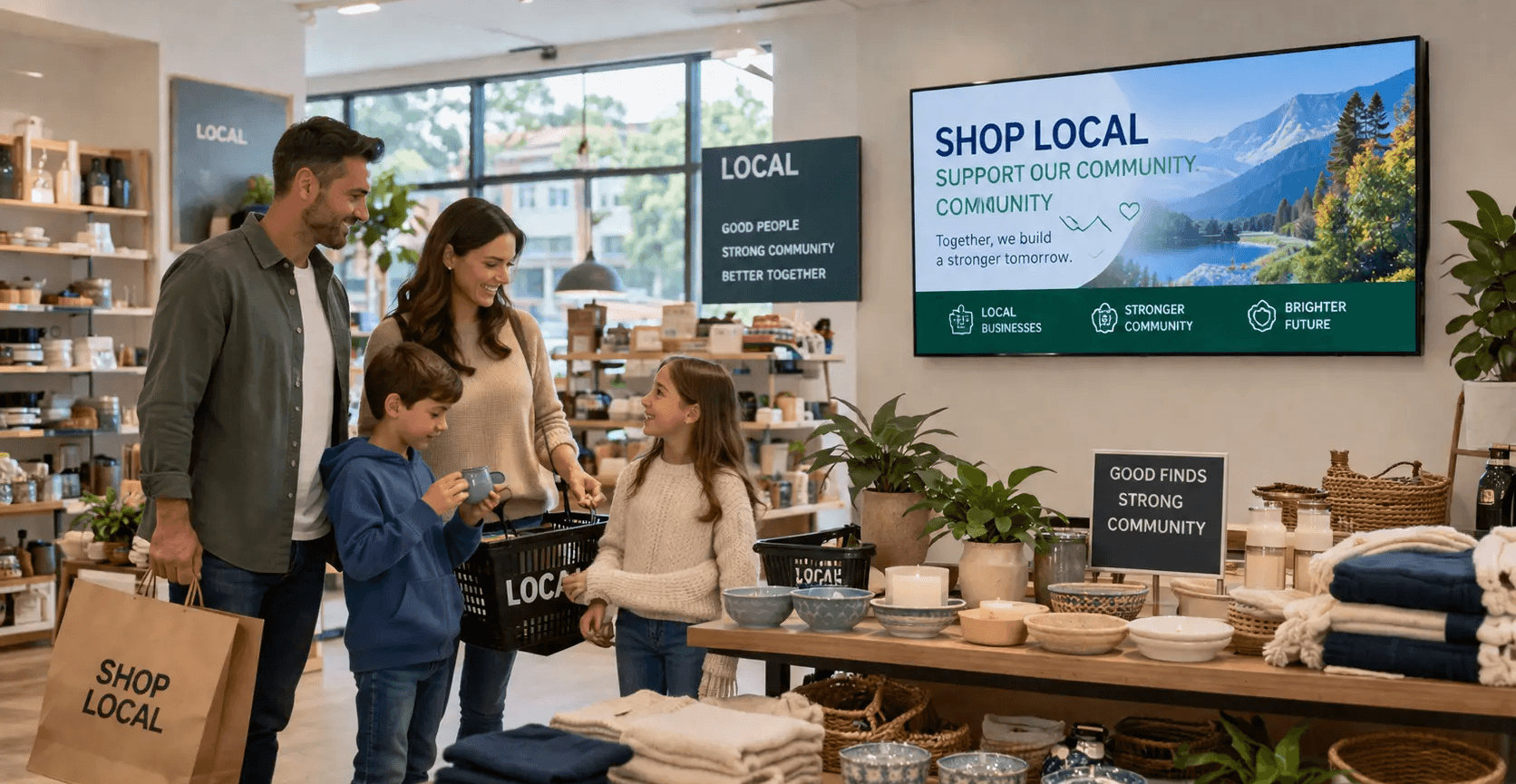
Start programming your back-to-school content now, because the season already started without you. 62% of back-to-school shoppers had already begun buying by early July 2026, and total K-12 spending is on track for a record $43.3 billion, according to the National Retail Federation. A campaign that goes live in the third week of August is aimed at a crowd that finished shopping in July.
This playbook is for owners of local venues who run their own screens: retail floors, barbershops, salons, gyms, convenience stores, auto shops, and restaurants. The number to watch is units per transaction and average ticket across a six-week window, plus the repeat visit you lock in before the school year takes over your customer's calendar.
Why July beats August
Two numbers set the timing
First, early buying is now the default, with 62% of shoppers underway by early July. Second, only 41% of back-to-school shoppers plan to buy online this year, the lowest share since 2016. More of this season's money runs through physical locations than at any point in a decade, and the store visit is exactly where your screen sits.
Price sensitivity should shape the message. 78% of shoppers expect higher prices this season, and about a third plan their trips around summer sales. A screen showing a specific price or a specific bundle answers the question those shoppers walked in with. A screen showing your logo over a stock photo does not.
A campaign that goes live in the third week of August is aimed at a crowd that finished shopping in July.
A six week programming plan
Run three phases and swap the creative on schedule. Build it once in July, then let the calendar do the work.
Late July: lead with bundles and prices.
Pair your two best sellers at one fixed number.
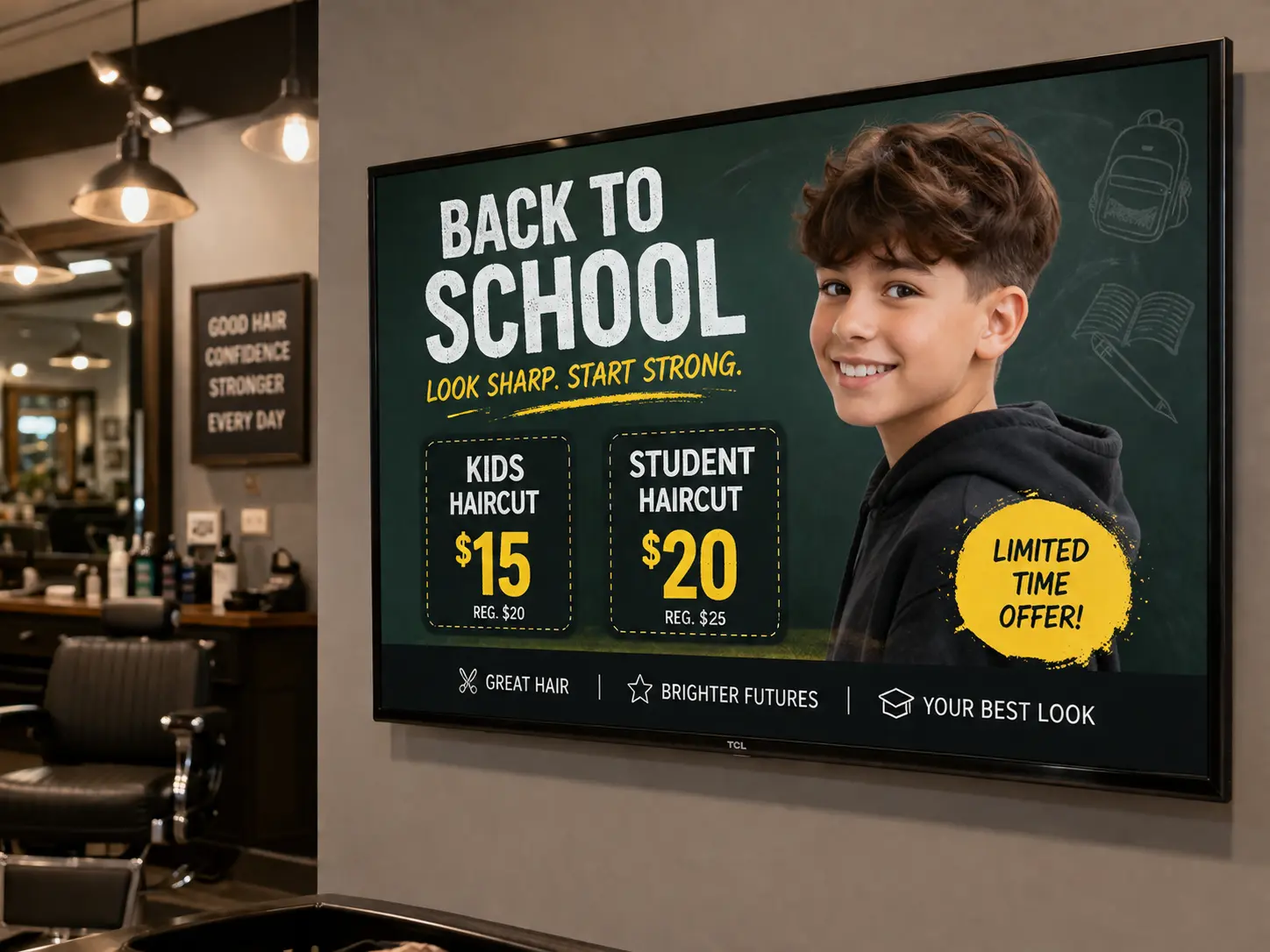
A barbershop sells a cut plus beard trim at a set price. A convenience store sells a lunchbox bundle. Put the price on the screen.
Early August: lead with scarcity and booking.
Post remaining back-to-school appointment slots, remaining seats in a youth program, or the cutoff date for service turnaround before the first day of school.
Late August into September: lead with the return visit. Promote the fall schedule, the membership, the loyalty sign-up, or the standing appointment. Seasonal traffic is your cheapest chance to convert a one-time visitor into a recurring one.
Hold each message to roughly ten seconds. Someone standing in your queue reads one short line from across the room, not a paragraph.
Be honest about what this measures
Signage attribution is directional. The effect shows up in your totals, not in a clean click path. Compare the promoted item's attach rate over the six weeks it runs against the same six weeks last year, and hold staffing, pricing, and hours steady while you do it. If average ticket moves and nothing else changed, the screen is a reasonable explanation. It is not proof, and anyone promising you proven causation from in-store signage is overstating what the data can carry.
Two more limits are worth naming. Screens do not change your Google rankings. They can prompt the branded searches and reviews that support local visibility, which is a different mechanism with a longer lag. And if the item on screen is out of stock, the screen makes that failure more visible rather than less.
Back-to-school is also a seller's market for your screen time
Here is the part most venue owners skip. July and August are peak buying months for advertisers who want families, and digital out-of-home is where that budget is going. DOOH revenue grew 12.9% year over year in Q1 2026 and made up about 36% of a record $2.12 billion quarter, per the Out of Home Advertising Association of America. Advertisers are paying for screens in front of real foot traffic during a high-intent season. You own those screens.
Your own promotions do not need every minute. A screen running your bundles most of the day still has idle hours that a regional or national advertiser will pay to fill.
Key stat. DOOH grew 12.9% year over year in Q1 2026 while overall out of home grew 7.1%, which means advertiser demand is shifting toward exactly the kind of screen sitting in your lobby.
How Beam helps
Beam runs both sides of the same screen. Schedule your back-to-school creative by date so the late July bundle swaps to the early August offer without anyone touching the TV. Open the remaining airtime to the Beam Network, where approved third-party advertisers buy time on your screens, and you get paid for hours that used to show a screensaver.
You keep control of the whole loop. You set the split between your promotions and network ads, you approve which advertiser categories run, and you block competitors outright. Scheduling is by date and daypart, so a lunch bundle can run at 11 am and a fall membership offer can run at 6 pm from the same playlist. The hardware is the TV you already own plus a Beam player, which matters when you are standing up a seasonal campaign in a week rather than a quarter.
Build it this week
Create your three creative sets, schedule them through Labor Day, and switch on network ads to earn from the hours you are not using. See how it works at usebeam.io.
Sources
When should a local business start running back-to-school content?
Late June to mid-July. With 62% of shoppers already buying by early July, a campaign that starts in mid-August reaches the tail of the season instead of the peak.
What belongs on screen for a service business rather than a retailer?
Bundles with a stated price, current appointment availability, and hard cutoff dates. Service businesses sell capacity, so showing what is left this week converts better than showing a general discount.
How many messages should be in the loop?
Three to five. Fewer than three feels repetitive to staff and regulars; more than five means most customers never see the one that matters during an average visit.
Can I actually measure whether the screens worked?
Directionally. Track the promoted item's attach rate and average ticket against the same weeks last year, keep other variables steady, and treat the result as a signal rather than a proven cause.
Do I need to buy new TVs?
No. Most venues use existing TVs with a Beam player attached, which is why seasonal campaigns can go live in days.
How much airtime should go to advertisers?
Start by giving your own promotions the majority of the loop during the six-week season, then increase network share in slower months. The split is yours to set and change.