The Sports Bar Football Season Screen Playbook: What to Put on Your TVs to Fill Tables
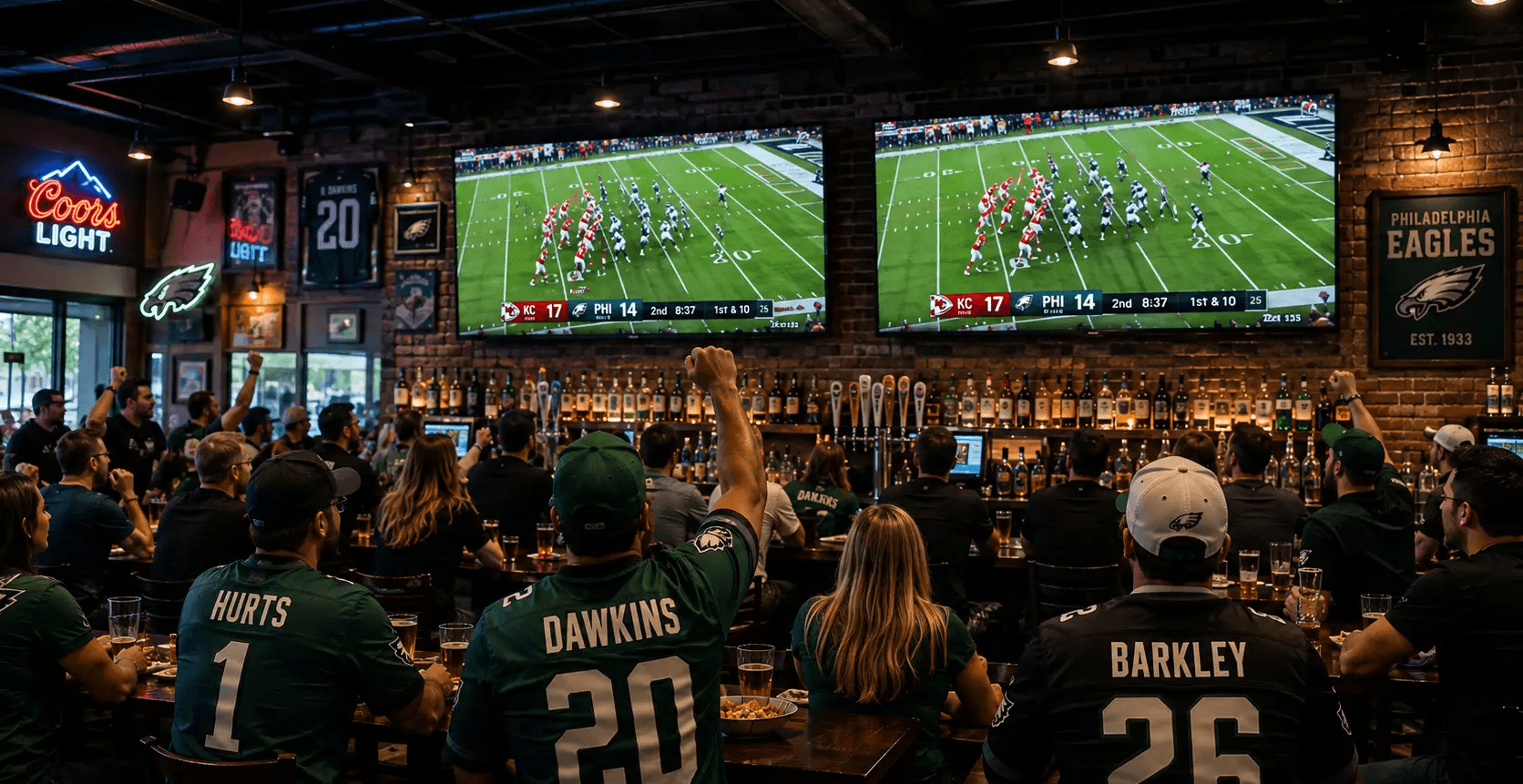
Put the game on your biggest screens and everything else on the rest, because football season is the highest-traffic stretch of the year for bars and grills. Point-of-sale data from Toast shows chicken wing orders climb about 25% and alcohol sales rise 6% on in-season Sundays compared to Sundays out of season. The venues that win those Sundays plan their screens like a menu, not an afterthought.
This playbook is for the owner or operator who runs the TVs at a sports bar, grill, or neighborhood pub and wants more covers per table and bigger tabs during the season.
Why the season is worth planning for
Game days concentrate demand into a few hours. Toast reported hard seltzer orders jumped 47% on in-season Sundays, and in Green Bay, restaurant food spending rose 27% on football Sundays. That surge is money you already have coming through the door. The screens decide whether a full room turns into a bigger check or just a loud one.
The four screen jobs on game day
Think of every TV in the building as having one job. Mixing jobs on one screen is how you lose the room.
Game screens: the biggest and best-placed TVs carry the live broadcast; sound on the primary set. Never cover these with promos.
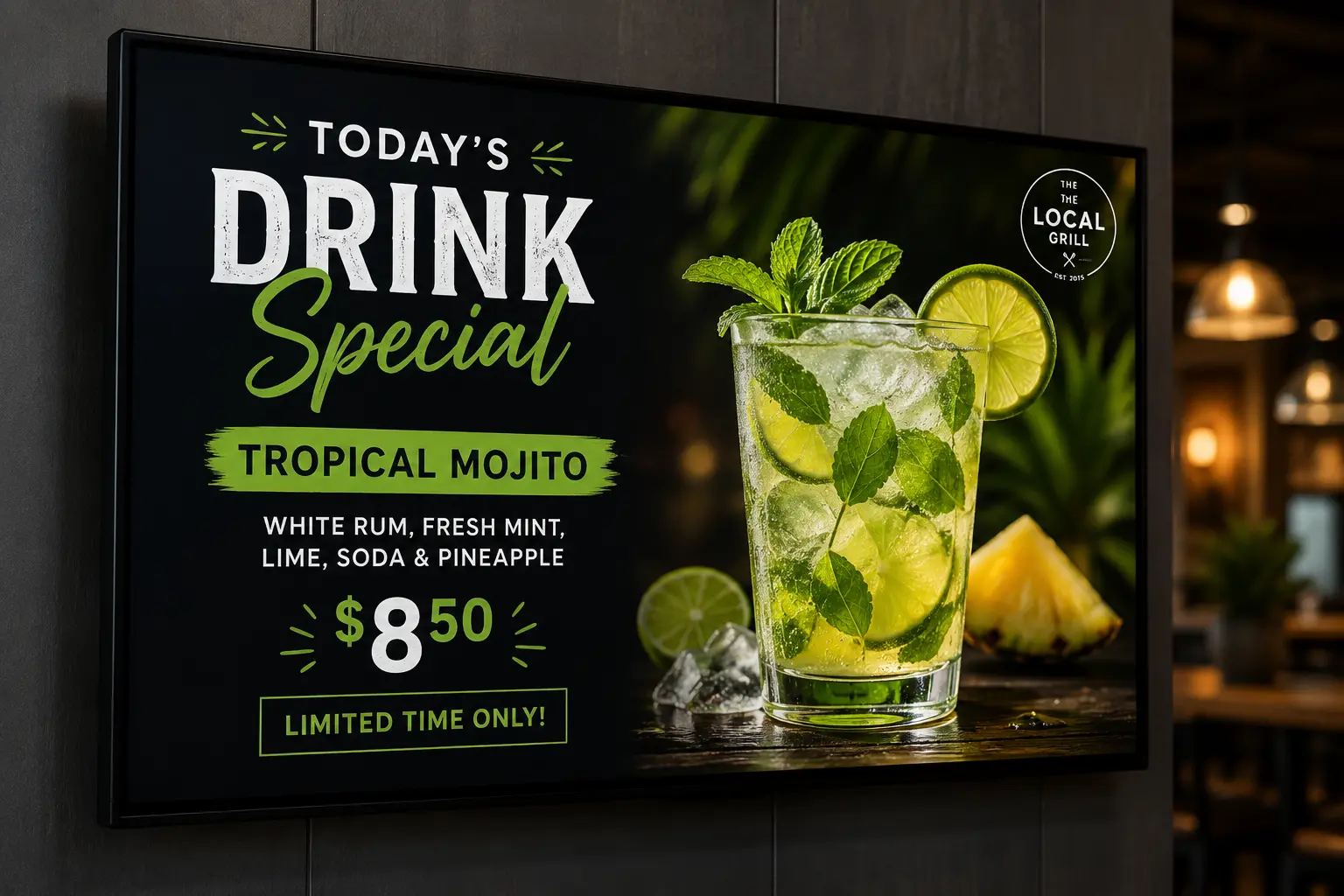
Menu and drink screens: near the bar and entry, rotate specials, buckets, and pitcher deals timed to kickoff and halftime.
Wait and door screens: at the host stand, show wait times, table availability, and the next kickoff schedule so groups stay instead of leaving.
Off-broadcast screens: restroom hallways, patio, private rooms, use these for promos, upcoming events, and paid ads when no game is on.
Treat every TV as having one job. A screen doing two jobs does neither well on a Sunday
What to show and when
Timing beats volume. A promo that hits at the right moment lifts the tab without feeling pushy.
Pre-kickoff: bucket deals, appetizer combos, and reservation prompts for the next big game.
During play: keep it to the broadcast. Let the game hold attention.
Timeouts and halftime: run your highest-margin items, wings, shareables, and drink upsells when eyes drift from the screen.
Post-game: dessert, coffee, and a prompt to book the next game day to turn one visit into repeat visits.
The honest limits
Screens influence behavior. They do not replace the fundamentals. Fast service, cold beer, and enough seating still decide your Sunday. Signage nudges the check upward and keeps groups from walking, but attribution is directional, not exact. You will see the lift in average check and covers over a few game days, not in a clean before-and-after on a single screen.
Plan the content, then read the trend across the season.
The off-season and off-broadcast problem
Here is the part most operators miss. Your screens sit idle Monday through Thursday, in the off-season, and on every wall that is not showing a game. That idle time has value. Out-of-home advertising reaches people at the point of purchase, and per OAAA and Morning Consult, 42% of consumers say out-of-home ads affect their in-person shopping decisions, and 75% still notice ads once inside a venue. US digital out-of-home ad spending is forecast to grow to about $4.56 billion by 2029, and a share of that budget wants exactly the audience sitting in your bar.
How Beam helps
Beam runs your game-day content and turns idle screen time into revenue. You schedule the game, the specials, and the wait-time screens from one place, then open your off-broadcast and off-season slots to approved advertisers through the Beam Network and get paid for time your TVs were showing nothing.
With Beam you can:
Schedule content by screen and by daypart, so game screens, menu screens, and door screens each do their one job.
Swap specials remotely between kickoff and halftime without touching a single TV.
Earn passive income from idle slots by joining the Beam Network, where third-party advertisers pay to run on your approved screens.
Keep control of what runs, since you approve the advertiser categories that appear in your venue.
The result is a season where your screens sell your kitchen when the game is on and sell someone else's ad when it is not.
Your game-day screen checklist
Assign every TV one job before the first Sunday.
Map specials to pre-game, halftime, and post-game slots.
Keep wait times and the kickoff schedule at the door.
Open off-broadcast and weekday slots to paid ads.
Review average check and covers across the first three game days, then adjust.
Ready to run your screens like a playbook and earn from the idle time? See how the Beam Network works at usebeam.io
Sources
When should I start planning my football season screen content?
Before the first game of the season. Build your specials calendar and daypart schedule in the preseason so week one runs clean, and you are not editing screens during a rush.
Will digital screens distract fans from the game?
Not if each screen has one job. Keep the broadcast on your main sets and put promos on off-broadcast screens like hallways, the patio, and the host stand.
How do I know if the screens are actually working?
Track average check and covers per table across several game days, not one. Signage lift is directional, so look for the trend over the season rather than an exact before-and-after.
Can I really make money from my TVs when no game is on?
Yes. Through the Beam Network, you can open idle and off-season screen time to approved advertisers and earn from slots that would otherwise show nothing.
Do I lose control of what appears on my screens?
No. You approve which advertiser categories can run, so paid content fits your venue and never competes with your own specials during a game.
What should I show during halftime?
Your highest-margin items and drink upsells. Attention drifts from the broadcast during breaks, which makes halftime the best window for wings, shareables, and bucket deals.