How Coworking Spaces Use Digital Signage to Lift Member Retention and Earn From Common-Area Screens
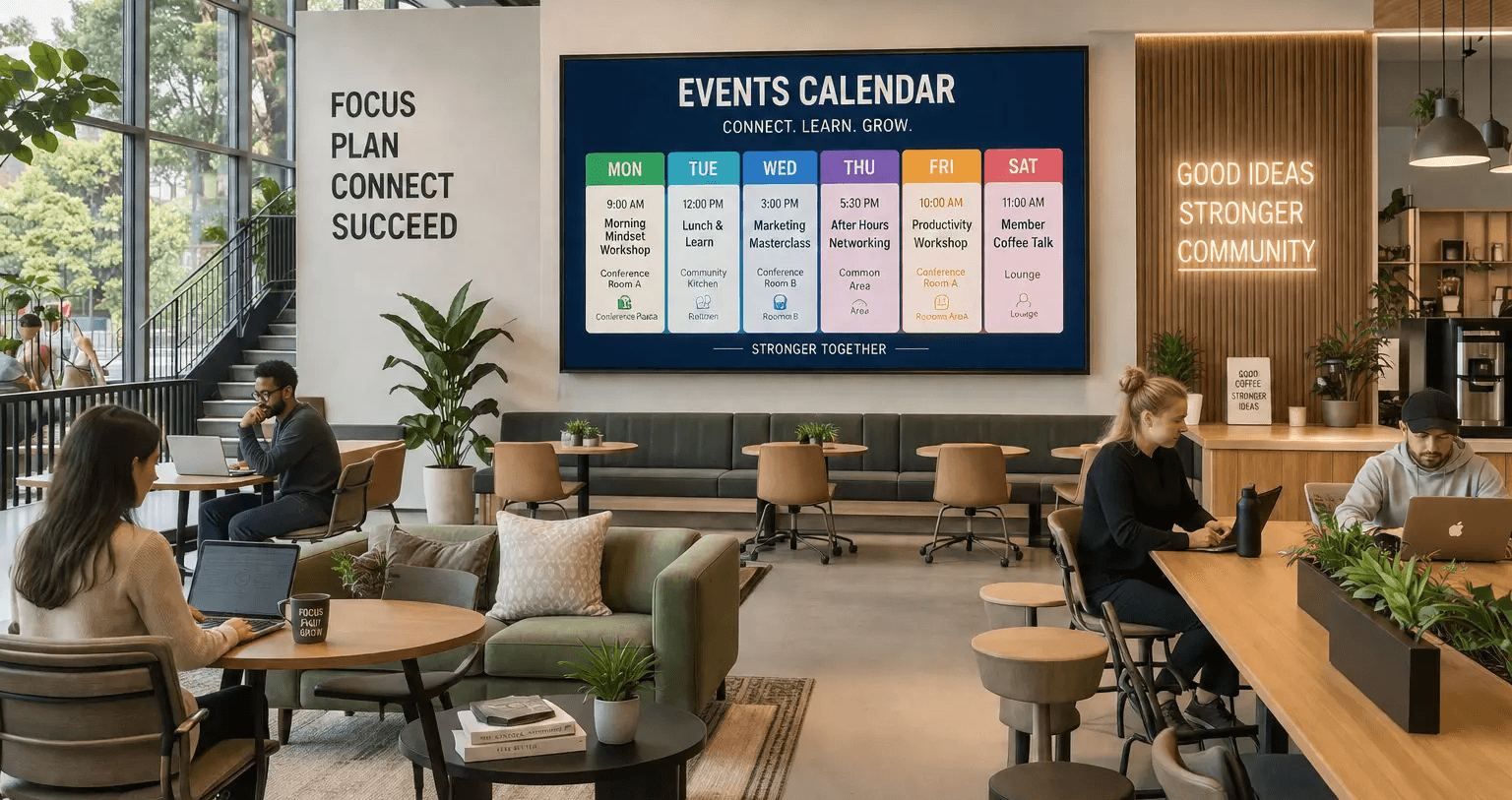
Digital signage helps coworking operators keep members longer by making community visible, and it turns idle lobby and lounge screens into a second revenue line. Retention is the number that decides whether a coworking business survives, and the average member now stays about 22 months, up from the old 9-to-18-month range. That matters because 55% of prospects pick a space based on its sense of community, and screens are one of the few tools that broadcast community all day without staff effort.
This article is for the operator running the space and its screens, not the advertiser buying placements. Your KPI here is member retention and renewal rate, with occupancy as the supporting number. Screens will not fix a weak community on their own, and signage attribution is directional rather than exact. Used well, they still move the metrics that keep desks full.
Why retention is the metric that matters
Occupancy looks good on a dashboard, but it hides churn. You can sit at 68% occupancy, the global average at the start of 2025, while quietly losing hot-desk members every month and backfilling them at higher acquisition cost. Private offices renew strongest; short-term hot desks churn fastest. The lever you control between contract dates is how connected a member feels day to day.
Members who join committees, forums, or events churn at noticeably lower rates than isolated ones. The problem is that most members never see what is happening. Event emails get buried, Slack channels get muted, and the flyer by the coffee machine goes stale. A screen in the lounge fixes the visibility gap because members walk past it every time they refill coffee or wait for a meeting room.
What to put on your screens
Keep the content tied to retention, not decoration. A useful rotation for a coworking space looks like this:
This week's events: lunch-and-learns, member socials, workshops, and who is hosting.
Member spotlights: a new company that joined, a member win, a hiring shout-out.
Room and desk availability: live meeting-room status and quiet-zone reminders.
House updates: printer fixes, guest Wi-Fi, parking changes, cleaning schedules.
Community asks: who needs a designer, who offers legal help, who wants a lunch partner.
Members who see the community every day are the ones who renew
The member spotlight rotation does double duty. It makes people feel seen, and it advertises the networking value that made them choose a coworking space over a home office in the first place.
The second job your screens can do: earn revenue
Here is the part most operators miss. Your screens sit idle for large parts of the day, showing a logo or a clock. That idle time has value. Out-of-home advertising hit a record $9.46 billion in 2025, and the digital slice grew 10.5% year over year to more than a third of all out-of-home revenue. Advertisers want screens in front of a desirable, hard-to-reach audience, and a room full of founders, freelancers, and remote professionals is exactly that.
Key stat: DOOH grew 10.5% in 2025 and now makes up 36.3% of all out-of-home ad revenue. That is money flowing toward the kind of screens you already own.
This is where the venue becomes a seller, a role you should keep distinct from your member-facing content. You decide how much screen time opens to advertisers and which categories you allow, so member updates always come first and the ads never undercut the community feel.
How Beam helps
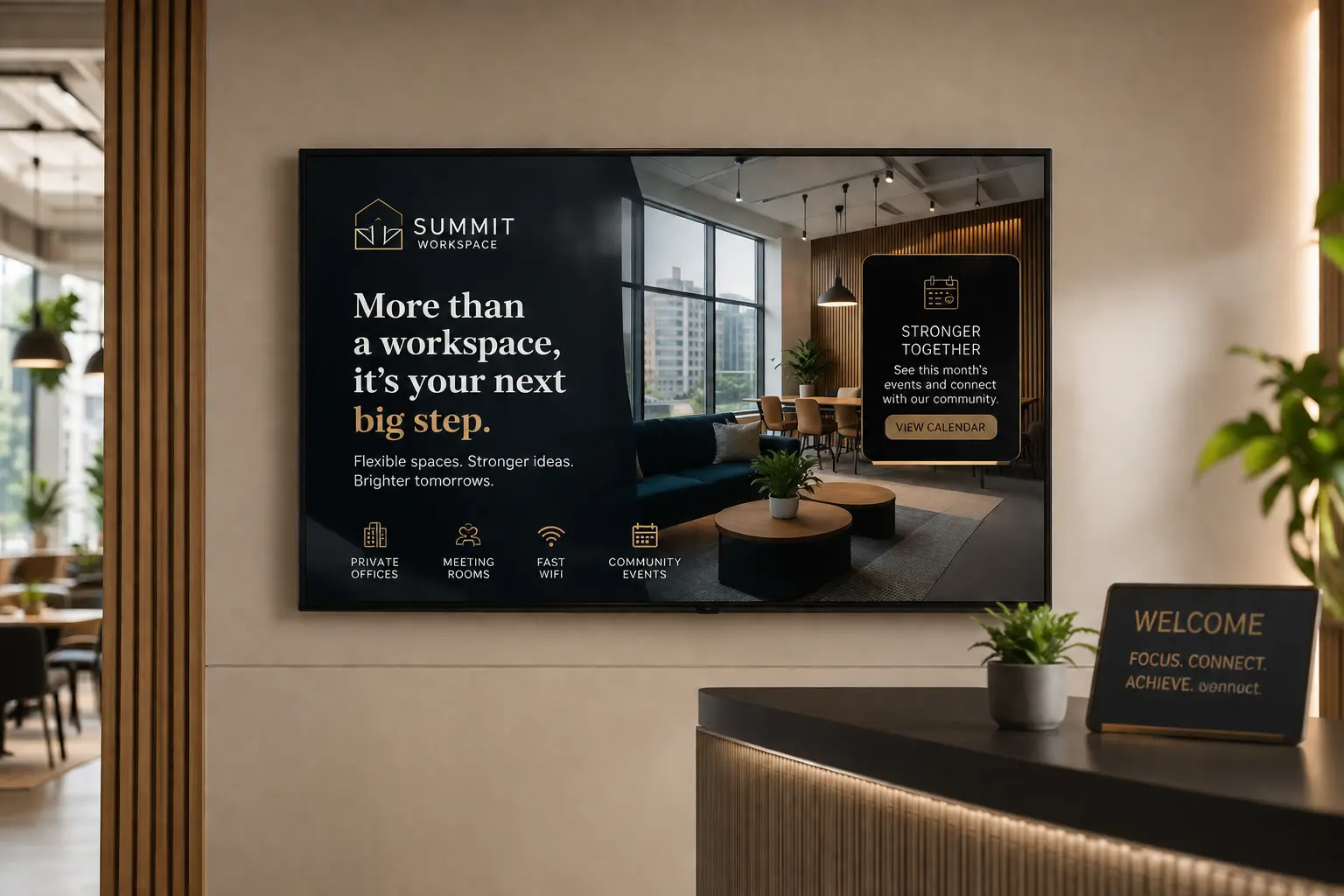
Beam runs your screens from one place and opens idle time to its advertiser network, so the same TV that promotes Thursday's mixer also earns money between updates.
Manage every screen remotely: push an event to all locations in seconds, schedule content by time of day, and update from your phone.
Earn from idle time: the Beam Network places approved third-party ads in the slots you free up, turning dead screen time into monthly income.
Stay in control: you approve advertiser categories and set how much inventory to sell, so member content and house updates keep priority.
Scale across sites: operators with several locations run one content plan and one revenue stream instead of juggling separate setups.
For a multi-location operator, that combination means retention content and a new revenue line from hardware you already installed.
Honest limits
Signage supports retention; it does not replace real community programming. The lift comes from consistent, current content, so a screen showing last month's events will hurt more than help. Ad revenue depends on your foot traffic and location, and earnings vary.
Attribution for signage is directional: you will see renewal and event-attendance trends move, but you cannot trace one renewal to one slide. Track the KPI that counts, renewal rate, and watch it across quarters rather than expecting a single-week spike.
Get started
If you run a coworking space and your screens are showing a clock, you are leaving both retention and revenue on the table. See how Beam turns your common-area screens into a retention tool and an income stream at usebeam.io
Sources
Will ads on our screens annoy members?
Not if you control the mix. You set which advertiser categories run and how much time they get, and member updates stay the priority. Most operators run ads lightly in reception and keep lounge screens community-first.
How much can a coworking space earn from screen advertising?
It depends on foot traffic, location, and how much inventory you open. Earnings are variable, so treat ad income as a supplement to membership revenue rather than a fixed line.
Does digital signage actually improve retention?
It supports it. Members who engage with events and community churn less, and screens make that community visible daily. The signage is one input, not a guarantee, and it works best alongside real programming.
What screens and equipment do we need?
Most standard commercial TVs or displays work with a media player and an internet connection. You can start with the screens you already have in your lounge, reception, and hallways.
Can we manage screens across multiple locations?
Yes. A platform like Beam lets you push content to every site from one dashboard and schedule it by location and time, which is the main reason multi-site operators adopt it.
Is coworking still growing enough to justify the investment?
The global coworking market grew to an estimated $27.64 billion in 2025, and US locations passed 9,100 by early 2026. Suburban and secondary-city spaces are growing fastest, so the audience for both members and advertisers keeps expanding.